Spatial Distribution Patterns of Vascular Medicinal Plant Species in the Democratic Republic of Congo
Résumé
Cette tude vise à répertorier les plantes médecinales en République Démocratique du Congo (RDC) et à présenter leur répartition géographique afin d’orienter les futurs efforts de conservation. Les données ont été récoltées à partir des ouvrages, articles, thèses et rapports. Les données géoréférencées ont été recueillies à partir du GBIF.
Selon les résultats, 1443 espèces sont utilisées comme plantes médicinales. Sur ce total, seuls 1371 taxons ont été analysés pour leur distribution spatiale, avec une estimation de 42.927 points d’occurrence. Nous avons utilisé la subdivision administrative (Provinces) de la RDC et les secteurs phytogéographiques de Ndjele pour représenter la répartition géographique. Les provinces les plus diversifies et avec nombre élevé d’occurrences sont Ituri, Nord-Kivu, Sud-Kivu et la Tshopo. Le secteur de transition Congolo-Zambézien et le secteur Forestier central étaient les deux secteurs phytogéographiques les plus importants.
Abstract
This study aims to catalog the medicinal plant diversity in the Democratic Republic of the Congo (DRC) and to display its biogeographic distribution to guide future conservation efforts.
The data was collected from books, articles, dissertations, and reports. And the georeferenced datasets were downloaded from GBIF.
According to the results, 1443 species are used as medicinal plants. Among these, only 1371 taxa were analyzed for spatial distribution, with an estimated of 42,927 occurrences points. We used the administrative subdivision (provinces) of the DRC and the phytogeographical sectors of Ndjele to display the geographical distribution. The provinces with the highest number of species and occurrence records were Ituri, North-Kivu, South-Kivu and Tshopo. The Congolese-Zambezian transition sector and Central forestry sector were the two most important phytogeographic sectors.
Introduction
1Plants play an important role in ecosystems, providing both food and habitat for various species (Kalčíková, 2020). The distribution of plants is neither uniform nor random throughout the world (Zhou et al., 2023), but a distinct distribution along geographic units determined due to the interaction of biotic (e.g., dispersal ability, competition, predation) and abiotic factors (e.g., topography, soil, geology, climate) (Qian, 2001). A thorough understanding of the biogeographic distribution of species and the causes that influence it has become an increasingly important factor in ecological processes, conservation planning, and sustainable management of genetic resources (Qian, 2001; Barthlott et al., 2005; Zeb et al., 2021), that also are impacted by biodiversity measured by species richness (Day et al., 2023).
2The Democratic Republic of Congo (DRC) is the most biodiverse country in tropical Africa, with 8,860 observed vascular species of which 18.3 % are endemic (Sosef et al., 2017). However, with an increase in habitat degradation and other human activities, the DRC is among the countries where the presumed extinction of native plants has occurred (Humphreys et al., 2019; Vorontsova et al; 2021).
3With its diverse ethnic, cultures, and various landscapes, including tropical rainforest, savanna, and mountains, the traditional knowledge in the DRC, especially medicinal plants knowledge, has been integrated into the culture of the people of the DRC and this knowledge dates back hundreds of years. Today, people still rely on plants and animals in their daily lives (Masumbuko & Mutabana, 2012; Iragi et al., 2021). Medicinal plant species exhibit a variety of life forms, such as trees, shrubs, lianas, and herbs. However, despite efforts to study medicinal plants, information on DRC medicinal plants is sparse (Katemo et al., 2012).
4Some studies have been undertaken on the biogeographic distribution of species in Central Africa (DRC, and Rwanda-Burundi), however, most of them have focused on pteridophyte, and angiosperm families or subfamilies. Koffi et al. (2008) analyzed the spatial distribution of Acanthaceae with the comparison of three phytogeographical theories. Mangambu et al., (2014) analyzed the phytogeography of pteridophytes in Kauzi-Biega National Park (DRC). Ndayishimiye (2012) modeled the spatial distribution of endemic Caesalpinoideae in central Africa to evaluate the actual protected areas. However, there has been no comprehensible publication on the diversity and biogeography of medicinal plants in the DRC.
5Therefore, the objective of this study is to catalog the medicinal plant diversity in the Democratic Republic of the Congo and to display its biogeographic distribution to guide future conservation efforts. We addressed these questions: (1) what are the dominant family, genera, species, and morphological types of medicinal plants in DRC? (2) What is the number of medicinal plants that have been used in DRC so far? (3) what are the richest provinces and phytogeographic sectors of DRC in terms of medicinal plant diversity?
Material and method
Study area
6DRC is the second largest country in Africa, covering 2,345,410 km2. It is divided into 26 provinces with varying sizes, climates, and ecological compositions. Based on the Koppen climate classification (Chen & Chen, 2013; https://en.climate-data.org) six climates exist in DRC: Tropical rainforest climate (Af), tropical savanna climate (Aw), tropical monsoon climate (Am), oceanic climate (Cfb), subtropical highland oceanic climate (Cwb), and humid subtropical climate (Cwa). Over 240 million hectares, of which 60 % is in DRC (Tyukavina et al., 2018), the Congo Basin humid tropical rainforest is the second green lung in the world (Okito et al., 2020; White et al., 2021).
Data
7This study presents a dataset on the diversity and distribution of medicinal plant species in the DRC. A comprehensive compilation of the dataset of medicinal plants was made from peer-reviewed papers, dissertations, reports, and books. The name of this dataset was cross-referenced with Plants of the World Online (https://powo.science.kew.org).
8Although some taxa were identified as varieties, subspecies, intraspecies, or synonyms, we restricted them to species level of accepted names. The term endemic species has been used to refer to species that are found exclusively in DRC and nowhere else in the world.
9Distribution records: we compiled the occurrence data of medicinal plant species in DRC obtained from the Global Biodiversity Information Facility (GBIF, https://www. Gbif.org). Filters were applied to remove duplicate occurrences, and records outside the DRC.
10Biogeographic elements: we first used the phytogeographic classification of Ndjele (Ndjele, 1988) which was based on the endemism of vascular plants, that subdivided the DRC into six regions, seven domains, and 13 sectors (Figure 1).
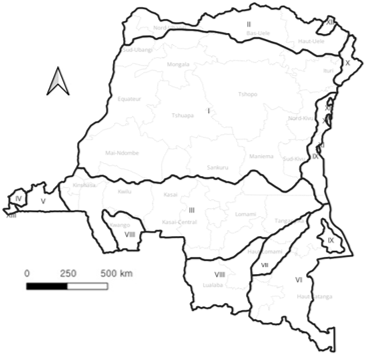
Figure 1 : The phytogeographic sectors of Ndjele (1988).
(I) Central forestry sector; (II) Congolese-Sudanese transition sector; (III) Congolese-Zambezian transition sector; (IV) Mayumbe forestry sector; (V) Lower Guinea-Zambezian transition sector; (VI) Bemba sector; (VII) Lualaba sector; (VIII) Lunda sector; (IX) Mountains sector; (X) Mobutu lake sector; (XI) High plains of Kivu sector; (XII) Southern Sudanese sector; (XIII) South Atlantic of the Guinean coast sector.
Analyses
11We downloaded the DRC’s administrative division from www. gadm.org, and the area covered by each province was estimated. In each province and phytogeographic subdivision, we calculated the plant richness for the family, genera, species, and life forms. Considering that the provinces/ phytogeographic subdivisions area are not equal, we calculated the area-adjusted species density following Tang et al., (2006):
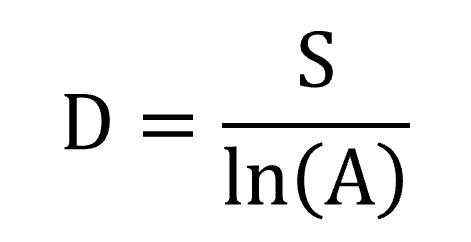
Where D is the species density for a province/phytogeographic subdivision. S is the number of species and A is the area of the province/phytogeographic subdivision.
Results and Discussion
An overview of medicinal plants in DRC
12In this study, 1443 medicinal plants were cataloged based on their historical use in treating human and animal illnesses. This represents 16 % of the total vascular plant diversity in DRC (Sosef et al., 2017). Native species were the most predominant (84%) of these 21 species (1.45 %) were endemic to DRC.
13These plants belong to 165 families and 762 genera. The top 20 largest families in terms of the number of medicinal plants comprise 61.6% of the total Congolese medicinal vascular flora (Table 1). The most important families were Fabaceae (97 genera/187 species), followed by Asteraceae (54/98), Rubiaceae (48/85), and Euphorbiaceae (23/60). our results confirm the previous findings that reported Fabaceae, Asteraceae, Rubiaceae, and Euphorbiaceae being among the most diverse families in Tropical Africa (Klopper et al. 2007; Dauby et al., 2016; Sosef et al. 2017; Ntore et al. 2022). 61% of genera gave only one medicinal species, whereas only 1.2 % of genera have more than 10 species. The important genera were Combretum (20 spp) Solanum (17 spp), Millettia (16spp), and Ficus (12). 466 genera were represented by only one species each.
14Among the various life forms, such as herbs to subshrubs, liana, shrubs, and trees, Herbs comprise the most abundant life forms in terms of richness with 575 species, followed by trees (411 taxa), shrubs (222 taxa), liana/climbing, and subshrub. These results corroborate with Sosef et al., (2017) who found that woody species have around the same number compared to herbaceous species.
Distribution of medicinal plants
15A total of 84,000 georeferenced records were downloaded from the GBIF. After cleaning up and removing duplicate coordinates, we retained 42,927 georeferenced records for 1371 species, which accounts for 95% of the total number of medicinal species present in the DRC. 72 species (5%) were lacking georeferenced records. It can be seen from Figure 2 that the prospecting did not follow a uniform pattern. The areas with concentrated prospecting are situated near universities, research centers, and protected areas. A similar result was obtained from the study of Acanthaceae in central African Flora (Koffi et al., 2008) and the study of legume flora in Burundi (Ndayishimiye et al., 2010). The first specimens were collected in 1849, and about 86 % of specimens and species were collected before 2000 with a pick around 1951 and 1960 (Figure 3). These periods correspond to the vast campaign of the “Institut National pour l’Etude Agronomique du Congo Belge (I.N.E.A.C.)” (National Institute for Agronomic Study of the Belgian Congo) called “Flore du Congo-Belge et du Ruanda- Urundi: spermatophytes” that provided ten Tomes of floristic diversity in Congo (previously Congo-Belge and Ruanda-Urundi) with just 95 families (Lejoly et al., 2012).
1649 species have more than 100 occurrences records, while 224 species between 50 and 99 collections, 808 species between 10 and 49 times, and 258 species between 2 and 9 times. The remaining 36 species have been collected just once. The most collected species are Aidia micrantha, Gloriosa superba, Pteridium aquilinum, Staudtia kamerunensis, respectively 256, 190, 176, and 175 georeferenced sampling. The most sampled genera were Combretum (562 samplings) followed by Solanum (540), Millettia (409), and Ipomoea (362).
Table 1 : Top 20 diverse families of medicinal plants in DRC.
|
Families |
Species |
Genera |
Native |
Introduced |
Endemic |
Trees |
Shrubs |
Liana/Climbing |
Herbs |
Sub-Shrub |
|
Fabaceae |
187 |
97 |
154 |
27 |
4 |
80 |
18 |
39 |
47 |
3 |
|
Asteraceae |
98 |
54 |
66 |
21 |
6 |
2 |
18 |
4 |
72 |
2 |
|
Rubiaceae |
85 |
48 |
76 |
3 |
3 |
25 |
29 |
13 |
17 |
1 |
|
Euphorbiaceae |
60 |
23 |
48 |
10 |
0 |
25 |
18 |
4 |
11 |
2 |
|
Lamiaceae |
55 |
20 |
49 |
6 |
0 |
7 |
9 |
11 |
28 |
0 |
|
Apocynaceae |
50 |
30 |
45 |
2 |
0 |
12 |
11 |
22 |
5 |
0 |
|
Malvaceae |
50 |
22 |
42 |
7 |
1 |
19 |
9 |
1 |
21 |
0 |
|
Poaceae |
32 |
25 |
23 |
9 |
0 |
0 |
0 |
0 |
32 |
0 |
|
Phyllanthaceae |
31 |
9 |
28 |
2 |
1 |
15 |
11 |
1 |
4 |
0 |
|
Solanaceae |
28 |
7 |
8 |
20 |
0 |
1 |
7 |
1 |
19 |
0 |
|
Acanthaceae |
27 |
15 |
27 |
0 |
0 |
0 |
2 |
0 |
25 |
0 |
|
Combretaceae |
25 |
3 |
23 |
2 |
0 |
7 |
4 |
11 |
1 |
2 |
|
Meliaceae |
25 |
12 |
23 |
2 |
0 |
22 |
3 |
0 |
0 |
0 |
|
Cucurbitaceae |
23 |
11 |
16 |
7 |
0 |
0 |
0 |
21 |
2 |
0 |
|
Amaranthaceae |
21 |
9 |
13 |
8 |
0 |
0 |
1 |
1 |
19 |
0 |
|
Annonaceae |
21 |
11 |
19 |
1 |
0 |
16 |
2 |
2 |
0 |
1 |
|
Moraceae |
20 |
7 |
19 |
1 |
0 |
15 |
1 |
1 |
3 |
0 |
|
Sapindaceae |
18 |
10 |
18 |
0 |
0 |
13 |
2 |
2 |
1 |
0 |
|
Commelinaceae |
17 |
9 |
15 |
1 |
1 |
0 |
0 |
0 |
17 |
0 |
|
Convolvulaceae |
16 |
5 |
13 |
3 |
0 |
0 |
0 |
2 |
14 |
0 |
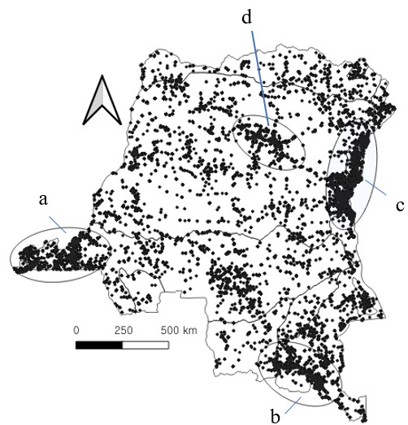
Figure 2 : Distribution patterns of medicinal plant inventories in Democratic Republic of Congo
Areas near (a) University of Kinshasa, Kisantu Botanical Garden, and Luki Reserve; (b) University of Lubumbashi; (c) Research Center of Natural Sciences/Lwiro, Official University of Bukavu; Kauzi-Biega National Park, Virunga National Park; (d) University of Kinsangani and Yangambi Institute. The (٠) indicate the collection places and the encircled areas are the most explored.
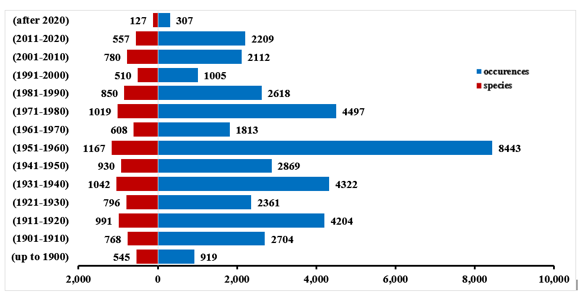
Figure 3 : Temporal distribution of medicinal plant collection in DR Congo
Table 2 : Number of unique georeferenced records of medicinal plants, families, genera, and species records in each Province
|
Provinces |
Occurrences |
Families |
Genera |
Species |
|
Bas-Uele |
1898 |
113 |
433 |
647 |
|
Equateur |
2323 |
117 |
465 |
693 |
|
Haut-Katanga |
3188 |
118 |
409 |
639 |
|
Haut-Lomami |
650 |
77 |
240 |
324 |
|
Haut-Uele |
988 |
97 |
335 |
453 |
|
Ituri |
2718 |
120 |
504 |
786 |
|
Kasai |
288 |
66 |
179 |
216 |
|
Kasai-Central |
458 |
74 |
216 |
268 |
|
Kasai-Oriental |
165 |
45 |
119 |
136 |
|
Kinshasa |
1408 |
107 |
377 |
544 |
|
Kongo-Central |
4539 |
129 |
526 |
829 |
|
Kwango |
431 |
75 |
201 |
252 |
|
Kwilu |
1470 |
115 |
431 |
623 |
|
Lomami |
600 |
81 |
253 |
334 |
|
Lualaba |
1568 |
110 |
365 |
535 |
|
Mai-Ndombe |
1297 |
103 |
370 |
525 |
|
Maniema |
902 |
103 |
354 |
470 |
|
Mongala |
869 |
101 |
329 |
449 |
|
Nord-Kivu |
3495 |
133 |
530 |
809 |
|
Nord-Ubangi |
299 |
70 |
186 |
221 |
|
Sankuru |
560 |
85 |
252 |
331 |
|
Sud-Kivu |
3427 |
130 |
521 |
792 |
|
Sud-Ubangi |
662 |
89 |
267 |
350 |
|
Tanganyika |
1097 |
105 |
323 |
444 |
|
Tshopo |
6678 |
127 |
533 |
858 |
|
Tshuapa |
949 |
87 |
292 |
385 |
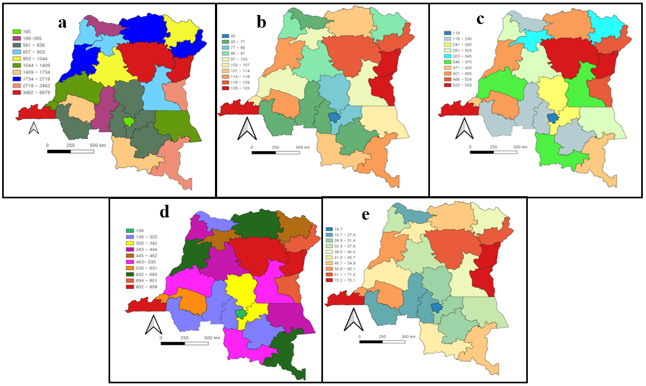
Figure 4 : Distribution of Medicinal Plants in DRC
(a) Number of occurrences per province; (b)Families richness per province; (c) Genera richness per Province; (d) Species richness per Province; (e) the area-adjusted species density per Province.
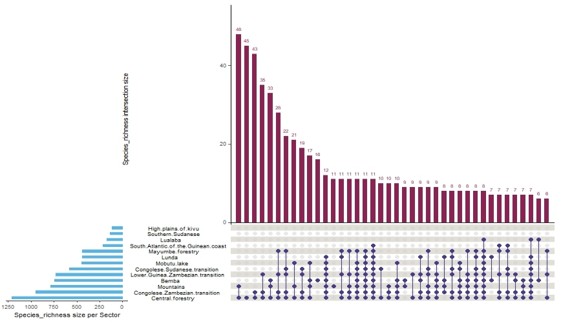
Figure 5 : Upset plots of intersections between the 13 phytogeographical sectors.
One species may have up to 10 sectors to be inventoried. Blue left histograms represent the richness of sectors, while the red histograms show the number of species.
17At the province level, the highest species richness was found in Tshopo (62.6% of the total), followed by Kongo-Central (60.5%), Nord-Kivu (59%), Sud-Kivu (57.8 %), and Ituri (57.3%) (Figure 4d, Table 2). These five provinces are the most diverse in Genera and family richness. the lowest diverse provinces are Kasai-Oriental, Kasai, and Nord-Ubangi with 136, 216, and 221 taxa each. If taking the province area size and calculating the area-adjusted species density (Figure 4e), the most diverse provinces are Kongo-Central and Nord-Kivu. Still, Kasai-Oriental, Kasai, and Nord-Ubangi are the lowest diverse provinces. Four percent of taxa are specific to one province (Table 3), 38.5 % of taxa are found in more than 10 provinces, 6.5% of taxa are found in more than twenty provinces, and only two species Craterispermum schweinfurthii and Oxyanthus unilocularis, native tree and shrub belonging to Rubiaceae, are found in all 26 provinces. Koffi et al., (2008) found that most species harvested within the entire study area are eco-tolerant.
Table 3 : Species specific to one province
|
Provinces |
species |
|
Bas-Uele |
Entada africana Guill. & Perr. |
|
Equateur |
Glycine max (L.) Merr., Microcos coriacea (Mast.) Burret, Piper nigrum L., Tragia volubilis L. |
|
Haut-Katanga |
Asparagus racemosus Willd., Combretum luxenii Exell, Gomphocarpus glaucophyllus Schltr., Khaya nyasica Stapf ex Baker f., Porphyrostemma chevalieri (O.Hoffm.) Hutch. & Dalziel, Sclerocroton schmitzii (J.L?onard) Kruijt & Roebers, Zanha africana (Radlk.) Exell, Zanthoxylum chalybeum Engl. |
|
Haut-Uele |
Cassia sieberiana DC. |
|
Ituri |
Secamone stuhlmannii K. Schum., Xylopia villosa Chipp |
|
Kongo-Central |
Acmella oleracea (L.) R.K.Jansen, Allanblackia staneriana Exell & Mendonça, Amphiblemma ciliatum Cogn., Ardisia devredii Taton, Bobgunnia fistuloides (Harms) J.H.Kirkbr. & Wiersema, Equilabium intrusum (Briq.) Mwany. & A.J.Paton, Eriosema vanderystii (De Wild.) Hauman, Millettia thonningii (Schumach. & Thonn.) Baker |
|
Kwilu |
Motandra lujae De Wild. & T.Durand |
|
Lualaba |
Raphia farinifera (Gaertn.) Hyl. |
|
Nord-Kivu |
Aloe dawei A.Berger, Hibiscus macranthus Hochst. ex A.Rich., Kalanchoe marmorata Baker, Leucas alluaudii Sacteux, Sclerosperma mannii H.Wendl. |
|
Nord-Ubangi |
Icacina oliviformis (Poir.) J.Raynal |
|
Sud-Kivu |
Coffea kivuensis Lebrun, Coleus autranii Briq., Ficus oreodryadum Mildbr. Haplopteris volkensii (Hieron.) E.H.Crane, Lepidium africanum (Burm.f.) DC., Marsilea minuta L., Pteris usambarensis Hieron., Sabicea arborea K.Schum. |
|
Sud-Ubangi |
Amorphophallus angolensis (Welw. ex Schott) N.E.Br. |
|
Tanganyika |
Aloe myriacantha (Haw.) Schult. & Schult.f. |
|
Tshopo |
Adenia venenata Forssk., Agave americana L., Annickia chlorantha (Oliv.) Setten & Maas, Ipomoea indica (Burm.) Merr., Ledebouria camerooniana (Baker) Speta, Loeseneriella clematoides (Loes.) R.Wilczek, Marsdenia latifolia (Benth.) K.Schum., Millettia duchesnei De Wild., Nephrolepis acutifolia (Desv.) Christ, Pavetta micrantha Bremek., Solanum melongena L., Triumfetta tomentosa Bojer ex Bouton |
18Phytogeographical sectors: Many medicinal plant species were observed in the central forestry sector, the Congolese-Zambezian transition sector, the Mountains sector, the Bemba sector, and the lower Guinea-Zambezian transition sector. The Mobutu and Lunda sectors had almost the same number of medicinal taxa, although the size of the former was only 44.6 % of the latter (Figure 5). these results were opposite to Koffi et al., (2008) who found that the Bemba sector was the most diverse sector for the Acanthaceae followed by central forestry and Mountains sectors. 89 taxa occur in more than 10 sectors, 82 taxa occur in one sector, of which 45 taxa occur in the central forestry sector. 48 species occur in only two sectors central forestry and mountain sectors.
Conclusion
19This study aimed to investigate the overall diversity of medicinal plants and their geographical distribution in the Democratic Republic of Congo (DRC) based on the administrative subdivision and phytogeographic sectors of Ndjele. The quantitative inventory of medicinal plants in the DRC revealed a total of 1443 species used to cure diseases. This plant diversity and composition show differences in distribution patterns: species diversity was higher in the Kongo-Central, Tshopo, and Nord-Kivu Provinces. In phytogeographic sectors, the Central forestry and Congolese-Zambezian transition sectors were the most diverse.
Conflict of interest
The authors declare that they have no know competing financial interests or personal relationships that could have appeared to influence the work reported in this paper.
Funding
This study was carried out with the support of ´R&D Program for Forest Science Technology (Project No. RS-2024-00404388 and FTIS 2022461E10-2324-0201) provided by Korea Forest Service (Korea Forestry Promotion Institute).
Bibliographie
Barthlott W., Mutke J., Rafiqpoor D., Kier G., Holfger K., 2005. Global Centers of Vascular Plant Diversity. Nova Acta Leopoldina NF, 92(342), 61–83.
Chen D., & Chen H.W., 2013. Using the Köppen classification to quantify climate variation and change: An example for 1901-2010. Environmental Development, 6(1), 69–79.
Dauby G., Zaiss R., Blach-Overgaard A., Catarino L., Damen T., Deblauwe V., Dessein S., Dransfield J., Droissart V., Duarte M. C., Engledow H., Fadeur G., Figueira R., Gereau R. E., Hardy O.J., Harris D.J., De Heij J., Janssens S., Klomberg Y., Ley A.C., Mackinder B.A., Meerts P., Jeike L.p., Sonké B., Sosef M.S.M., Tariq S., Piet S., Svenning J.C., Sepulche P., Xander B., Wieringa J.J., Couvreur, T.L.P., 2016. RAINBIO: A mega-database of tropical African vascular plants distributions. PhytoKeys, 74(1), 1–18.
Day J.J., Steell E.M., Vigliotta T.R., Withey L.A., Bills R., Friel J.P., Genner,M.J., Stiassny M. L.J., 2023. Exceptional levels of species discovery ameliorate inferences of the biogeography and diversification of an Afrotropical catfish family. Molecular Phylogenetics and Evolution, 182, 107754.
Mangambu M.J.D., Elmar R., Honorine N.H., Diggelen R., 2014. Analyse phytogeographique des pteridophytes d’afrique centrale: cas des etages des montagnes du parc National de Kahuzi-Biega. European Scientific Journal (Kocani), 10(8), 84.
Humphreys AM, Govaerts R, Ficinski SZ, Lughadha, E., Vorontsova, M.S., 2019. Global dataset shows geography and life form predict modern plant extinction and rediscovery. Nature Ecology and Evolution, 3(7), 1043–1047.
Iragi G.K., Rusaati B.I., Nfizi I.B., Masumbuko C.N., Gendusa P.A., Furaha A.M., Kang J.W., 2021. Ethnomedicinal study of plants used in the Uvira Territory (Democratic Republic of Congo). Forest Science and Technology, 17(3), 144–154.
Kalčíková G., 2020. Aquatic vascular plants – A forgotten piece of nature in microplastic research. Environmental Pollution, 262.
Katemo M, Mpiana PT, Mbala BM, Mihigo S.O., Ngbolua K.N., Tshibangu D.S.T., Koyange P.R., 2012. Ethnopharmacological survey of plants used against diabetes in Kisangani city (DR Congo). Journal of Ethnopharmacology, 144(1), 39–43.
Klopper R.R., Gautier L., Chatelain C., Smith G.F., Spichiger R., 2007. Floristics of the angiosperm flora of Sub-Saharan Africa: An analysis of the African plant checklist and database. Taxon, 56(1), 201–208.
Koffi K, Champluveir D, Neuba DF, De Canniere C., Dossahoua T., Lejoly J., Robbrecht E., Bogaert J., 2008. Analyse de la distribution spatiale des Acanthaceae en Afrique Centrale et comparaison avec les théories phytogéographiques de Robyns, White et Ndjele. Sciences & Nature, 5(2), 101–110.
Lejoly J., Ndjele M.B., Geerinck D., 2012. Catalogue-Flore des plantes vasculaires des districts de Kisangani et de la Tshopo (RD Congo). Taxonomania, 30, 1–308.
Masumbuko N.C., & Mutabana D.N., 2012. Plantes médicinales utilisées chez les Fuliiru d ’ Uvira ( Sud-Kivu,R.D.Congo). Annales Sci and Sci.Appl. U.O.B, 3, 82–90.
Ndayishimiye J, Sibomana S, Bigendako MJ, Lejoly J., Bogaert J., 2010. Diversité et distribution géographique des légumineuses de la flore du Burundi. Bulletin Scientifique de l’INECN, 8, 16–21.
Ndayishimiye J., 2012. Modelling the spatial distribution of endemic Caesalpinioideae in Central Africa, a contribution to the evaluation of actual protected areas in the region. International Journal of Biodiversity and Conservation, 4(3).
Ndjele M.B., 1988. Les Elements Phytogeographiques endemiques dans la flore vasculaire du Zaire. These de Doctorat, Université Libre de Bruxelles (Belgique).
Ntore S., Theeten F., Nkengurutse J., Ndayishimiye J., Sosef M.S.M., 2022. The vascular plant diversity of Burundi. Plant Ecology and Evolution, 155(3), 404–416.
Okito G.M., Matunguru J.M., Muzungu L., Duni P.L., Sindayihebura A., Sibomana C., Muderhwa V.N., Micha J.C., Ntakimazi G., 2020. Les poissons du bassin de la rivière Ulindi, à l’Est de la République Démocratique du Congo : revue de la littérature. International Journal of Biological and Chemical Sciences, 14(8), 2928–2940.
Qian H., 2001. Floristic Analysis of Vascular Plant Genera of North America North of Mexico : Spatial Patterning of Phytogeography. Journal of Biogeography, 28, 525–534.
Sosef, M.S.M., Dauby G., Blach O.A., van der Burgt X., Catarino L., Damen T., Deblauwe V., Dessein S., Dransfield J., Droissart V., Duarte,M. C. Engledow H., Fadeur G., Figueira,R., Gereau R.E., Hardy, O.J., Harris D.J., de Heij J., Janssens, S., Klomberg Y., Ley A.C., Mackinder B.A., Meerts P., Jeike L.p., Sonké B., Tariq S., Piet S., Svenning J.C., Sepulche P., Zaiss R., Wieringa J.J., Couvreur, T. L. P., 2017. Exploring the floristic diversity of tropical Africa. BMC Biology, 15(1), 1–23.
Tang Z., Wang Z., Zheng C., Fang J., 2006. Biodiversity in China ’ s mountains. Front Ecol Environ, 4(7), 347–352.
Tyukavina A., Hansen M.C., Potapov P., Parker D., Okpa C., Stehman S.V., Kommareddy I., Turubanova S., 2018. Congo Basin forest loss dominated by increasing smallholder clearing. Science Advances, 4(11).
Vorontsova M.S., Lowry P.P., Andriambololonera S.R., Wilmé, L., Rasolohery A., Govaerts R., Ficinski S.Z., Humphreys A.M., 2021. Inequality in plant diversity knowledge and unrecorded plant extinctions: An example from the grasses of Madagascar. Plants People Planet, 3(1), 45–60.
White LJT, Masudi EB, Ndongo JD, Matondo R., Soudan-N.A., Ngomanda A., Averti,I. S., Ewango C.E.N., Sonké B., Lewis S.L., 2021. Congo Basin rainforest - invest US$150 million in science. Nature, 598(7881), 411–414.
Zeb SA, Khan SM, Ahmad Z, Abdullah., 2021. Phytogeographic Elements and Vegetation along the River Panjkora - Classification and Ordination Studies from the Hindu Kush Mountains Range. Botanical Review, 87(4), 518–542.
Zhou Y.D., Qian H., Jin Y., Xiao K.Y., Yan X., Wang Q.F., 2023. Geographic patterns of taxonomic and phylogenetic β-diversity of aquatic angiosperms in China. Plant Diversity, 45(2), 177–184.
Pour citer cet article
