


- Accueil
- Volume 29 (2026)
- number 1-2
- The Romont tephrostratotype of the Rocourt Tephra, a widespread chronostratigraphic marker in western Europe


Visualisation(s): 374 (5 ULiège)
Téléchargement(s): 55 (2 ULiège)

The Romont tephrostratotype of the Rocourt Tephra, a widespread chronostratigraphic marker in western Europe

Résumé
Dans le stratotype des loess de Belgique, dans la carrière du Romont (Bassenge), des minéraux d’une retombée volcanique sont dispersés en fortes quantités sous forme de cryptotéphra dans un horizon humifère fossile qui remonte à la fin du Début Glaciaire weichsélien. L’analyse chimique des pyroxènes et amphiboles démontre que ces minéraux appartiennent au Téphra de Rocourt tel qu’il a été décrit dans quatre autres localités de référence. Le stratotype de ce téphra est maintenu dans cette carrière car c’est le seul site à haute valeur chronostratigraphique où il est encore accessible.
Abstract
In the loess stratotype of Belgium, in Romont quarry (Bassenge), minerals of a volcanic ash-fall deposit are dispersed in large quantities as a cryptotephra within a fossil humic horizon dating back to the end of the Weichselian Early Glacial. Chemical analysis of pyroxenes and amphiboles indicates that those minerals belong to the Rocourt Tephra as described in another four reference localities. The stratotype of this tephra is thus maintained in this quarry, as it is the only site of high chronostratigraphic value where it is still accessible.
Table des matières
1. Introduction
1The Rocourt Tephra (RT) is composed of explosively erupted ash-sized glass shards and of crystals, preserved in various host sediments in which they are too widely scattered and too fine (<350 µm) to be visible to the naked eye, i.e. it is a cryptotephra (Lowe, 2011). It was recognized by its concentration of volcanogenic mafic minerals (vmm) at about 40 sites in Belgium, western Germany, and south Netherlands (Fig. 1) (Juvigné et al., 2025). Volcanic glass shards have been detected at three sites in loess sections, Rocourt, Kesselt and Remicourt. They consist of blocky shards of hyaloclasts with a curviplanar surface and no vacuoles, which are typical of ash products from a major hydromagmatic eruptive event (Pouclet et al., 2008). Based on its stratigraphic position, particularly in loess sequences, the age of the RT is bracketed between 70 and 80 ka (Juvigné et al., 2025).
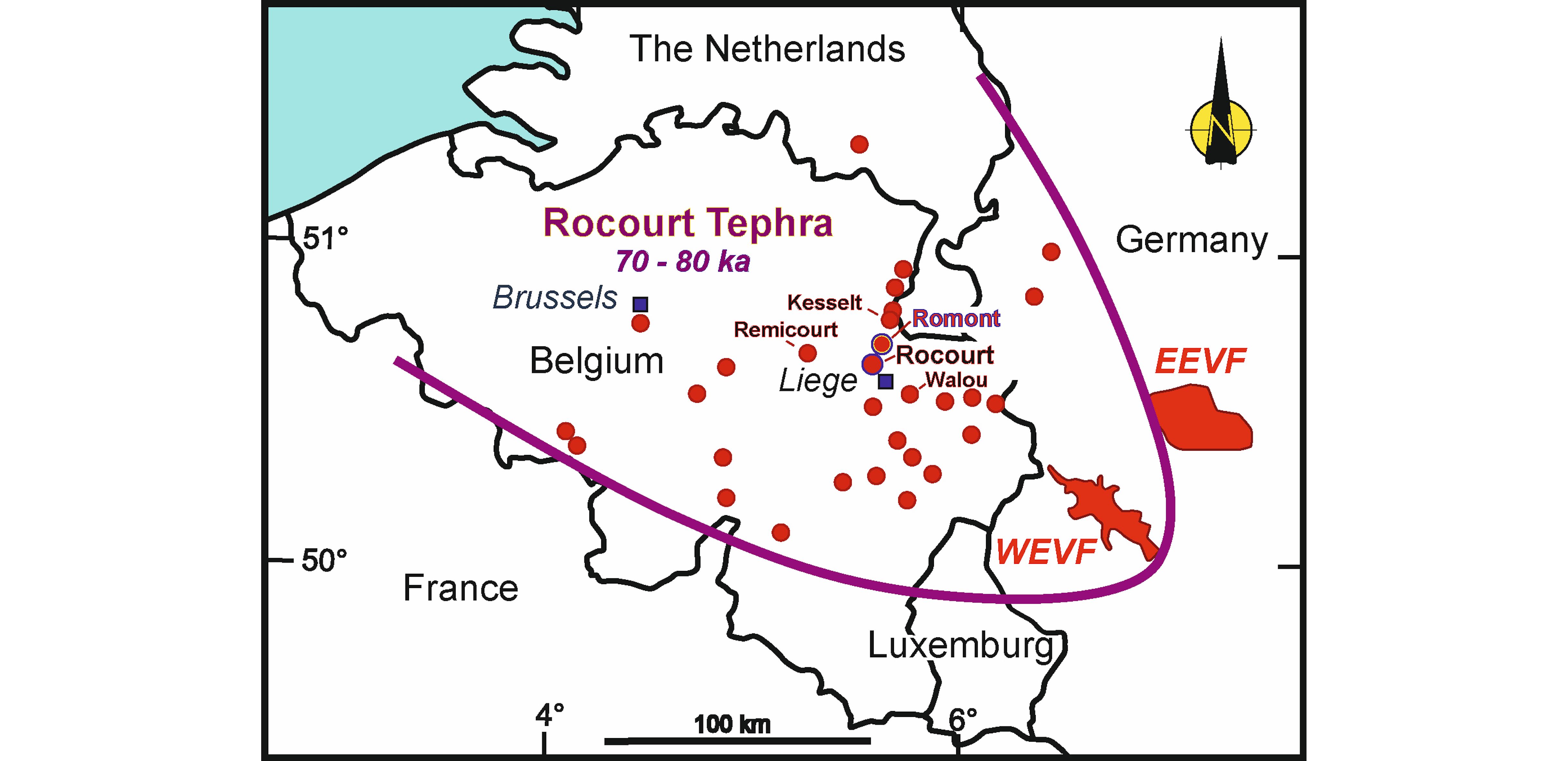
Figure 1. Geographical distribution of the Rocourt Tephra (RT), a widespread Quaternary stratigraphic marker in western Germany, Belgium, and south Netherlands (Juvigné et al., 2025). Red dots locate the tephra sites, the analysed sites being Rocourt, Remicourt, Romont (this work), Kesselt and Walou. West Eifel Volcanic Field (WEVF) where the RT emitting volcano should be located (Juvigné et al., 2024). Abbreviation: EEVF, East Eifel Volcanic Field.
2In the Romont quarry, a cryptotephra has been discovered in a loess section and it was assigned to the RT based on its position in the stratigraphic sequence and its mineral association including clinopyroxenes, orthopyroxenes and amphiboles (Juvigné et al., 2008). The association of the vmm was established at all above cited sites where enough minerals were collected, and variations in relative frequencies were pointed out, particularly in Romont where the frequencies of amphiboles (5.4%) and orthopyroxenes (3.8%) are exceptionally low versus clinopyroxenes (90.8%).
3The Romont quarry is located between Visé, Riemst and Maastricht on the left bank of the Geer valley (Fig. 2). Heidelberg Materials extracts Maastrichtian (Upper Cretaceous) chalk there. The overlying terrains consist of remnants of Lower and Middle Pleistocene Meuse terraces (Juvigné, 2024), themselves covered with loess. Outcrops of these terrains remain accessible around the perimeter of the quarry, and representative stratigraphic sequences are maintained by the operator for further scientific research. One of them has been defined as the stratotype for the loess sequence of Belgium (Haesaerts et al., 2011). Minerals likely to belong to the RT have been identified under the microscope in that section (Juvigné et al., 2008), which was therefore proposed to replace the previous tephrostratotype (Rocourt, backfilled in 2018). The uncertainties of this optical technique, however, require geochemical identification to confirm the site’s recognition as the tephrostratotype of the Rocourt Tephra.
4Minerals and glass shards in the RT have been analysed by electron probe microanalyser at several sites (Rocourt, Kesselt, Remicourt and Walou), and a unique fingerprint was developed for mineralogical compositions (Pouclet & Juvigné, 1993; Pouclet et al., 2008). At the Romont site, the relative frequency of the vmm association is different from that of the other sites (see above). The aim of this study is to analyse the minerals of the cryptotephra of Romont to confirm or refute its inclusion in the RT.
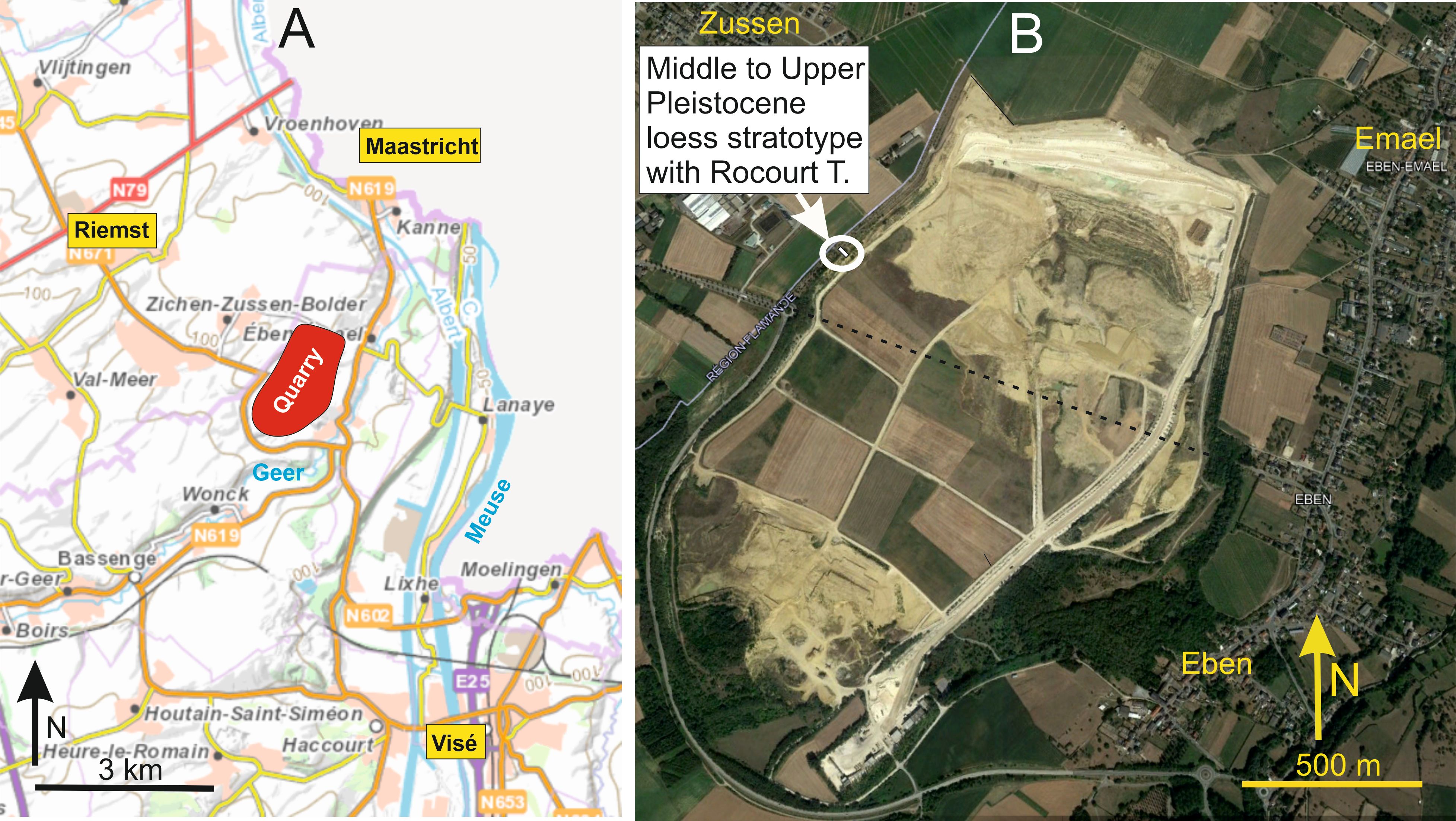
Figure 2. Romont quarry (Heidelberg Materials Romont & Löen) where the loess stratotype containing the Rocourt Tephra is preserved for further scientific research. A. Location of the quarry. B. Location of the loess stratotype including the Rocourt Tephra at the edge of the quarry (x = 239895; y = 165221 (Belgian Lambert 72; EPSG 31370)) (progress status of the quarry in 2024). Abbreviation: Rocourt T., Rocourt Tephra.
2. Analytical procedures
5The bulk sample was treated as follow: dispersion in boiling water, underwater sieving to isolate the useful fraction of 355/75 µm so that the loess (very rich in dense minerals) and the coarse fraction (without vmm) are eliminated, boiling in hydrogen peroxide to remove micro-particles of humus, and drying. Dense minerals (>2.8 g/cm3) were separated with bromoform by repeating agitation-decantation-harvest cycles, until no more harvest was obtained (3 to 5 cycles). Aliquots were examined for identification with a petrographical microscope. In the fraction thus isolated, the vmm constitute the essential part of the minerals. Feldspars (light fraction) have not been studied because it is not possible to make sure that the feldspars belong to the RT rather than to the Oligocene marine sediments, a mound of which is present close to the stratotype. The search for volcanic glasses using density gradient and magnetic separation (Frantz) was unsuccessful despite processing a significantly larger sample of bulk sediment.
6Minerals have been analysed with a Jeol JXA-iHP200F electron microprobe (15 kV, 10 nA) at Camparis, University Paris-Sorbonne, France. For this purpose, Kα lines were used. The chemical composition was determined using the following standards: garnet for Si, Ca, Fe and Mg, MnTiO3 for Ti and Mn, Cr2O3 for Cr. The counting times were 10 s for peaks and 10 s for background, with a 5-µm defocused beam. As standards, combinations of natural and synthetic minerals were used. Data corrections were made using the PAP method correction of Pouchou & Pichoir (1991).
3. The Romont loess reference sequence and the RT sampling
7The loess sequence in Romont has been first studied in the early 1990s (Juvigné, 1992). In 2007, an extension of the quarry gave access to a more complex sequence, encompassing most of the known litho- and pedostratigraphic markers of the Late Pleistocene loess deposits of Belgium and north-western Europe (Fig. 3), including the Rocourt Pedocomplex and the Humic Complex of Remicourt (HCR), covering the equivalent of the whole MIS 5 (Eemian interglacial and Weichselian Early Glacial; Haesaerts et al., 2016). In the HCR, the RT has been identified, and the location has been proposed as its new tephrostratotype (Juvigné et al., 2008). This thick succession of loess/palaeosols has then been described as the new stratotype for the loess cover from Middle Belgium, being defined as the Romont Group (Haesaerts et al., 2011).
8At the sampling location, most of the classic stratigraphic markers of the Late Pleistocene loess reference sequence are present (Haesaerts et al., 2016), i.e. from bottom to top (soil classification according to IUSS Working Group WRB, 2006): (1) the Rocourt Pedocomplex, including three pedogeneses recorded by Bt to Bth horizons (luvisols to “greyzem”; Antoine et al., 2016; Haesaerts at al., 2016; Schirmer, 2016; see also Vancampenhout et al., 2013a, 2013b) ; (2) the Humic Complex of Remicourt (HCR; see below); (3) a thick deposit of laminated colluvium; (4) the Malplaquet soil present as a cambic Bw horizon interpreted as belonging to a cambisol (“boreal brown soil” of Antoine et al., 2016); (5) the Kincamp soil, a humic A horizon probably developed under dense herb cover (Haesaerts et al., 2016); (5) the Nagelbeek tongued horizon (NTH) (Haesaerts et al., 1981); (6) the Brabantian loess (Fig. 3).
9The Hesbayan loess, situated below the NTH in other parts of the quarry, is strongly eroded in the sampled section. This situation explains the absence of the Eltville Tephra (Pouclet & Juvigné, 2009) in the studied sequence.
10The HCR is c. 50 cm thick and is composed of three units, which are, from bottom to top: a dark grey strongly bioturbated horizon (HCR-a); a humic loam (HCR-b); and finally, a dark grey horizon with oxidoreduction features (HCR-c) (Haesaerts et al., 1999, 2016). The bulk sample containing the cryptotephra was taken in April 2025 by one of us (EJ), in unit HCR-b within the stratotype. The sampled place was chosen after it was verified that it contains the highest concentration of vmm of the RT as shown in detail on a very close identical sequence by Juvigné et al. (2008). The decrease of frequency above and below the vmm peak is explained: (1) in the overlying laminated colluvium, by sedimentary reworking, evidenced by the fine laminations of the material eroding and reworking the HCR; (2) in the underlying horizon (HCR-a) by bioturbations, mainly by the action of burrowing animals. Thus, we can assume that the tephra fall-out took place after the formation of unit HCR-a but before the formation of unit HCR-c, a conclusion also reached in Remicourt, another site with detailed sampling and analyses of the RT (Juvigné et al., 2013).
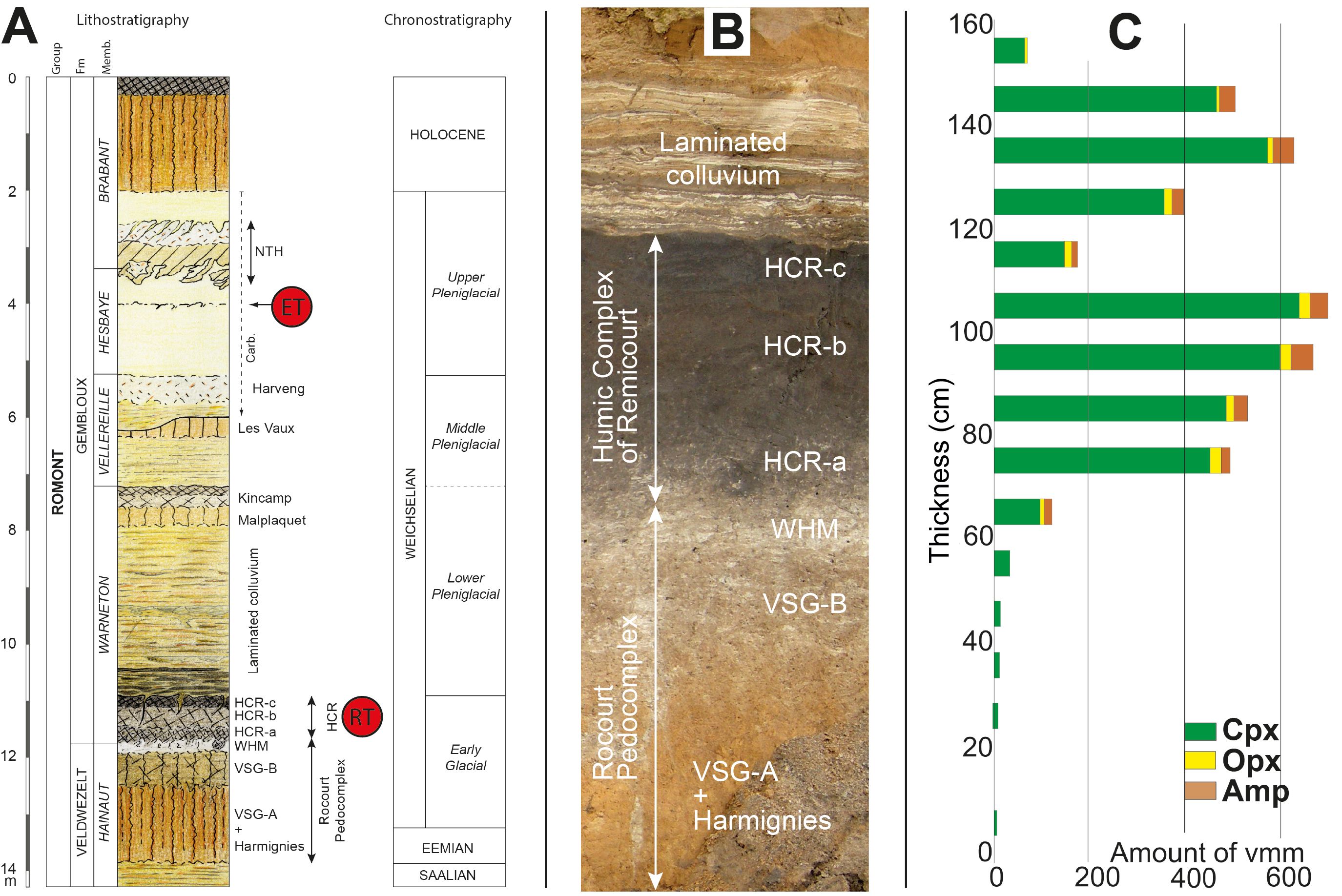
Figure 3. A. The synthetic loess sequence for the Late Pleistocene in the stratotype of the Romont quarry (Haesaerts et al., 2016). B. Section showing the stratigraphic context of the Rocourt cryptotephra (same vertical scale as C). C. Number of vmm per gram of the particle size fraction between 105 and 420 mm in the section studied by Juvigné et al. (2008) in the same quarry, where 15 samples were analysed above, within and below the layer of highest concentration. Abbreviations: Amp, amphiboles; Carb., carbonated sediment; Cpx, clinopyroxenes; ET, Eltville Tephra; Fm, Formation; HCR, Humic Complex of Remicourt; Memb., Member; NTH, Nagelbeek tongued horizon; Opx, orthopyroxenes; RT, Rocourt Tephra; WHM, Whitish horizon of Momalle; vmm, volcanogenic mafic minerals; VSG-A and VSG-B, Villers-Saint-Ghislain A and B soils.
4. Composition and significance of mafic minerals of the tephra
11The electron probe microanalysis data comprise 42 analyses of clinopyroxenes, 5 of orthopyroxenes and 5 of amphiboles.
12Clinopyroxenes show a broad compositional range from magnesian augite to fassaitic diopside (Fig. 4A). They are distributed in three groups (Fig. 4B–D) which are distinguishable by their contents in AlIV, AlVI, Ti, and Na in the formulae units (Table 1). The first group consists of few Mg-rich and Cr-rich diopside enriched in AlVI at the expense of AlIV with low Ti content. According to Juvigné et al. (2024), these clinopyroxenes are high pressure xenocrysts extracted from peridotitic and pyroxenitic mantle xenoliths. In fact, they have the same composition as the mantle clinopyroxenes of xenocrysts and nodules of lherzolite and pyroxene from the lavas of the Eifel volcanoes (Duda & Schmincke, 1985; Witt-Eickschen et al., 1998). The second group comprises megacrysts of clinopyroxenes discriminated by their relatively high AlVI, Ti and Na contents. They originated from early crystallization of primitive magma stored in deep crustal reservoirs. The third group includes phenocrysts distinguished by their high Ti and Ca contents with a fassaitic trend. They have crystallized at low pressure in the upper crust magma chamber of the emitting volcano. The same megacrysts and phenocrysts were analysed in the Eifel lavas and interpreted in the same way by Becker (1977), Duda & Schmincke (1978, 1985), Stosch & Lugmair (1986), Shaw & Eyzaguirre (2000) and Shaw (2024).
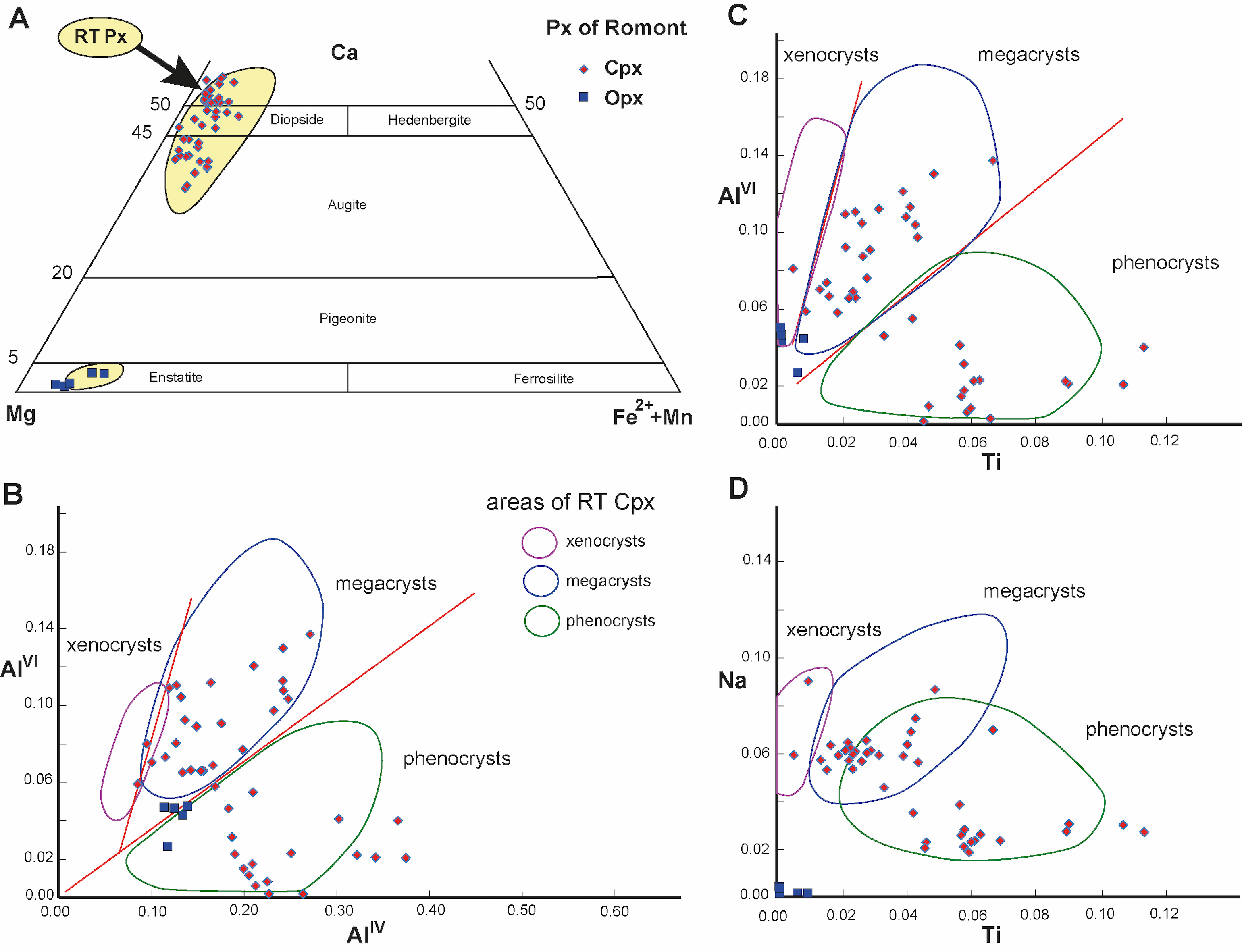 Figure 4. Comparison of the Romont pyroxenes (purple dots) with the compositional areas of the RT pyroxenes redrawn after Juvigné et al. (2024). A. Mg–Ca–Fe2+ + Mn diagram and the nomenclature of Morimoto (1988). B., C., and D. Covariation diagrams of AlVI, AlIV, Ti and Na of the formulae units. The pyroxenes are distributed in three groups: xenocrysts, megacrysts, and phenocrysts. Abbreviations: Cpx, clinopyroxenes; Px, pyroxenes; Opx, orthopyroxenes; RT, Rocourt Tephra.
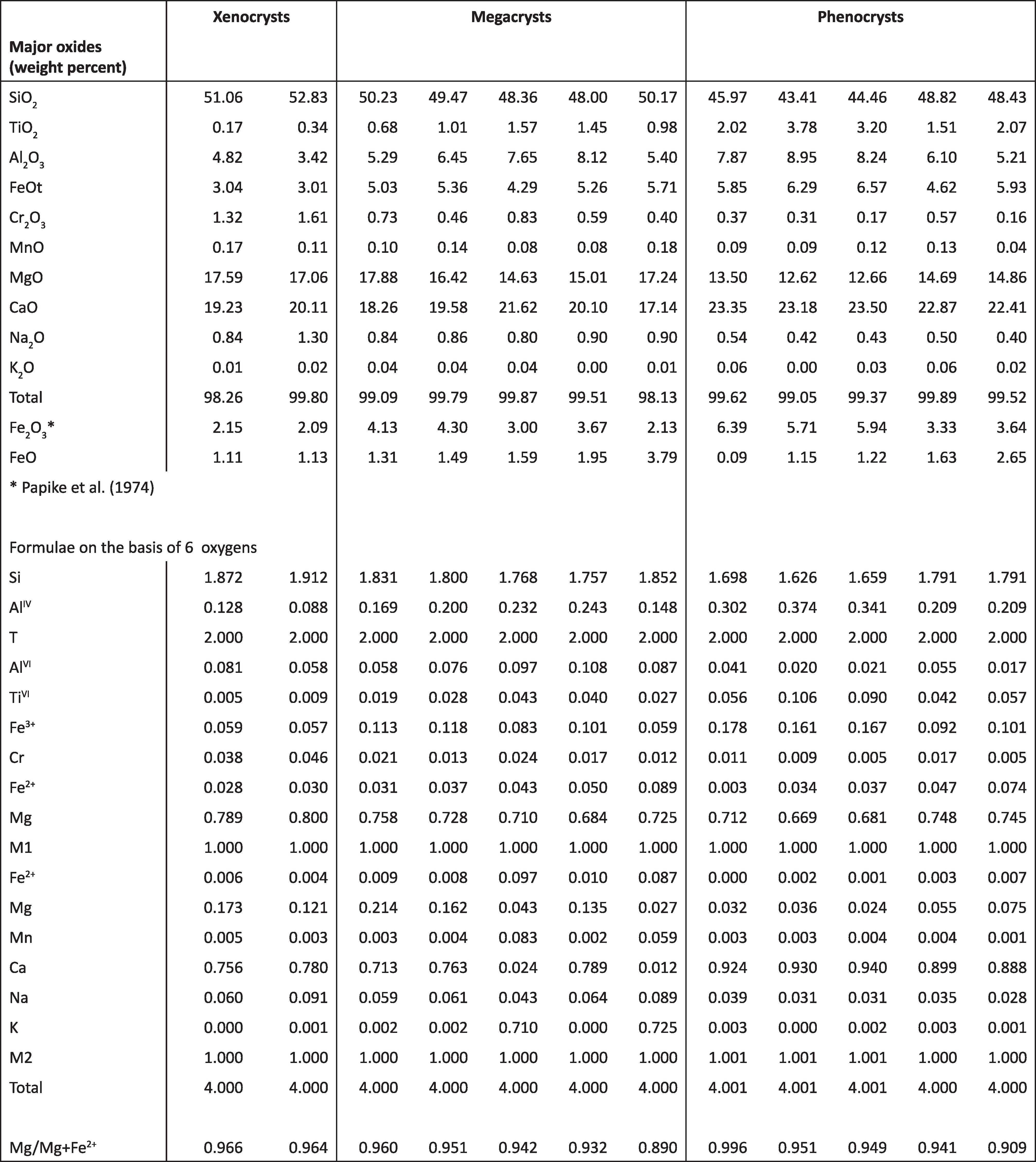
Table 1. Selected chemical analyses of clinopyroxenes.
13Orthopyroxenes are magnesian enstatite (Table 2). Like clinopyroxene xenocrysts, these orthopyroxenes have the composition of mantle pyroxenes from xenocrysts and nodules of lherzolite and pyroxenite analysed in lavas from the Eifel volcanoes (Duda & Schmincke, 1985; Witt-Eickschen et al., 1998).
14Amphiboles are determined as Ti-rich pargasite (Locock, 2014) (Table 3). Most of them are xenocrysts that originated from upper mantle to lower crust cumulates and veins of amphibole-bearing pyroxenites according to the data of Witt-Eickschen et al. (1998) and Shaw & Eyzaguirre (2000) on xenolithic amphiboles of the Eifel volcanoes (Fig. 5, areas Acx and Hvp). One may be a lava megacryst or phenocryst according to the data of Duda & Schmincke (1978, 1985) and Wörner & Schmincke (1984).
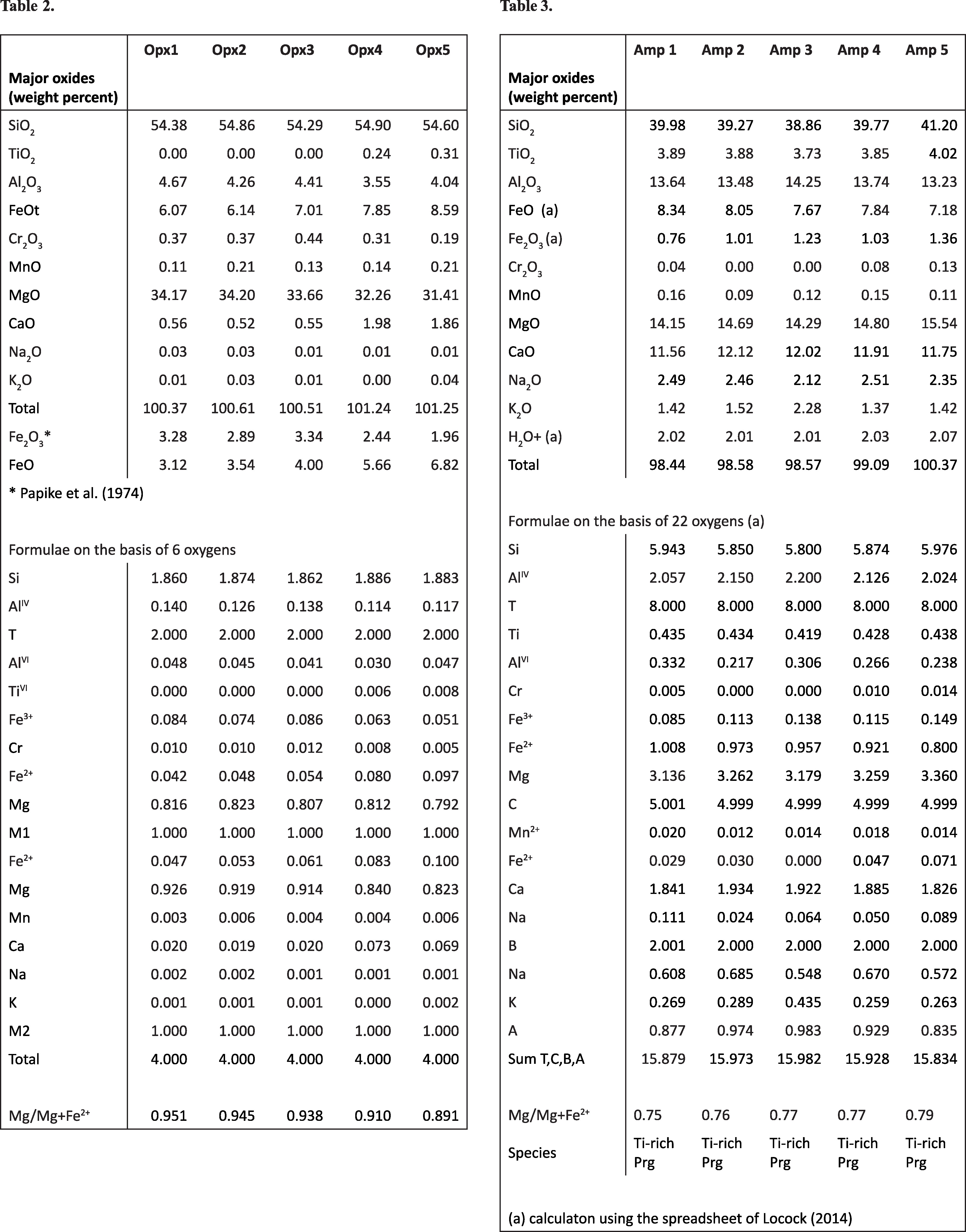
Table 2. Results of chemical analyses of orthopyroxenes. Abbreviation: Opx, orthopyroxenes.
Table 3. Results of chemical analyses of amphiboles. Abbreviations: Amp, amphiboles, Prg, pargasite.
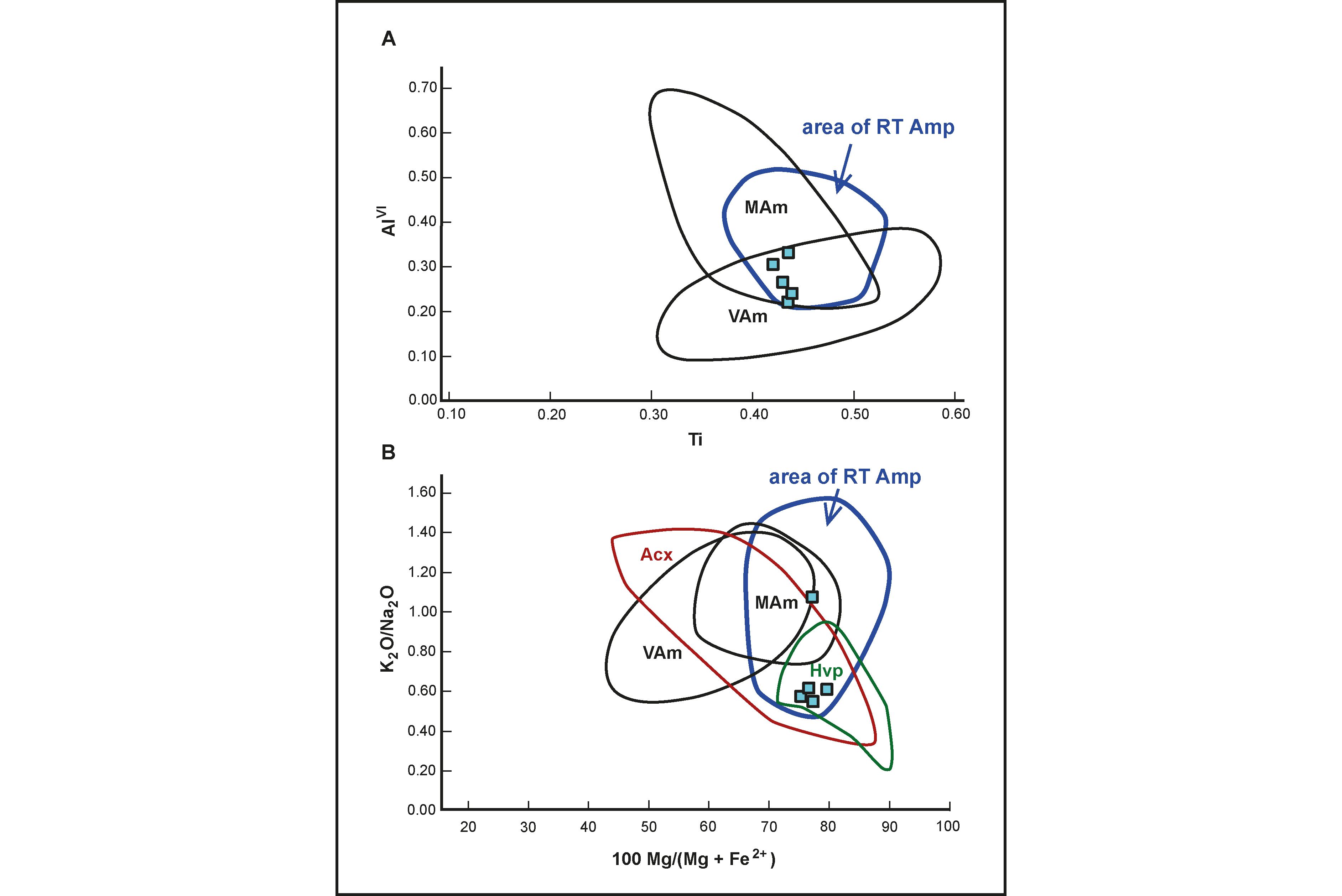
Figure 5. Ti versus AlVI (A) and 100Mg/(Mg+Fe2+) versus K2O/Na2O (B) diagrams of the amphiboles. Area of the RT amphiboles after Pouclet et al. (2008). MAmp, megacrystic amphiboles and VAmp, amphibole phenocrysts of the Eifel lavas; Acx and Hvp, amphiboles from pyroxenite xenoliths and from veins in peridotite, respectively. Areas redrawn after the data of Duda & Schmincke (1978), Wörner & Schmincke (1984), Witt-Eickschen et al. (1998) and Shaw & Eyzaguirre (2000). Abbreviations: Amp, amphiboles; RT, Rocourt Tephra.
5. Discussion and conclusion
15The Rocourt Tephra, a cryptotephra including clinopyroxenes, orthopyroxenes and amphiboles, has been described in the Humic Complex of Remicourt in several sites on the Belgian loess belt since 1954 (Gullentops, 1954; see also Haesaerts et al., 2016, and Juvigné et al., 2025). Electron probe analyses performed on mafic minerals from three of these loess sites (Rocourt, Kesselt and Remicourt) confirmed its unique geochemical fingerprint (Pouclet et al., 2008).
16The same mineralogical association found in the Humic Complex of Remicourt in the Romont quarry and studied under the polarising microscope (Juvigné et al., 2008) was analysed through microprobe. The results presented in this paper show that the association of the different pyroxenes is strictly similar to those obtained on minerals from these three loess sites (Rocourt, Kesselt and Remicourt) as well as on the cryptotephra from Walou Cave (Pouclet & Juvigné, 1993; Pouclet et al., 2008), which has a very comparable stratigraphic position (Pirson, 2011; Pirson & Juvigné, 2011). Amphiboles from Romont are also similar to those analysed in these four sites. While we have not found any spinel nor glass, based on its stratigraphic location and the chemical signature of the pyroxenes, there is no doubt that the Romont cryptotephra is a fallout deposit of the Rocourt Tephra. The loess stratotype preserved in the Romont site can therefore be confirmed as the new tephrostratotype of the Rocourt Tephra. Its stratigraphic position inside the Humic Complex of Remicourt fits with the other occurrences of the tephra in the loess sequences that form the type region.
Acknowledgements
17C. Boukari (GEOPS, Université Paris-Saclay, France) prepared polished samples, N. Rividi and W. Bai (Camparis, Université Paris-Sorbonne, France) helped for microprobe analyses. J. Vander Auwera (Department of Geology, University of Liège) made available to us the magnetic separator (Frantz) of her laboratory. Those colleagues are warmly acknowledged for their contribution. Constructive review and comments of the manuscript by David J. Lowe (University of Waikato, New Zealand), Pascal Bertran (Inrap / PACEA, Université de Bordeaux, France) and the editor, Annick Anceau (University of Liège), improved the manuscript. All those colleagues are warmly acknowledged for their contribution. We also would like to thank the Romont quarry staff (Heidelberg Materials), and especially Benoît Gastout, Philippe Delporte, Frédéric Deleuze, Pierre-Yves Lenoir and Jean-Marie Cloes, for granting SP and EJ access to the quarry.
Author contributions
18EJ, AP and SP designed the study. EJ performed the sample collection. JMB analysed the samples. EJ and AP wrote the introduction and prepared Figure 1. SP and EJ wrote the stratigraphy and data sampling and prepared Figures 2 and 3. AP wrote the analytical chapter with part of the discussion and prepared Figures 4 and 5 and all the tables. All authors reviewed the manuscript.
Data availability
19All chemical analyses of the clinopyroxenes are available in the Supplementary material.
References
20Antoine, P., Coutard, S., Guerin, G., Deschodt, L., Goval, E., Locht, J.-L. & Paris, C., 2016. Upper Pleistocene loess-palaeosol records from Northern France in the European context: Environmental background and dating of the Middle Palaeolithic. Quaternary International, 411, 4–24. https://doi.org/10.1016/j.quaint.2015.11.036
21Becker, H.J., 1977. Pyroxenites and hornblendites from the maar-type volcanoes of the Westeifel, Federal Republic of Germany. Contributions to Mineralogy and Petrology, 65, 45–52. https://doi.org/10.1007/BF00373569
22Duda, A. & Schmincke, H.-U., 1978. Quaternary basanites, melilite nephelinites and tephrites from the Laacher See area (Germany). Neues Jahrbuch für Mineralogie Abhandlungen, 132, 1–33.
23Duda, A. & Schmincke, H.-U., 1985. Polybaric differentiation of alkali basaltic magmas: evidence from green-core clinopyroxenes (Eifel, FRG). Contribution to Mineralogy and Petrology, 91, 340–353.
24Gullentops, F., 1954. Contributions à la chronologie du Pléistocène et des formes du relief en Belgique. Mémoires de l’Institut géologique de l’Université de Louvain, 18, 125–252.
25Haesaerts, P., Juvigné, E., Kuyl, O., Mucher, H. & Roebroeks, W., 1981. Compte rendu de l’excursion du 13 juin 1981, en Hesbaye et au Limbourg néerlandais, consacrée à la chronostratigraphie des loess du Pléistocène supérieur. Annales de la Société géologique de Belgique, 104, 223–240.
26Haesaerts, P., Mestdagh, H. & Bosquet, D., 1999. The sequence of Remicourt (Hesbaye, Belgium): new insights on the pedo- and chronostratigraphy of the Rocourt Soil. Geologica Belgica, 2(1-2), 5–27. https://doi.org/10.20341/gb.2014.008
27Haesaerts, P., Pirson, S. & Meijs, E., 2011. [Quaternary lithostratigraphy, aeolian sediments:] Romont Group and related formations and members. National Commission for Stratigraphy Belgium, Subcommission Quaternary. https://ncs.naturalsciences.be/lithostratigraphy/Romont-Group, accessed 18/02/2026.
28Haesaerts, P., Damblon, F., Gerasimenko, N., Spagna, P. & Pirson, S., 2016. The Late Pleistocene loess-palaeosol sequence of Middle Belgium. Quaternary International, 411, 25–43. https://doi.org/10.1016/j.quaint.2016.02.012
29IUSS Working Group WRB, 2006. World Reference Base for Soil Resources 2006. Food and Agriculture Organization of the United Nations, Rome, World Soil Resources Reports, 103, 128 p.
30Juvigné, E., 1992. Les formations cénozoïques de la carrière C.B.R. du Romont (Eben/ Bassenge, Belgique). Annales de la Société géologique de Belgique, 115, 159–165.
31Juvigné, E., Tallier, E., Haesaerts, P. & Pirson, S., 2008. Un nouveau stratotype du Téphra de Rocourt dans la carrière de Romont (Eben/Bassenge, Belgique). Quaternaire, 19(2), 133–139. https://doi.org/10.4000/quaternaire.2742
32Juvigné, E., Pouclet, A., Haesaerts, P., Bosquet, D. & Pirson, S., 2013. Le Téphra de Rocourt dans le site paléolithique moyen de Remicourt (Province de Liège, Belgique). Quaternaire, 24(3), 279–291. https://doi.org/10.4000/quaternaire.6738
33Juvigné, E., Pouclet, A., Pirson, S. & Bardintzeff, J.-M., 2024. Reappraisal of the volcanic source of the Rocourt Tephra, a widespread chronostratigraphic marker aged ca. 78–80 ka in Western Europe. Bulletin of Volcanology, 86(7), 66. https://doi.org/10.1007/s00445-024-01756-2
34Juvigné, E., Pouclet, A., Pirson, S. & Bardintzeff, J.-M., 2025. Further considerations of the provenance of the Rocourt Tephra: volcanic mafic minerals and age. Bulletin de la Société royale des Sciences de Liège, 94(1), 1–21. https://doi.org/10.25518/0037-9565.12500
35Locock, A.J., 2014. An Excel spreadsheet to classify chemical analyses of amphiboles following the IMA 2012 recommendations. Computers & Geosciences, 62, 1–11. https://doi.org/10.1016/j.cageo.2013.09.011
36Lowe, D.J., 2011. Tephrochronology and its application: a review. Quaternary Geochronology, 6, 107–153. https://doi.org/10.1016/j.quageo.2010.08.003
37Morimoto, N., 1988. Nomenclature of pyroxenes. Mineralogical Magazine, 52, 535–550. https://doi.org/10.1180/minmag.1988.052.367.15
38Papike, J.J., Cameron, K.L. & Baldwin, K., 1974. Amphiboles and pyroxenes: characterization of other than quadrilateral components and estimates of ferric iron from microprobe data. Geological Society of America, Abstracts with Programs, 6, 1053–1054.
39Pirson, S., 2011. Contextes paléoenvironnemental et chronostratigraphique du remplissage de la grotte Walou : apport de la géologie et comparaison avec les autres disciplines. In Pirson, S., Draily, C. & Toussaint, M. (eds), La grotte Walou à Trooz (Belgique). Fouilles de 1996 à 2004. Volume 1. Les sciences de la terre. Service public de Wallonie, Namur, Etudes et documents – Archéologie, 20, 170–201.
40Pirson, S. & Juvigné, E., 2011. Bilan sur l’étude des téphras à la grotte Walou. In Pirson, S., Draily, C. & Toussaint, M. (eds), La grotte Walou à Trooz (Belgique). Fouilles de 1996 à 2004. Volume 1. Les sciences de la terre. Namur, Service public de Wallonie, Namur, Etudes et documents – Archéologie, 20, 134–167.
41Pouchou, J.-L & Pichoir, F., 1991. Quantitative analysis of homogeneous or stratified microvolumes applying the model “PAP”. In Heinrich, K.F.J. & Newbury, D.E. (eds), Electron Probe Quantification. Plenum Press, New York, 31–75. https://doi.org/10.1007/978-1-4899-2617-3_4
42Pouclet, A. & Juvigné, E., 1993. La Téphra de Rocourt en Belgique : recherche de son origine d’après la composition des pyroxènes. Annales de la Société géologique de Belgique, 116(1), 137–145.
43Pouclet, A. & Juvigné, E., 2009. The Eltville tephra, a late Pleistocene widespread tephra layer in Germany, Belgium and The Netherlands; symptomatic compositions of the minerals. Geologica Belgica, 12(1-2), 93–103.
44Pouclet, A., Juvigné, E. & Pirson, S., 2008.The Rocourt Tephra, a widespread 90–74 ka stratigraphic marker in Belgium. Quaternary Research, 70, 105–120. https://doi.org/10.1016/j.yqres.2008.03.010
45Schirmer, W., 2016. Late Pleistocene loess of the Lower Rhine. Quaternary International, 411, 44–61. https://doi.org/10.1016/j.quaint.2016.01.034
46Shaw, C.S.J., 2024. Clinopyroxenite xenoliths record magma transport and crystallization in the middle and upper crust: A case study from the Rockeskyllerkopf volcanic complex, West Eifel, Germany. Journal of Petrology, 65, egae035. https://doi.org/10.1093/petrology/egae035
47Shaw, C.S.J. & Eyzaguirre, J., 2000. Origin of megacrysts in the mafic alkaline lavas of the West Eifel volcanic field, Germany. Lithos, 50, 75–95. https://doi.org/10.1016/S0024-4937(99)00048-1
48Stosch, H.-G. & Lugmair, G.W., 1986. Trace element and Sr and Nd isotope geochemistry of peridotite xenoliths from the Eifel (West Germany) and their bearing on the evolution of the subcontinental lithosphere. Earth and Planetary Science Letters, 80, 281–298. https://doi.org/10.1016/0012-821X(86)90111-1
49Vancampenhout, K., Langohr, R., Slaets, J., Buurman, P., Swennen, R. & Deckers, J., 2013a. Paleo-pedological record of the Rocourt Pedosequence at Veldwezelt–Hezerwater (Belgian Pleistocene loess belt): Part 1 — Evolution of the parent material. Catena, 107, 118–129. https://doi.org/10.1016/j.catena.2013.02.005
50Vancampenhout, K., Langohr, R., Slaets, J., Buurman, P., Swennen, R. & Deckers, J., 2013b. Paleo-pedological record of the Rocourt pedosequence at Veldwezelt–Hezerwater (Belgian Pleistocene loess belt): Part 2 — Soil formation. Catena, 110, 8–23. https://doi.org/10.1016/j.catena.2013.06.020
51Witt-Eickschen, G., Kaminsky, W., Kramm, U. & Harte, B., 1998. The nature of young vein metasomatism in the lithosphere of the West Eifel (Germany): Geochemical and isotopic constraints from composite mantle xenoliths from the Meerfelder Maar. Journal of Petrology, 39, 155–185. https://doi.org/10.1093/petroj/39.1.155
52Wörner, G. & Schmincke, H.-U., 1984. Mineralogical and chemical zonation of the Laacher See tephra sequence (East Eifel, W. Germany). Journal of Petrology, 25, 805–835. https://doi.org/10.1093/petrology/25.4.805
53Manuscript received 05.01.2026, accepted in revised form 20.02.2026, available online 14.06.2026.
