


- Startpagina tijdschrift
- Volume 29 (2026)
- number 1-2
- Experimental assessment of galena oxidation using XPS depth profiling: implications for weathering processes and supergene Pb ore formation


Weergave(s): 33 (12 ULiège)
Download(s): 6 (1 ULiège)

Experimental assessment of galena oxidation using XPS depth profiling: implications for weathering processes and supergene Pb ore formation

Abstract
This study investigates the oxidation behavior of galena (PbS) using X-ray Photoelectron Spectroscopy (XPS) depth profiling. Samples of galena from three distinct geological contexts (Mississippi Valley-Type Vedrin and Engis in Belgium, and vein-type Kipushi deposit in Democratic Republic of Congo) were exposed to continuous water drip experiment for up to 5000 hours to simulate weathering processes. Results reveal that galena oxidation proceeds through the formation of thin layers of lead sulfates (anglesite), oxides, and minor carbonates, with occasional intermediate sulfide species. Oxidation rates, calculated from depth profiles, range from 0.6 to 0.9 µm.yr-1, significantly slower than those previously observed for pyrite under similar conditions (4.3 ± 0.6 µm.yr-1). Trace element substitutions show negligible influence on oxidation kinetics, whereas inclusions of other sulfides (e.g. pyrite, chalcopyrite) may accelerate the oxidation process. These findings provide quantitative constraints for extrapolating weathering rates in geological profiles and highlight the role of mineral associations, host-rock buffering, and fluid chemistry in supergene ore formation and environmental risk assessment.
Inhoudstafel
1. Introduction
1Mining operations, including ore extraction and metal processing, generate substantial quantities of sulfide-rich waste materials. These residues are highly reactive and, upon exposure to atmospheric conditions, undergo weathering and leaching processes that introduce acidity and heavy/toxic metal(loid)s (acid mine drainage (AMD); e.g. As, Cd, Co, Cu, Hg, Ni, Pb, Zn, Sb, and Se) into surrounding groundwater and surface water systems (Nordstrom & Alpers, 1999; Nordstrom, 2011; Bao et al., 2021). Subsequent geochemical processes, such as neutralization processes, precipitation of secondary phases, and sorption/desorption of metals at mineral surfaces (Schlegel et al., 1999), regulate contaminant mobility but often fail to prevent significant degradation of water quality. Galena (PbS) oxidation can be described by several chemical reactions depending on the oxidation conditions (Rimstidt et al., 1993; Heidel & Tichomirowa, 2011; Andersen et al., 2017): (i) aqueous oxidation of galena (simplified) (Eq. 1), (ii) oxidation in acidic conditions with the presence of ferric iron (Eq. 2), (iii) in alkaline conditions with oxygen (Eq. 3).
|
PbS + 2 H2O + O2 → Pb2+ + SO42- + 4 H+ |
(1) |
|
PbS + 8 Fe3+ + 4 H2O → 8 H+ + SO42- + Pb2+ + 8 Fe2+ |
(2) |
|
PbS + 2 O2 + 3 OH- → HPbO2- + SO42- + H2O |
(3) |
2Galena is the most common and important source of lead that frequently occurs in relation to hydrothermal systems and accounts for approximately half of global lead production, with the remainder derived from recycling (Blowes et al., 2014). This mineral is typically associated with other sulfide minerals such as sphalerite ((Zn,Fe)S), chalcopyrite (CuFeS2), and pyrite (FeS2), forming the main part of polymetallic sulfide ores (e.g. Bouabdellah et al., 2012; Verhaert et al., 2017; Poot et al., 2024a). These deposits are significant sources of lead and often contain valuable co-products like silver, antimony or copper, which can substitute within the galena structure (Renock & Becker, 2011; Nassar et al., 2015). Its widespread presence in sulfide deposits is due to the geochemical affinity of lead for sulfur under reducing conditions, making galena a stable phase during hypogene ore formation. Common geological settings include Mississippi Valley-Type (MVT) deposits, SEDEX (sedimentary exhalative) deposits, and epithermal veins, where galena crystallizes from the combination of S-rich and Pb-rich solutions (Sangameshwar & Barnes, 1983; Leach et al., 2006, 2010; Boni & Mondillo, 2015).
3Previous studies on galena weathering have primarily focused on (sub)surface processes (e.g. Buckley & Woods, 1984; Becker & Hochella, 1996; Chernyshova & Andreev, 1997; Nowak & Laajalehto, 2000; Acero et al., 2007; Hampton et al., 2011; Lara et al., 2011; Liu et al., 2018; Bao et al., 2021; Wang et al., 2021) especially for acid mine drainage (AMD) impact. As for pyrite, most of these models use the specific area of the galena and therefore the surface reaction rate (mol.m-2.s-1) calculated by dividing the amount of change in reactants or products by the total surface area of galena.
4In this study, we aim to study the weathering rate of galena samples originating from three distinct deposits and geological contexts: (i) Engis (Liège, Belgium), (ii) Vedrin (Namur, Belgium), and (iii) Kipushi (Democratic Republic of Congo) (Fig. 1). The experimental findings will be extrapolated to determine the evolution of galena within geological weathering profiles, with rates governed by multiple factors discussed herein, such as trace elements, mineral inclusions, crystal structure or formation processes. Furthermore, a comparative analysis will be conducted with other sulfide minerals occurring in polymetallic deposits, and on their interactions during the weathering process.
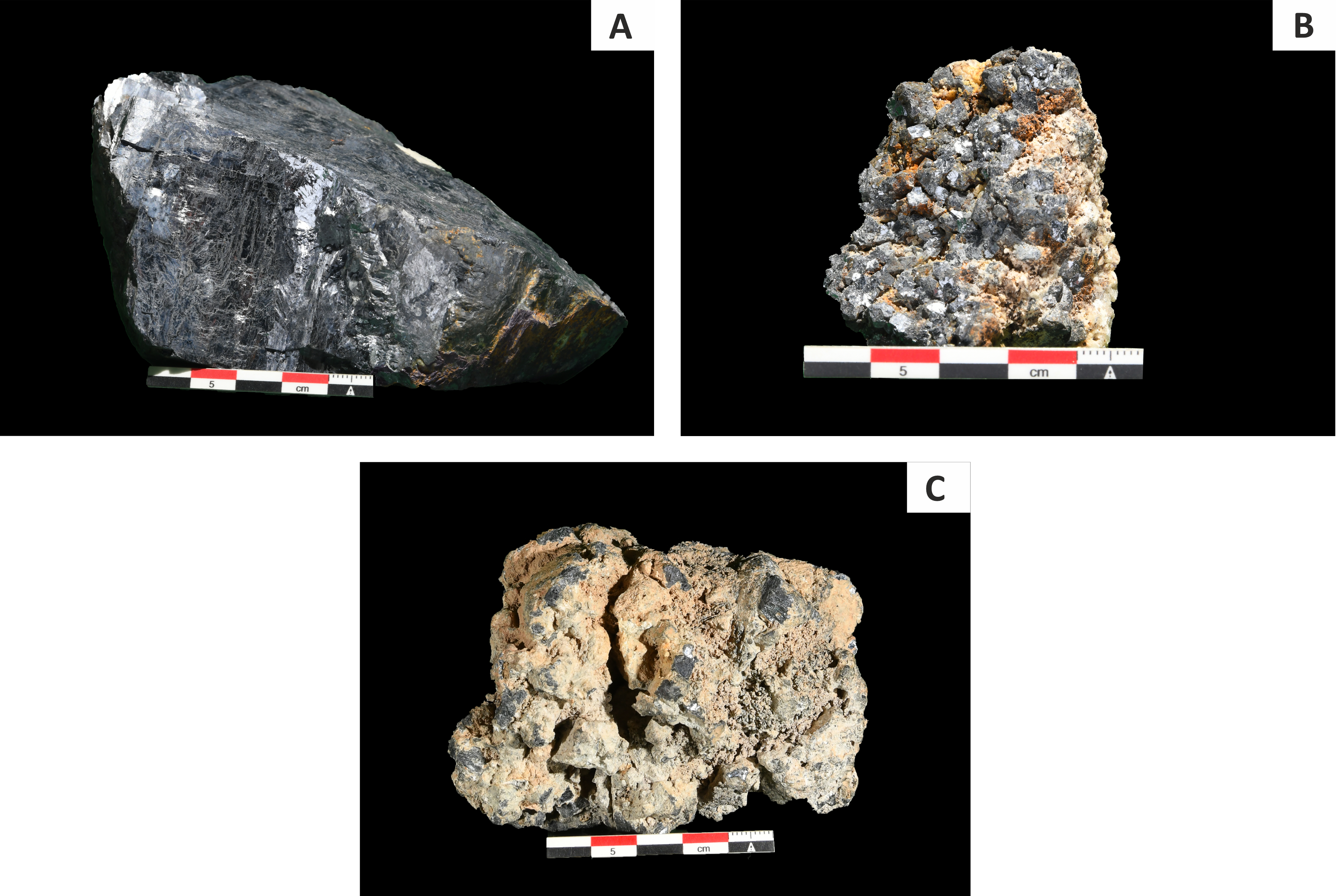
Figure 1. Representative bulk galena specimens, used in this study before isolation and fresh fracturing: A. Vedrin, B. Engis, and C. Kipushi. Scale bars: 5 cm.
2. Geological context
5The geological context of galena emplacement varies depending on the studied site. In Belgium (Engis, Vedrin), most Pb-Zn(-Ba) deposits are located in Devonian and Carboniferous rocks (sandstones, shales and limestones) with exploitation in more than 200 localities along the Pb-Zn-(Ba) district of the Brabant Parautochthon and Vesdre Area, Pb-Zn(-Ba) district of the Dinant Synclinorium, and the Pb-Zn district of the Ardenne Anticlinorium (Dejonghe, 1985, 1998; Fig. 2).
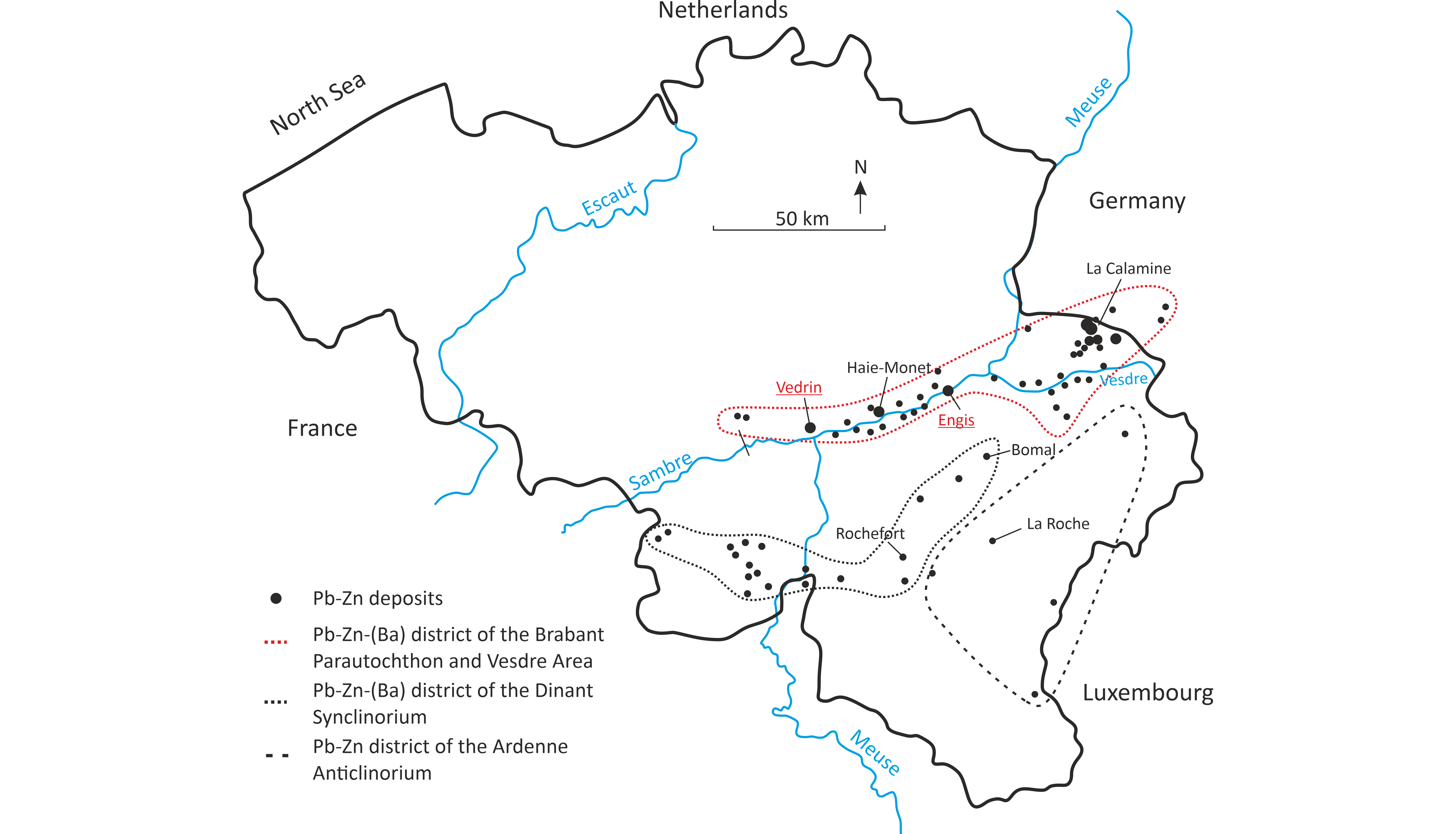
Figure 2. Main Pb-Zn ore deposits in the different Pb-Zn(-Ba) districts in Belgium (modified after Dejonghe, 1985).
6In Engis, galena mineralization is hosted by post-Variscan fractures and faults developed along two principal structural trends (N-S and NNW-SSW) (Bartholomé & Gérard, 1976). Probably during the Jurassic period (Schneider et al., 1999), sulfide minerals, particularly galena and sphalerite which often contain inclusions of each other, crystallized into these fractures and faults through low-temperature (50‒200 °C) hydrothermal fluids with salinity of approximately 20 wt.% at relatively shallow depths (Heijlen et al., 2001; Dejonghe, 2009). Concurrently, sulfide clusters developed in paleokarsts resulting from limestone dissolution during the Carboniferous (Bartholomé & Gérard 1976; Dejonghe 2009).
7Galena from the Vedrin mine also formed from fluids broadly like those responsible for mineralization at Engis, occurring within Famennian sandstones and at the contact with dolomite. This deposit is sometimes classified as hydrothermal of low temperature (MVT, ~110 °C; ; Heijlen et al., 2001; Dejonghe, 2009) and/or “telethermal,” representing the extreme endmember of hydrothermal mineralization processes (Evrard, 1943). The Vedrin mine was the latest active sulfide mine in Belgium, which was closed in 1945 (Dejonghe, 1985).
8Galena from the Kipushi deposit is hosted within Precambrian sedimentary rocks composed primarily of dolomites and dolomitic shales (Van Wilderode et al., 2013). Sulfide mineralization is considered to be derived from saline mineralizing fluids with a salinity of 30‒43 wt.% originating from formation waters or metamorphic fluids after the Pan-African orogeny (Heijlen et al., 2008) with an age of approximatively 450 Ma (Schneider et al., 2007). These fluids are typically with higher temperature (290‒380 °C) and deeper formation compared to Engis and Vedrin. The saline mineralizing fluids, enriched in Ba, Zn, Fe, and Pb, likely leached metals from upper continental crust rocks during their ascent, as indicated by lead isotope signatures, suggesting a contribution from felsic basement sources (Schneider et al., 2007; Heijlen et al., 2008).
3. Material and methods
9The samples used in this study come from the Vedrin and Engis former mines (Belgium; Fig. 1A‒B), and the Kipushi deposit (Democratic Republic of Congo; Fig. 1C). Fresh fractures were created along cleavage planes on selected samples of each site to obtain unoxidized fragments of similar size. Prior to initiating the oxidation simulation, the surfaces of these samples were analyzed by X-ray Photoelectron Spectroscopy (XPS) to ensure the absence of any oxidation traces and verify that there are no differences between the samples from the three sites (e.g. same surface roughness).
10Experimental setup followed the method described in Poot et al. (2024b) with lab conditions between 19 and 21 °C and humidity between 50 and 55%. The experiment conducted by Poot et al. (2024b) demonstrated that oxidation of pyrite samples under ambient air and in distilled water is negligible compared to exposure under drip conditions. Consequently, here we focus on exposure to a continuous water drip (distilled water with a consistent composition, pH slightly below neutral due to dissolved CO2) simulating a flow (0.1 ml/min) using a Masterflex® peristaltic IPC-N pump with 12 Ismaprene tubing channels (0.25 mm diameter). The resulting oxidation will therefore represent a maximum oxidation rate, as conditions in a natural system are not subject to continuous leaching.
11Oxidation was examined at multiple time intervals, ranging from t = 0 to 5000 hours. For each specimen, at least two measurements were performed on the surface and at depth; both performed on a planar and smooth surface (octahedral crystal or cleavage planes).
12XPS analyses were conducted using a Thermo Fisher K-Alpha spectrometer equipped with a monochromatic Al Kα radiation source (1486.6 eV) and a 300 µm spot size. Data acquisition and processing were performed with Thermo Avantage software. Survey and high-resolution surface spectra were recorded using energy steps of 1.0 eV and 0.1 eV and pass energies of 200 eV and 20 eV, respectively. Energy calibration was performed on the C 1s peak. The peaks and binding energies associated with galena and oxidation products, used in this study, are listed in Table 1. Depth-profile spectra were acquired in snapshot mode. Sputtering was carried out using Ar⁺ ions at 2 keV (low, medium, or high current), with a raster area of 1.5 x 1.5 mm. To mitigate surface charging, a dual flood gun combining electrons and low-energy ions was employed during analysis. During an Ar profile, phenomenon such as preferential sputtering and chemical reduction of metal oxide can happen. This is particularly true for reactive metal oxides such as Ti oxides, but it seems much less the case for lead sulfide or oxide. Indeed, no significant chemical shifts of the Pb4f peaks are observed during the Ar sputtering on our samples and preferential sputtering is minimal (as it was observed on the profile of the polished sample where the Pb and S ratio does not vary, not shown here). We thus consider in the following discussion that these effects can be neglected in our experiments.
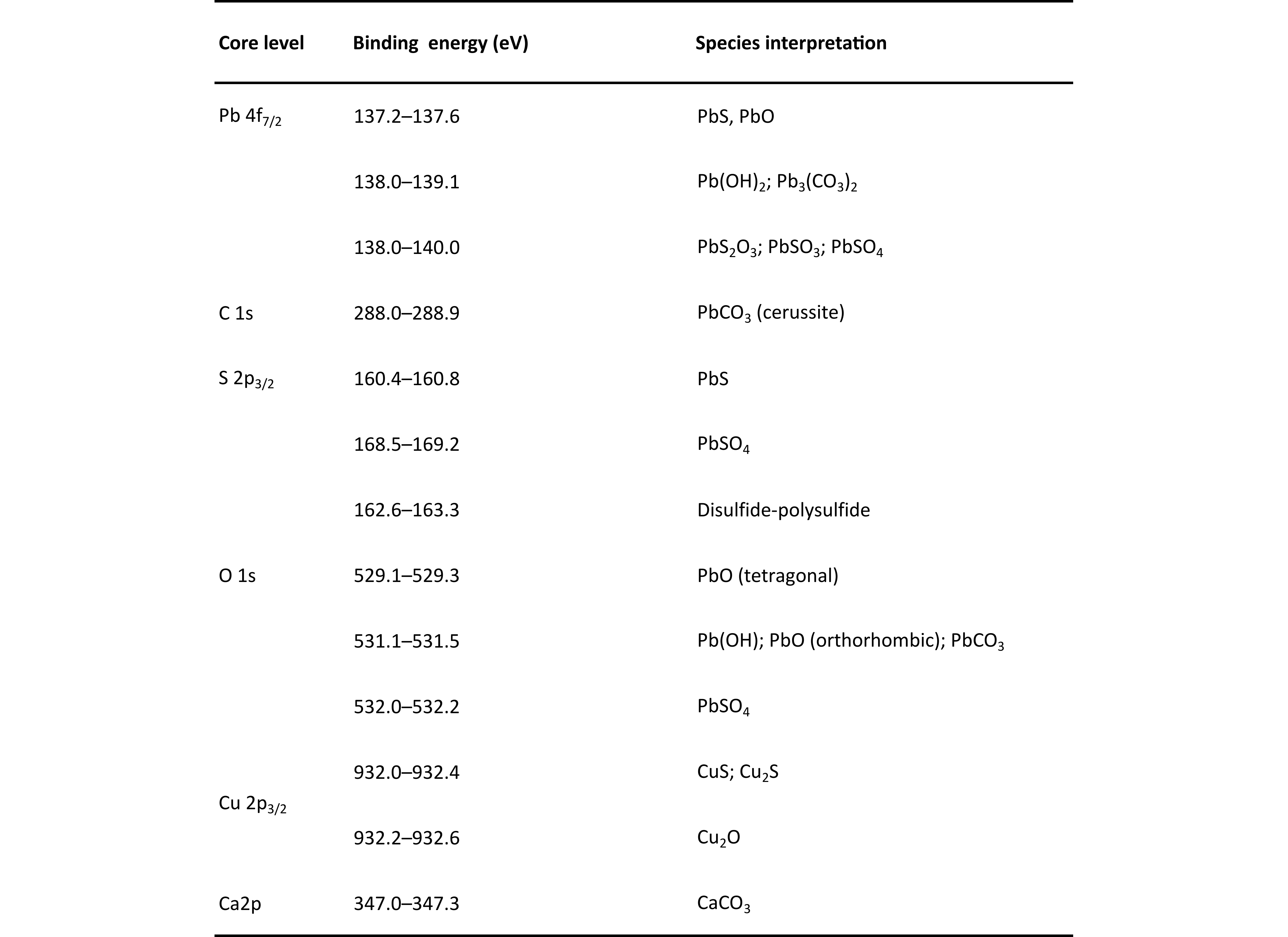
Table 1. XPS binding energies for relevant chemical species (Fornasiero et al., 1994; Biesinger, 2017; Kloprogge & Wood, 2020).
13Depth profiling consisted of sequential sputtering cycles ranging from 5 to 100 s, depending on the targeted total profile duration (Etch time). Following each sputtering step, snapshot acquisitions of S 2p, Pb 4f, O 1s, Cu 2p3/2, Ca 2p and C 1s were performed (Fig. 3). XPS analyses provided precise information on the elemental composition of the samples, with an exceptional depth resolution of less than 10 nm.
14The sputtering rate was determined by measuring the depth of the crater produced on polished galena following the sputtering process, using a DektakXT stylus profilometer (Bruker©). Under low-current conditions, the average sputtering rate was 0.41 nm.s-1 and demonstrated high reproducibility. It should be noted that in the weathered samples, we are not only performing sputtering on PbS but also on Pb oxides formed during the drip experiment. Here we assume that the PbS sputtering rate using 2 keV Ar+ ions is like the Pb oxide rate in the weathered samples (although oxides possibly have slower sputtering rate than sulfide).
15For each depth profile, the thickness of the oxidation layer was determined based on several indicators: the evolution Pb/S atomic or wt.% ratio, the oxygen concentration throughout the profile (Fig. 3C), and the presence of sulfates, oxides or other secondary minerals. The oxygen content never reaches zero due to shadowing effects and surface roughness; however, it stabilizes once oxidation ceases, as observed in fresh galena. The boundary of the oxidized layer is further defined by an atomic Pb/S ratio of approximately 1:1, corresponding to a weight ratio of 6.45:1. After establishing these limits, the associated sputtering time was converted into oxidation depth using the measured sputtering rate (0.41 nm.s-1 under low-current). Reported error bars primarily reflect minor variations in depth profile measurements and the inherent heterogeneity of natural galena, which introduces variability across experimental time intervals. Consequently, for a given time period, the error bars represent both the sample variability in oxidation depth and the negligible measurement uncertainty of crater depth obtained with the DektakXT profilometer.
16Chemical analyses on pure galena samples were carried out by Activation Laboratories Ltd. (Actlabs, Canada). Sodium peroxide fusion (FUS-Na2O2) was used, and concentration was determined by Inductively Coupled Optical Emission Spectrometry (ICP-OES) and Inductively Coupled Plasma Mass Spectrometry (ICP-MS).
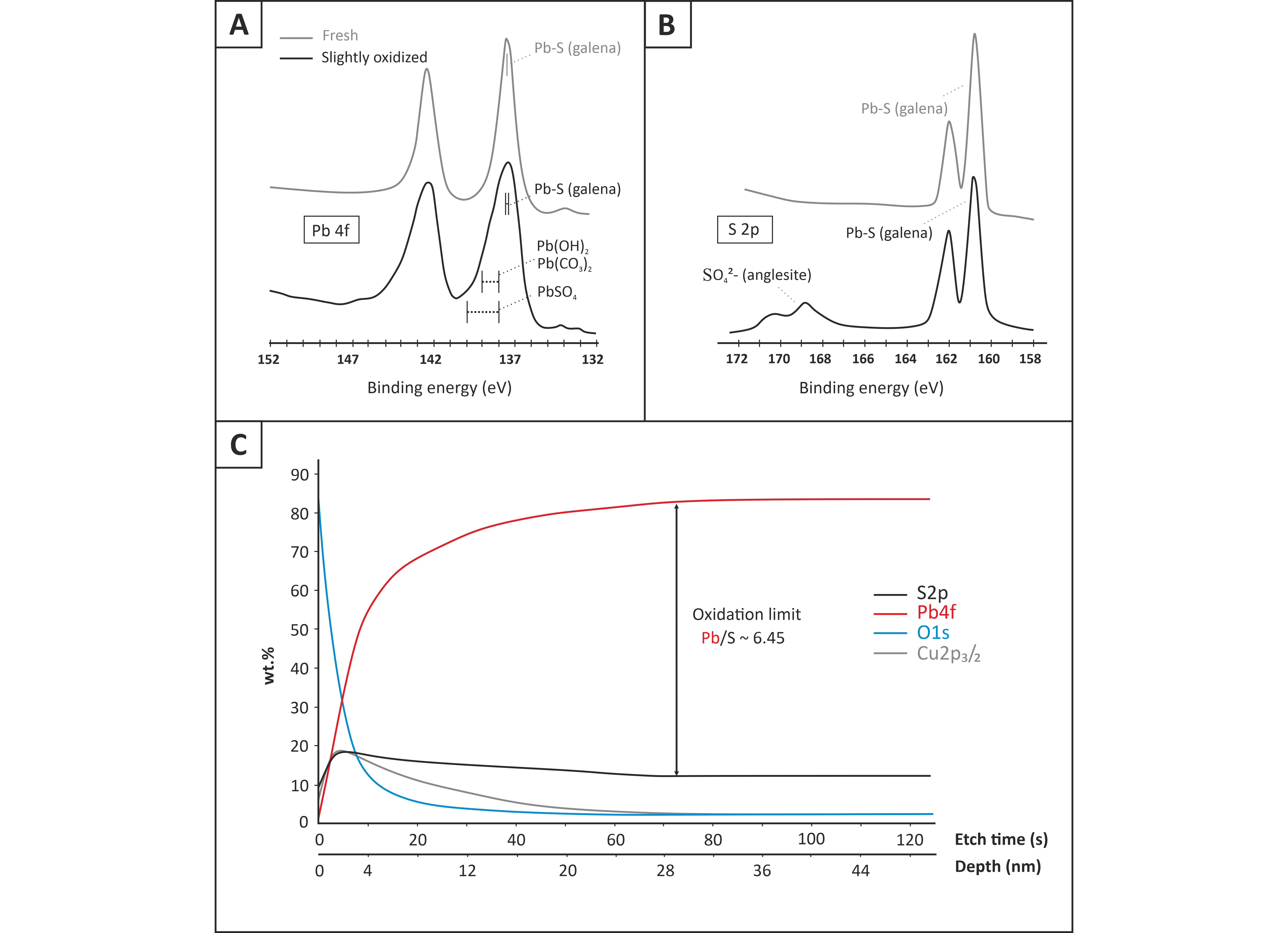
Figure 3. A. XPS spectrum of Pb species (Pb 4f) on the surface of fresh or slightly oxidized galena (~500 hours). B. XPS spectrum of sulfate and sulfide (S 2p) on the surface of fresh or slightly oxidized galena. C. Determination of the oxidation limit with Pb/S ratio and oxygen from XPS profile on galena (Etch time represents the sputtering time, and therefore the depth calculated with the sputtering rate).
4. Results
17Chemical analyses of the three nearly pure galena samples are presented in Table 2. Galena specimens from Kipushi and Vedrin contain approximately 13.5 wt.% sulfur, whereas the Engis sample exhibits a slightly lower value of 13.3 wt.% (13.4 wt.% for ideal galena). This minor difference is primarily due to the slightly higher concentrations of Fe, Al, and Si in the Engis sample (Table 2). Galena from Kipushi also shows a Ca content of 0.07 wt.%. Regarding trace elements, all samples display notable Cu enrichment, with concentrations ranging from 180 ppm in Engis to 353 ppm in Vedrin. The Vedrin galena is further characterized by relatively high Sb content (~0.3 wt.%), while other trace elements remain below limit of detection (LOD). Silver is particularly enriched in the Kipushi sample (210 ppm), whereas its concentration in the other samples is very low. Finally, the Engis galena exhibits comparatively higher levels of Zn (250 ppm) and As (51 ppm) than the other specimens (Table 2).
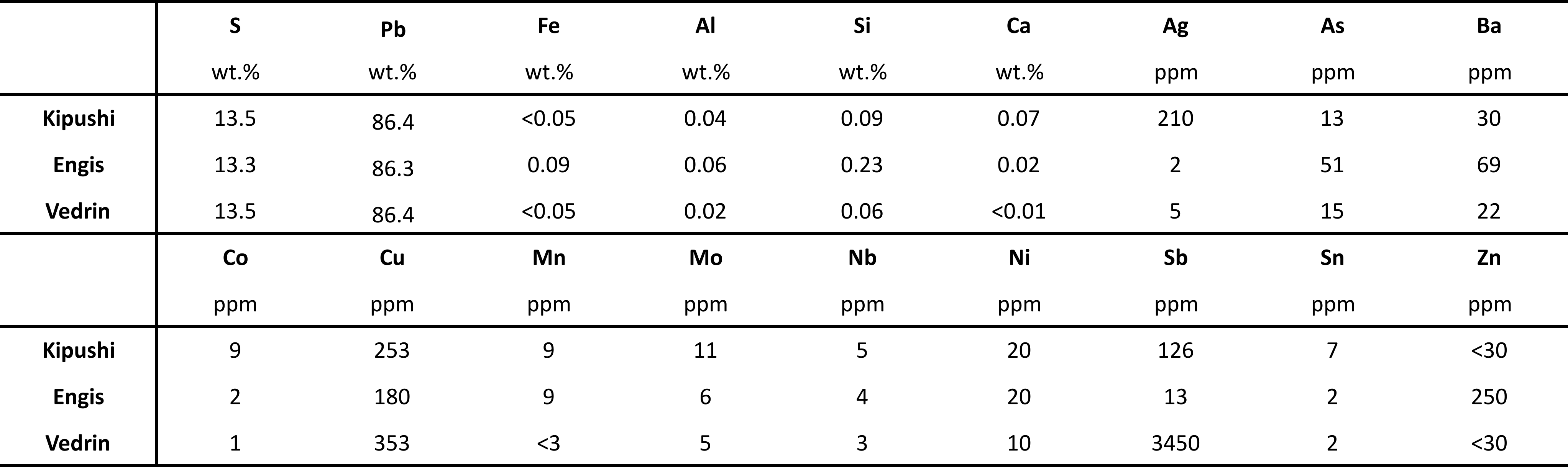
Table 2. Major and trace elements (wt.% or ppm) in galena (Kipushi, Engis and Vedrin) used in this study.
18The oxidation depth results obtained by XPS for the different samples are shown in Figure 4. Massive galena from Vedrin shows a minimal oxidation depth of 396 nm for an oxidation time of 5000 h (Fig. 4). Considering an almost linear evolution of the depth of oxidation, the related equation is y = 0.0709x (R2 = 0.97; Fig. 4), representing on oxidation rate of 0.62 µm.yr-1 for the galena from Vedrin. XPS analysis reveals a thin layer of sulfate (S 2p 169.0 eV; Table 1) in the subsurface (<20 nm) of oxidized samples. Moreover, the O 1s peak is located between 529.0 and 531.5 eV, which corresponds to oxidized Pb phases such as PbO (tetragonal, orthorhombic) and Pb(OH) (Table 1). The Pb peaks (doublets, Fig. 3) are more challenging to interpret because the various binding energies are all very close to one another (Table 1). However, the peak shifts slightly toward values higher than 138 eV when the sample is oxidized, returning to approximately 137.5 eV when only PbS remains (correlated with the appearance of the S 2p sulfide peak and the disappearance of the O 1s peak associated with oxidized lead). Copper, present as trace element in the samples, appears at or near the surface (first 20 nm), with a peak at 932.4 eV, which may correspond to CuS/Cu2S related to the S 2p sulfide peak (Table 1).
19For the Kipushi galena, sulfate species are generally detected until greater depths (approximately 50 nm after 5000 h of oxidation), whereas the copper signal associated with CuS is less pronounced than the one observed for the galena from Vedrin. Calcite (CaCO3), identified by the Ca 2p peak at 347.2 eV, remains observable up to a depth of 20 nm for all oxidation time exceeding 500 h. Although the presence of a minor fraction of PbCO3 (binding energy at 138.4 eV) cannot be entirely ruled out, its confirmation is complicated due to the limited lead concentration within the first ten nanometers. Beyond several tens of nanometers, the various Pb oxide phases are present, as observed in Vedrin galena, while sulfates and carbonates are completely absent. The progression of oxidation depth follows a linear trend for the Kipushi galena, expressed by the equation y = 0.112x (R2 = 0.98), representing the highest oxidation rate among the three investigated sites with 0.98 µm.yr-1.
20Analyses of the octahedral galena samples from Engis reveal a very low presence of sulfates at or near the surface, while CuS occurrence remains anecdotal and is observed only in two samples. A peak at 163.0 eV (S 2p) is occasionally identified and could correspond to polysulfides. These complex sulfur species are also detected at or near the surfaces of samples from the Kipushi and Vedrin deposits but do not represent a dominant phase in these systems. Like the other samples, the various Pb oxide species are predominant in-depth analyses and allow observation of the progression of oxidation. Considering an almost linear evolution of the depth of oxidation for this galena from Engis, the related equation is y = 0.0974x (R2 = 0.98) representing an oxidation rate of 0.85 µm.yr-1.
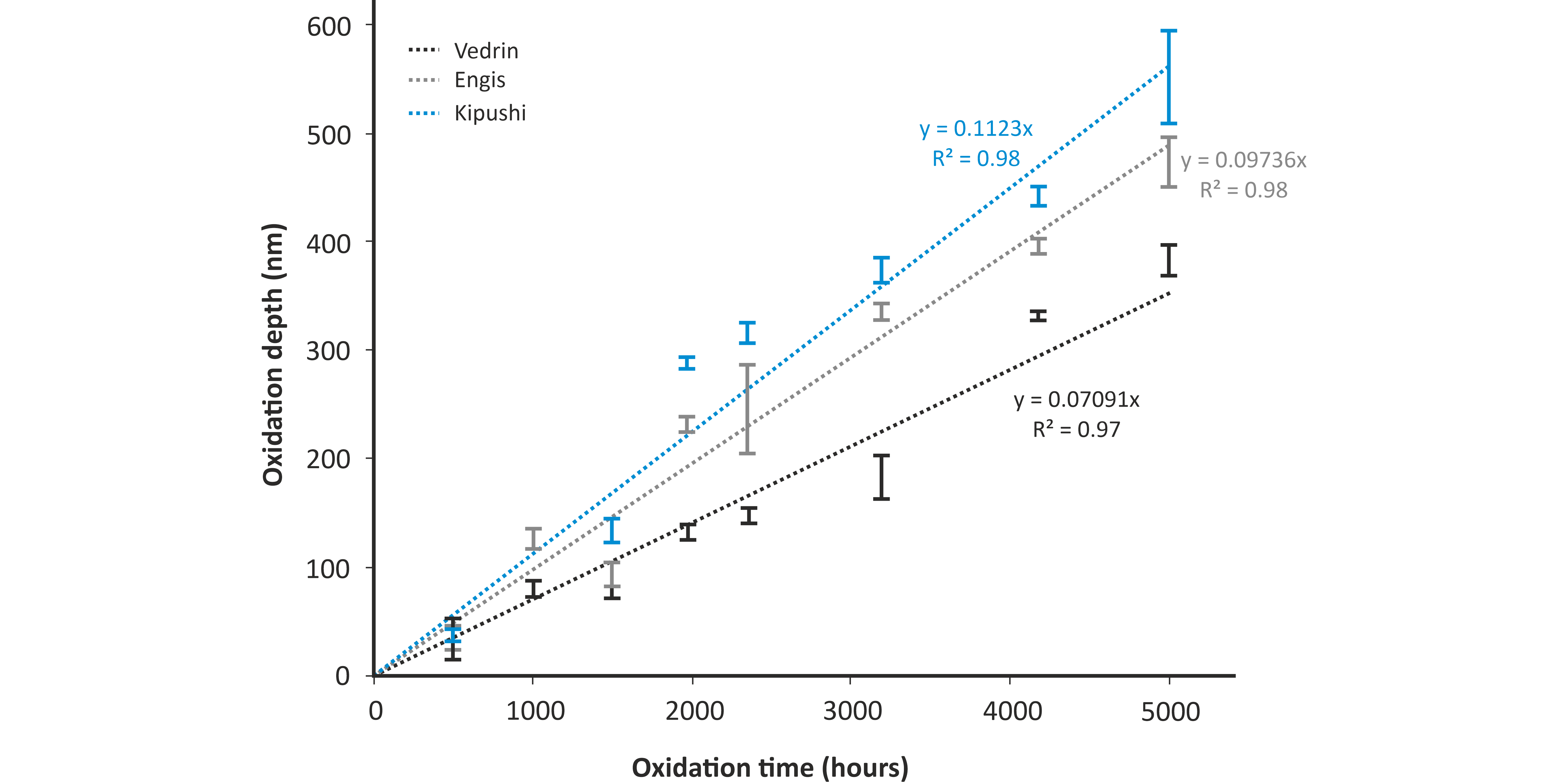
Figure 4. Galena oxidation depth over time for galena from Vedrin, Engis and Kipushi.
5. Discussion
21This section interprets experimental results in relation to galena oxidation processes. It addresses four main aspects: (i) structural and geochemical characteristics of the samples, (ii) formation and distribution of oxidation products, (iii) comparison of oxidation rates with pyrite (Fig. 5), and (iv) implications for supergene ore formation and sulfide weathering in polymetallic deposits.
5.1. Structure and chemistry of galena
22In terms of structure, the galena from Engis occasionally forms octahedral crystals, whereas specimens from Vedrin and Kipushi are generally more massive and are all characterized by well-developed cleavage planes (Fig. 1). The slight differences between the galena crystals from Engis and those from Vedrin and Kipushi do not appear to have a direct significant impact on the oxidation rate; the oxidation rate of Engis galena falls between the ones observed for Vedrin and Kipushi. In the study of Lu et al. (2019), dissolution tests of galena indicated that the amount of oxidation products is inversely proportional to particle size. Our study is based on samples of comparable size and therefore should not have influenced the observed differences in oxidation rates. Moreover, Kim et al. (1994) show that oxidation product growth on natural galena does not show any preference, with indiscriminate coverage of edges and faces.
23Regarding geochemistry, the studied galena samples exhibit comparable minor and trace element content (Table 2), with the exception of one distinctive element at each locality: Sb in Vedrin (0.3 wt.%), Zn in Engis (250 ppm), and Ag in Kipushi (210 ppm). This kind of enrichment in Sb and Ag is quite common in galena (Sharp & Buseck, 1993; Renock & Becker, 2011; George et al., 2015; Keim et al., 2016), as is the case, for example, in the Pb–Zn deposit at Daliangzi (China) (Li et al., 2022). These elements are generally incorporated as substitution in the galena via Sb3+ + Ag+ → 2 Pb2+ or 2 Sb3+ + (vacancy) → 3 Pb2+ for high Sb concentration (Li et al., 2022), or Ag–Sb-bearing mineral inclusions (Sharp & Buseck, 1993) which are not observed in Vedrin and Kipushi galena. The occurrence of Zn in the Engis galena may be related to micro-inclusions of sphalerite as described by Dejonghe (2009). These inclusions, unlike substitution, could have impacts on the oxidation rate as discussed below.
5.2. Oxidation products
24On galena surfaces, lead sulfate (PbSO₄, anglesite) represents the dominant secondary mineral phase. Nevertheless, this sulfate is restricted to layers only a few tens of nanometers thick and is considerably less developed compared to oxidative processes observed in minerals such as pyrite (Garrels & Thompson, 1960; Huminicki & Rimstidt, 2009; Wang et al., 2022; Poot et al., 2024b). Covellite (CuS) is also observed and is most likely associated with the copper content present as a substitution in galena. During oxidation, a slight drop of the pH and slightly oxidized conditions allow a localized concentration of secondary copper (more mobile than Pb) sulfide once the sample has been removed from the oxidation system. This phenomenon is notably described in the study of galena oxidation products of Bao et al. (2021), where part of the dissolved copper is rapidly captured to form covellite on the galena surface, and in many supergene deposits where secondary sulfides are observed at the edge of primary sulfides (e.g. Fontaine et al., 2020; Poot et al., 2024b). In the same study, the authors also report that lead carbonates, such as cerussite (PbCO3), are commonly found on galena surfaces (e.g. Engis), where sulfur is rapidly oxidized to sulfate and leached away with the fluid. Similarly, the XPS study on surface of galena by Nowak & Laajalehto (2000) indicates that lead sulfate and lead carbonate are the two most stable phases on galena surfaces. In the study of Urbano et al. (2016) about electrochemical analysis of galena reactivity, the authors also highlight the formation of intermediate sulfide species at the onset of oxidation, which in our study may correspond to polysulfides or other secondary sulfides (e.g. covellite). The authors also report the presence of anglesite and cerussite (Urbano et al., 2016); however, they additionally describe the occurrence of compact elongated structures in the form of nanotubes, which may correspond to lead oxide (PbO2). At depth, XPS data show that these lead oxides have almost completely replaced the other associated oxidation phases.
5.3. Oxidation rates of galena and pyrite
25As mentioned in the introduction section, galena oxidation has been already studied for (sub)surface processes using models related to the specific area of galena. In contrast, the present work uses XPS data to estimate oxidation rates with depth, thereby providing a quantitative perspective for geological extrapolation. Based on these measurements, the average oxidation rates for galena samples from Kipushi, Engis and Vedrin, calculated using a linear relationship (Figs 4, 5), are 0.98 µm.yr-1, 0.85 µm.yr-1, and 0.62 µm.yr-1, respectively. For comparison, under similar experimental conditions, pyrite exhibits an oxidation rate of 4.3 ± 0.6 µm.yr-1 (Poot et al., 2024b), which is up to eight times higher than that of galena. This experimental difference is macroscopically observed, as pyrite exhibits oxidation traces relatively quickly, whereas such traces are visually absent in our studied galena, even after 5000 h. Pyrite also has oxidation mechanism that slightly differ from galena (Pb2+ most of the time, except for some oxide species), especially the potential oxidation changes in oxidation states of Fe and S.
26In literature, the closest approximation to the calculated oxidation rates can be obtained from galena dissolution rates. In the study by Zha et al. (2020), the dissolution rate of galena was assessed in a NaCl solution to simulate future deep-sea mining operations and the associated potential environmental pollution. The authors reported that galena released Pb2+ at a rate of 2.85 10-2 g.m-2.d-1 in a neutral NaCl medium, with this rate increasing to 5.71 × 10⁻² g.m-2.d-1 at pH 1.0. Given that the density of galena is 7.6 g.cm-3, these data can be converted into µm.yr-1, yielding rates of approximately 137 and 274 µm.yr-1, respectively. According to the authors, the presence of chloride ions increases the electrochemical activity of the galena surface and therefore could explain the higher values than oxidation rates in our study.
27Keim & Markl (2015) also proposed the mineralogical evolution of galena oxidation on bulk samples (magmatic host rock and other minerals like chalcopyrite, sphalerite and barite). The associated lead supergene minerals are cerussite, anglesite and pyromorphite group minerals (pyromorphite (Pb5(PO4)3Cl), mimetite (Pb5(AsO4)3Cl) and vanadinite (Pb5(VO4)3Cl)). The authors demonstrated that approximately nine years are required to form a thin pyromorphite crust 1 mm thick over a surface of 1 m2, corresponding to a growth rate of 0.11 mm.yr-1. They also highlighted the influence of pyrite in the environment regarding the mineral phases produced during galena oxidation, which is linked to the pH of the system. Furthermore, the study by Zheng et al. (2018) showed that the presence of pyrite accelerates galena oxidation, with dissolution rates of 1.7 g.m-2.yr-1 (Pb2+ released into solution) at an acid rain pH of 5.2, increasing to 95.7 g.m-2.yr-1 at pH 4.2 when combined with the galvanic effect of pyrite. These values correspond to rates of approximately 22.4 µm.yr-1 and 1.26 mm.yr-1, respectively, exhibiting rates almost 20 times higher in the presence of pyrite. These dissolution values are considerably higher than our experimental data on oxidation rates and may be attributable to two reasons: (i) the already acidic water (pH 5.2) used in the study by Zheng et al. (2018), whereas in our study the water pH is slightly below neutrality due to dissolved CO2, (ii) studies primarily focused on surface reactions (thin layer), which tend to occur relatively rapidly compared to continuous depth oxidation processes considerate as linear in this work. Several studies have reported an “armor effect” associated with the formation of an oxidized surface layer that temporarily slows further oxidation (Poot et al., 2024 and references therein). However, these studies generally evaluate the phenomenon over relatively short experimental durations. In contrast, both the present study and the previous work on pyrite involve much longer experiments.
28The influence of pH on dissolution rate is also highlighted in the previously cited study by Zha et al. (2020) regarding galena oxidation in neutral, basic and acidic NaCl solution. The study of Rimstidt et al. (1993) which is related sulfide reaction rates, including galena, in acidic Fe(III) solutions, also highlights the impact of pyrite for galena oxidation. Specifically, pyrite oxidation generates Fe2+, which is rapidly oxidized to Fe3+ at neutral pH in the presence of dissolved oxygen (Nordstrom, 1982; Eq. 4). This Fe3+ subsequently influences the oxidation of sulfides, including pyrite, which in turn regenerates Fe3+, creating a cyclical process. Zárate-Gutiérrez et al. (2012) also confirm that the presence of pyrite modifies both the reaction kinetics and the mechanism, accelerating the oxidation of galena by depassivating its surface.
|
Fe2+ + 1∕4 O2 + 5∕2 H2O → Fe(OH)3 + 2 H+ |
(4) |
29In our samples, galena from Vedrin and Kipushi do not exhibit other sulfides as inclusions. In contrast, galena from Engis has been reported in the literature to contain sphalerite inclusions (Dejonghe, 2009), which could slightly influence its oxidation behavior. Sphalerite ((Zn,Fe)S) may incorporate a significant proportion of Fe2+, thereby having a similar effect to that of pyrite. This phenomenon could account for the slightly higher oxidation rate observed in Engis galena compared to Vedrin, despite their broadly similar geological context and timing of formation.
30It remains unclear at this stage how to explain the difference with Kipushi galena, which shows an even higher oxidation rate despite the absence of inclusions of other sulfides. The differences observed between the various sites may also result from the natural variability of the samples rather than their geographic/formation origin, as illustrated by the case of pyrite from Hautrage (Poot et al., 2024b), where all specimens originate from a single locality/type of formation and yet exhibit substantial variability.
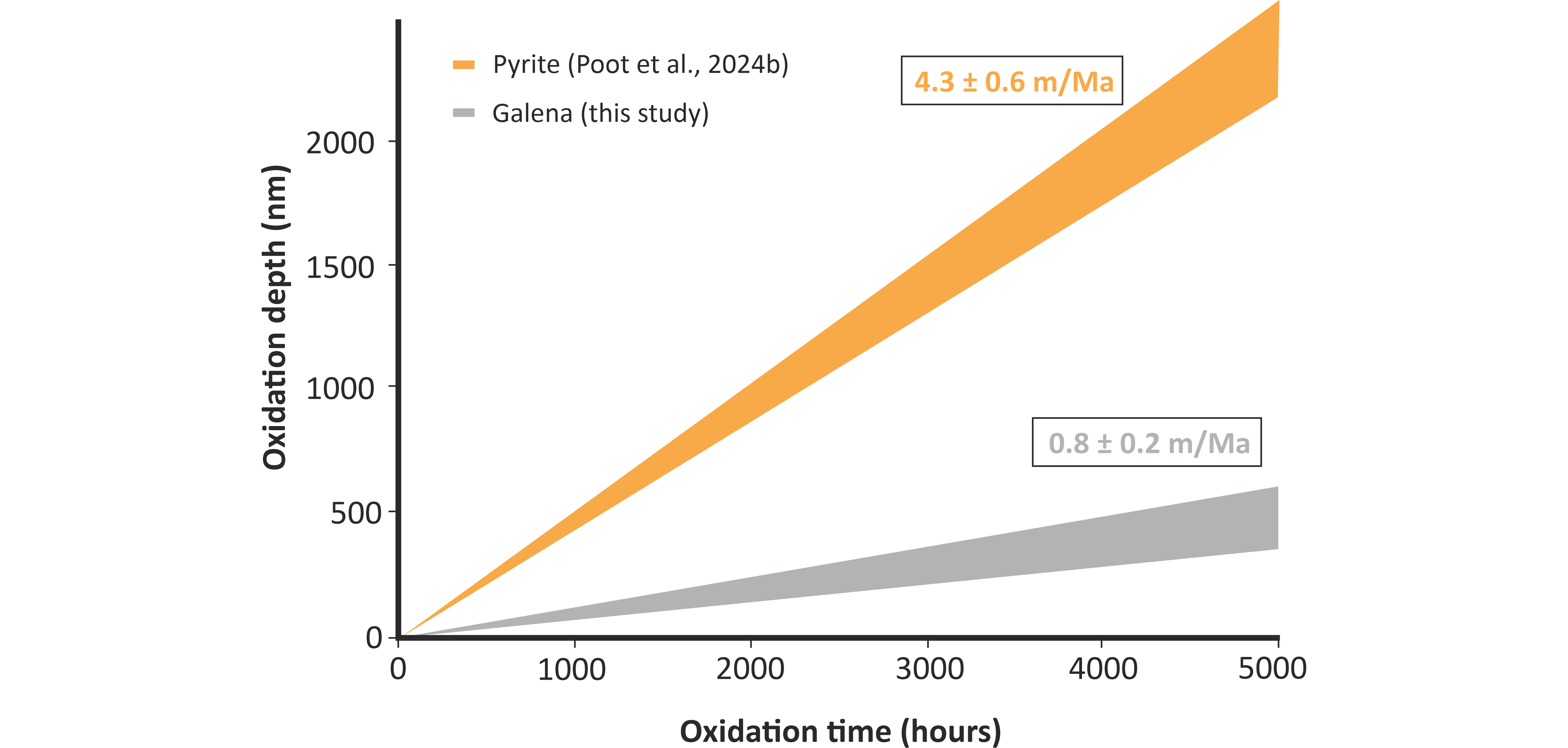
Figure 5. Comparison between galena and pyrite (Poot et al., 2024b) oxidation rates.
5.4. Consequences for supergene ores
31Most supergene ores/deposits are polymetallic (e.g. Verhaert et al., 2018; Bouabdellah et al., 2021; Poot et al., 2024a). Previous results on pyrite (Poot et al., 2024b) and the present study have established oxidation rates for these two isolated sulfides, based on experimental methods. At the geological scale, these rates can be extrapolated to approximately 4.3 ± 0.6 m.Ma-1 for pyrite and 0.8 ± 0.2 m.Ma-1 for galena. However, experimental data generally underestimate actual oxidation rates under natural geological conditions, mainly due to extrinsic factors (see below) that might have a significant effect in generating higher oxidation rates, but are more difficult to reproduce in the laboratory (White & Brantley, 2003). For example, in geological profiles, there are much lower fluid/mineral interactions over much longer time periods, whereas experimental rates are measured with high fluid/mineral ratios reacting over short periods of time (White & Brantley, 2003). Many other factors can affect these rates like the climate change over time (rainfall, temperature...), the nature of the host rock for neutralization processes and its faulting, fracturing and porosity (Borg, 2009; Choulet et al., 2014; Boni & Mondillo, 2015; Ciantia & Castellanza, 2016), the presence of an oxidizing environment (White & Brantley, 2003; Verhaert et al., 2017; Sillitoe, 2019), the precipitation of secondary mineralization (White & Brantley, 2003; Boni & Mondillo, 2015; Wang et al., 2019) or even the role of bacteria acting as catalysts (De Putter et al., 2010; Vera et al., 2022).
32As previously discussed, the presence of pyrite, or more generally of Fe2+ that is rapidly oxidized to Fe3+, is likely promoting the oxidation of other sulfides. In the case of galena, the presence of pyrite, which is significantly more reactive than galena, could therefore accelerate galena oxidation (Rimstidt et al., 1993; Zheng et al., 2018), thereby generating fluids that are more acidic and consequently richer in metals. These implications, depending on the nature of the host rock and its neutralizing minerals, could directly influence the formation of secondary minerals and, thus, the crystallization sequence. For example, in the Schwarzwald district (Germany), at the Lisbühl locality, galena occurs together with pyrite and represents the part of the deposit where anglesite is most abundant, resulting from the development of (micro)environments with low pH (Keim & Markl, 2015). Conversely, when pyrite is less abundant, oxidation is weaker/slower and the surrounding environment less acidic, favoring the formation of a small amount of cerussite rather than anglesite. Similar observations have been reported in Cu-Pb-Zn-V deposits of the Oriental High Atlas in Morocco (Verhaert et al., 2017), where galena and sphalerite oxidation is much less pronounced and releases only limited H+ into the system in the absence of pyrite. Anglesite is primarily observed in proximity to pyrite, whereas cerussite occurs in nearly neutral pH zones characterized by slower or less extensive oxidation.
33Collectively, the datasets and associated discussions underscore the inherent complexity of the processes that control the oxidation of sulfides and the formation/evolution of weathering profiles in polymetallic deposits. Although pyrite alone appears to be among the most reactive sulfides, with galena being up to eight times less reactive, the coexistence of multiple sulfides within ore bodies may significantly accelerate oxidation, resulting in rates far exceeding those observed for isolated sulfides in experimental studies. Obviously additional parameters must be considered, particularly the host rock and associated minerals, which can buffer acidic fluids and potentially limit Fe2+/Fe3+ mobility which seems to be an important factor contributing to sulfide oxidation. Additionally, such effects may also account for localized alteration zones or variable degrees of intensity within supergene deposits (e.g. Bou Skour deposit; Poot et al., 2026) and therefore have an impact on the rate of formation of weathering profiles.
34These observations highlight that predicting supergene evolution requires an integrated approach that accounts for mineral associations, host-rock buffering capacity, and fluid chemistry, as these factors govern oxidation dynamics and the spatial heterogeneity of weathering profiles. These also underline that sulfide oxidation not only governs supergene mineralization but also critically influences the generation of acidic, metal-rich waters, thereby posing significant environmental risks for groundwater and surface water systems.
6. Conclusion
35This study provides a quantitative assessment of galena oxidation using XPS depth profiling, offering new insights into the kinetics and mineralogical evolution of this process. The results indicate that galena oxidizes at rates significantly slower than pyrite with approximately 0.8 ± 0.2 µm.yr-1 compared to 4.3 ± 0.6 µm.yr-1 for pyrite. Oxidation proceeds through the formation of thin layers of lead sulfates (anglesite), oxides, and, occasionally, carbonates (cerussite), with minor contributions from intermediate sulfide species. Trace element substitutions within galena appear to have negligible influence on oxidation behavior, whereas inclusions of other sulfides, particularly pyrite, may accelerate the process. Structural variations among samples, by contrast, show limited impact on oxidation kinetics
36The presence of other sulfides, particularly pyrite, emerges as a critical factor accelerating galena oxidation through interactions with Fe3+, thereby enhancing acidity and metal mobility in supergene systems. These findings underscore the complexity of weathering profiles in polymetallic deposits, where primary sulfide associations, host-rock buffering capacity, and fluid chemistry govern weathering intensity and secondary mineral formation. These experimental rates obtained in this study combined with field observations could therefore help to refine predictive models of supergene evolution and environmental risk assessment.
Acknowledgements
37We would like to thank Thierry Mortier for providing us with some samples of galena from the Vedrin mine. We also thank the reviewers, René H. Lara (Universidad Juárez del Estado de Durango, Mexico) and Philippe Muchez (KU Leuven, Belgium), and the editor for their constructive comments and suggestions, which helped improve this manuscript.
Author contribution
38All authors contributed to the study conception and design. Samples were prepared by POOT Julien and ROCHEZ Gaëtan. XPS analysis and data processing were carried out by POOT Julien and FELTEN Alexandre. All authors contributed to and approved the final manuscript.
Data availability
39Data will be made available on request.
References
40Acero, P., Cama, J. & Ayora, C., 2007. Rate law for galena dissolution in acidic environment. Chemical Geology, 245, 219–229. https://doi.org/10.1016/j.chemgeo.2007.08.003
41Andersen, J.E., Halpern, J. & Samis, C.S., 2017. Kinetics of the oxidation of galena in sodium hydroxide solutions under oxygen pressure. JOM, 5, 554–558. https://doi.org/10.1007/BF03397517
42Bao, Z., Al, T., Couillard, M., Poirier, G., Bain, J., Shrimpton, H.K., Finfrock, Y.Z., Lanzirotti, A., Paktunc, D., Saurette, E., Hu, Y., Ptacek, C.J. & Blowes, D.W., 2021. A cross scale investigation of galena oxidation and controls on mobilization of lead in mine waste rock. Journal of Hazardous Materials, 412, 125130. https://doi.org/10.1016/j.jhazmat.2021.125130
43Bartholomé, P. & Gérard, E., 1976. Les gisements plombo-zincifères de la région d’Engis, province de Liège, Belgique. Annales des Mines de Belgique, 11, 901–917.
44Becker, U. & Hochella, M.F., 1996. The calculation of STM images, STS spectra, and XPS peak shifts for galena: New tools for understanding mineral surface chemistry. Geochimica et Cosmochimica Acta, 60, 2413–2426. https://doi.org/10.1016/0016-7037(96)00094-4
45Biesinger, M.C., 2017. Advanced analysis of copper X-ray photoelectron spectra. Surface and Interface Analysis, 49(13), 1325–1334. https://doi.org/10.1002/sia.6239
46Blowes, D.W., Ptacek, C.J., Jambor, J.L., Weisener, C.G., Paktunc, D., Gould, W.D. & Johnson, D.B., 2014. The geochemistry of acid mine drainage. In Holland, H.D. & Turekian, K.K. (eds), Treatise on Geochemistry (2nd ed.), Volume 11, Environmental Geochemistry. Elsevier, Amsterdam, 131–190. https://doi.org/10.1016/B978-0-08-095975-7.00905-0
47Boni, M. & Mondillo, N., 2015. The “Calamines” and the “Others”: The great family of supergene nonsulfide zinc ores. Ore Geology Reviews, 67, 208–233. https://doi.org/10.1016/j.oregeorev.2014.10.025
48Borg, G., 2009. The influence of fault structures on the genesis of supergene zinc deposits. In Titley, S.R. (ed.), Supergene Environments, Processes, and Products. Society of Economic Geologists, Littleton, CO, Special Publications of the Society of Economic Geologists, 14, 121–132. https://doi.org/10.5382/SP.14.11
49Bouabdellah, M., Sangster, D.F., Leach, D.L., Brown, A.C., Johnson, C.A. & Emsbo, P., 2012. Genesis of the Touissit-Bou Beker Mississippi Valley-type district (Morocco-Algeria) and its relation to the Africa-Europe collision. Economic Geology, 107, 117–146. https://doi.org/10.2113/econgeo.107.1.117
50Bouabdellah, M., Boukirou, W., Potra, A., Melchiorre, E., Bouzahzah, H., Yans, J., Zaid, K., Idbaroud, M., Poot, J., Dekoninck, A. & Levresse, G., 2021. Origin of the Moroccan Touissit-Bou Beker and Jbel Bou Dahar supergene non-sulfide biomineralization and its relevance to microbiological activity, late Miocene uplift and climate changes. Minerals, 11(4), 401. https://doi.org/10.3390/min11040401
51Buckley, A.N. & Woods, R., 1984. An X-ray photoelectron spectroscopic study of the oxidation of galena. Applications of Surface Science, 17, 401–414. https://doi.org/10.1016/0378-5963(84)90003-5
52Chernyshova, I.V. & Andreev, S.I., 1997. Spectroscopic study of galena surface oxidation in aqueous solutions: I. Identification of surface species by XPS and ATR/FTIR spectroscopy. Applied Surface Science, 108, 225–236. https://doi.org/10.1016/S0169-4332(96)00579-X
53Choulet, F., Charles, N., Barbanson, L., Branquet, Y., Sizaret, S., Ennacri, A., Badra, L. & Chen, Y., 2014. Non-sulfide zinc deposits of the Moroccan High Atlas: Multi-scale characterization and origin. Ore Geology Reviews, 56, 115–140. https://doi.org/10.1016/j.oregeorev.2013.08.015
54Ciantia, M.O. & Castellanza, R., 2016. Modelling weathering effects on the mechanical behaviour of rocks. European Journal of Environmental Civil Engineering, 20, 1054–1082. https://doi.org/10.1080/19648189.2015.1030086
55De Putter, T., Mees, F., Decrée, S. & Dewaele, S., 2010. Malachite, an indicator of major Pliocene Cu remobilization in a karstic environment (Katanga, Democratic Republic of Congo). Ore Geology Reviews, 38, 90–100. https://doi.org/10.1016/j.oregeorev.2010.07.001
56Dejonghe, L., 1985. Mineral deposits in Belgium. Bulletin de la Société belge de Géologie, 94(4), 283–297.
57Dejonghe, L., 1998. Zinc–lead deposits of Belgium. Ore Geology Reviews, 12, 329–354. https://doi.org/10.1016/S0169-1368(98)00007-9
58Dejonghe, L., 2009. Les gisements plombo-zincifères de la région d’Andenne : Andenelle, Ben, Fond de Jottée, Héron, Landenne, Lavoir, Lovegnée, Marsinne, Moha, Roua, Sarts, Sissoule, Velaine, Tramaka et Vezin. Memoirs of the Geological Survey of Belgium, 56, 1–100.
59Evrard, P., 1943. La minéralisation de Vedrin. Annales de la Société géologique de Belgique, 66, M181–M204.
60Fontaine, L., De Putter, T., Bernard, A., Decrée, S., Cailteux, J., Wouters, J. & Yans, J., 2020. Complex mineralogical-geochemical sequences and weathering events in the supergene ore of the Cu–Co Luiswishi deposit (Katanga, D.R. Congo). Journal of African Earth Sciences, 161, 103674. https://doi.org/10.1016/j.jafrearsci.2019.103674
61Fornasiero, D., Li, F., Ralston, J. & Smart, R.S.C., 1994. Oxidation of galena surfaces: I. X-ray photoelectron spectroscopic and dissolution kinetics studies. Journal of Colloid and Interface Science, 164, 333–344. https://doi.org/10.1006/jcis.1994.1175
62Garrels, R.M. & Thompson, M.E., 1960. Oxidation of pyrite by iron sulfate solutions. American Journal of Science, 258(A), Bradley Volume, 57–67.
63George, L., Cook, N.J., Ciobanu, C.L. & Wade, B.P., 2015. Trace and minor elements in galena: A reconnaissance LA-ICP-MS study. American Mineralogist, 100, 548–569. https://doi.org/10.2138/AM-2015-4862
64Hampton, M.A., Plackowski, C. & Nguyen, A.V., 2011. Physical and chemical analysis of elemental sulfur formation during galena surface oxidation. Langmuir, 27, 4190–4201. https://doi.org/10.1021/la104755a
65Heidel, C. & Tichomirowa, M., 2011. Galena oxidation investigations on oxygen and sulphur isotopes. Isotopes in Environmental and Health Studies, 47, 169–188. https://doi.org/10.1080/10256016.2011.577893
66Heijlen, W., Muchez, P. & Banks, D.A., 2001. Origin and evolution of high-salinity, Zn-Pb mineralising fluids in the Variscides of Belgium. Mineralium Deposita, 36, 165–176.https://doi.org/10.1007/s001260050296
67Heijlen, W., Banks, D.A., Muchez, P., Stensgard, B.M. & Yardley, B.W.D., 2008. The nature of mineralizing fluids of the Kipushi Zn-Cu deposit, Katanga, Democratic Repubic of Congo: Quantitative fluid inclusion analysis using laser ablation ICP-MS and bulk crush-leach methods. Economic Geology, 103, 1459–1482. https://doi.org/10.2113/gsecongeo.103.7.1459
68Huminicki, D.M.C. & Rimstidt, J.D., 2009. Iron oxyhydroxide coating of pyrite for acid mine drainage control. Applied Geochemistry, 24, 1626–1634. https://doi.org/10.1016/j.apgeochem.2009.04.032
69Keim, M.F. & Markl, G., 2015. Weathering of galena: Mineralogical processes, hydrogeochemical fluid path modeling, and estimation of the growth rate of pyromorphite. American Mineralogist, 100, 1584–1594. https://doi.org/10.2138/am-2015-5183
70Keim, M.F., Vaudrin, R. & Markl, G., 2016. Redistribution of silver during supergene oxidation of argentiferous galena: A case study from the Schwarzwald, SW Germany. Journal of Mineralogy and Geochemistry, 193(3), 295–309. https://doi.org/10.1127/NJMA/2016/0002
71Kim, B.S., Hayes, R.A., Prestidge, C.A., Ralston, J. & Smart, R.St.C., 1994. Scanning tunnelling microscopy studies of galena: The mechanism of oxidation in air. Applied Surface Science, 78(4), 385–397. https://doi.org/10.1016/0169-4332(94)90063-9
72Kloprogge, J.T. & Wood, B.J., 2020. Handbook of Mineral Spectroscopy: Volume 1, X-Ray Photoelectron Spectra. Elsevier, Amsterdam, 505 p. https://doi.org/10.1016/C2015-0-01704-X
73Lara, R.H., Briones, R., Monroy, M.G., Mullet, M., Humbert, B., Dossot, M., Naja, G.M. & Cruz, R., 2011. Galena weathering under simulated calcareous soil conditions. Science of the Total Environment, 409(19), 3971–3979. https://doi.org/10.1016/j.scitotenv.2011.06.055
74Leach, D., Macquar, J.-C., Lagneau, V., Leventhal, J., Emsbo, P. & Premo, W., 2006. Precipitation of lead–zinc ores in the Mississippi Valley-type deposit at Trèves, Cévennes region of southern France. Geofluids, 6, 24–44. https://doi.org/10.1111/j.1468-8123.2006.00126.x
75Leach, D.L., Bradley, D.C., Huston, D., Pisarevsky, S.A., Taylor, R.D. & Gardoll, S.J., 2010. Sediment-hosted lead-zinc deposits in Earth history. Economic Geology, 105, 593–625. https://doi.org/10.2113/gsecongeo.105.3.593
76Li, G., Zhao, Z., Wei, J. & Ulrich, T., 2022. Trace element compositions of galena in an MVT deposit from the Sichuan-Yunnan-Guizhou metallogenic province, SW China: Constraints from LA-ICP-MS spot analysis and elemental mapping. Ore Geology Reviews, 150, 105123 https://doi.org/10.1016/j.oregeorev.2022.105123
77Liu, Q., Li, H., Jin, G., Zheng, K. & Wang, L., 2018. Assessing the influence of humic acids on the weathering of galena and its environmental implications. Ecotoxicology and Environmental Safety, 158, 230–238. https://doi.org/10.1016/j.ecoenv.2018.04.030
78Lu, Y., Tong, X., Xie, X., Yang, B. & Hua, Z., 2019. Effect of particle size on the oxidation and flotation behavior of galena particles. Physicochemical Problems of Mineral Processing, 55, 208–216. https://doi.org/10.5277/ppmp18122
79Nassar, N.T., Graedel, T.E. & Harper, E.M., 2015. By-product metals are technologically essential but have problematic supply. Science Advances, 1(3), e1400180. https://doi.org/10.1126/sciadv.1400180
80Nordstrom, D.K., 1982. Aqueous pyrite oxidation and the consequent formation of secondary iron minerals. In Kittrick, J.A., Fanning, D.S. & Hosner, L.R. (eds), Acid Sulfate Weathering. Soil Science Society of America, Madison, WI, SSSA Special Publications, 10, 37–56. https://doi.org/10.2136/sssaspecpub10.c3
81Nordstrom, D.K., 2011. Hydrogeochemical processes governing the origin, transport and fate of major and trace elements from mine wastes and mineralized rock to surface waters. Applied Geochemistry, 26, 1777–1791. https://doi.org/10.1016/j.apgeochem.2011.06.002
82Nordstrom, D.K. & Alpers, C.N., 1999. Geochemistry of acid mine waters. In Plumlee, G.S., Logsdon, M.J. & Filipek, L.F. (eds), The Environmental Geochemistry of Mineral Deposits: Part A: Processes, Methods and Health Issues. Society of Economic Geologists, 133–160. https://doi.org/10.5382/Rev.06.06
83Nowak, P. & Laajalehto, K., 2000. Oxidation of galena surface – an XPS study of the formation of sulfoxy species. Applied Surface Science, 157, 101–111. https://doi.org/10.1016/S0169-4332(99)00575-9
84Poot, J., Buelens, P., Dekoninck, A., Rochez, G. & Yans, J., 2024a. Tracing the Eh–pH evolution of Cu–Pb–As–Zn supergene mineralization using detailed petrography in the Cap Garonne mineral deposit (Provence, France). Mineralium Deposita, 59, 1249–1271. https://doi.org/10.1007/S00126-024-01258-3
85Poot, J., Felten, A., Colaux, J.L., Gouttebaron, R., Lepêcheur, G., Rochez, G. & Yans, J., 2024b. Experimental timing of pyrite oxidation under various leaching conditions: consequences for rates of weathering in geological profiles. Environmental Earth Sciences, 83, 9. https://doi.org/10.1007/s12665-023-11325-z
86Poot, J., Stanus, R., El Azmi, M., Dekoninck, A., Maacha, L., Rochez, G., Bouabdellah, M. & Yans, J., 2026. Weathering processes and the role of combined chlorite-dolomite as main neutralizing agents of acidic fluids in the Cu(-Pb-Zn-Ag) Bou Skour supergene deposit (Eastern Anti-Atlas, Morocco). Journal of African Earth Sciences, 235, 105981. https://doi.org/10.1016/j.jafrearsci.2025.105981
87Renock, D. & Becker, U., 2011. A first principles study of coupled substitution in galena. Ore Geology Reviews, 42, 71–83. https://doi.org/10.1016/j.oregeorev.2011.04.001
88Rimstidt, J.D., Chermak, J.A. & Gagen, P.M., 1993. Rates of reaction of galena, sphalerite, chalcopyrite, and arsenopyrite with Fe(III) in acidic solutions. In Alpers, C.N. & Blowes, D.W. (eds), Environmental Geochemistry of Sulfide Oxidation. American Chemical Society, Washington DC, ACS Symposium Series, 550, 2–13. https://doi.org/10.1021/bk-1994-0550.ch001
89Sangameshwar, S.R. & Barnes, H.L., 1983. Supergene process in zinc-lead-silver sulfide ores in carbonates. Economic Geology, 78, 1379–1397. https://doi.org/10.2113/gsecongeo.78.7.1379
90Schlegel, M.L., Charlet, L. & Manceau, A., 1999. Sorption of metal ions on clay minerals: II. Mechanism of Co sorption on hectorite at high and low ionic strength and impact on the sorbent stability. Journal of Colloid and Interface Science, 220, 392–405. https://doi.org/10.1006/jcis.1999.6538
91Schneider, J., Haack, U., Hein, U.F. & German, A., 1999. Direct Rb-Sr dating of sandstone-hosted sphalerites from strata-bound Pb-Zn deposits in northern Eifel, NW Rhenish Massif, Germany. In Stanley et al. (eds), Mineral Deposits: Processes to Processing. Balkema, Rotterdam, 1287‒1290.
92Schneider, J., Melcher, F. & Brauns, M., 2007. Concordant ages for the giant Kipushi base metal deposit (DR Congo) from direct Rb–Sr and Re–Os dating of sulfides. Mineralium Deposita, 42, 791–797.https://doi.org/10.1007/s00126-007-0158-y
93Sharp, T.G. & Buseck, P.R., 1993. The distribution of Ag and Sb in galena: inclusions versus solid solution. American Mineralogist, 78, 85–95.
94Sillitoe, R.H., 2019. Supergene oxidation of epithermal gold-silver mineralization in the Deseado massif, Patagonia, Argentina: response to subduction of the Chile Ridge. Mineralium Deposita, 54, 381–394. https://doi.org/10.1007/s00126-018-0814-4
95Urbano, G., Reyes, V.E., Veloz, M.A. & González, I., 2016. Electrochemical analysis of galena reactivity in typical physicochemical conditions of calcareous soils. International Journal Electrochemical Science, 11, 3714–3726. https://doi.org/10.1016/s1452-3981(23)17431-1
96Van Wilderode, J., Heijlen, W., De Muynck., D., Schneider, J., Vanhaecke, F. & Muchez, Ph., 2013. The Kipushi Cu–Zn deposit (DR Congo) and its host rocks: A petrographical, stable isotope (O, C) and radiogenic isotope (Sr, Nd) study. Journal African Earth Sciences, 79, 143–156. https://doi.org/10.1016/j.jafrearsci.2012.11.011
97Vera, M., Schippers, A., Hedrich, S. & Sand, W., 2022. Progress in bioleaching: fundamentals and mechanisms of bacterial metal sulfide oxidation – part A. Applied Microbiology and Biotechnology, 106, 6933–6952. https://doi.org/10.1007/s00253-022-12168-7
98Verhaert, M., Bernard, A., Dekoninck, A., Lafforgue, L., Saddiqi, O. & Yans, J. 2017. Mineralogical and geochemical characterization of supergene Cu–Pb–Zn–V ores in the Oriental High Atlas, Morocco. Mineralium Deposita, 52, 1049–1068. https://doi.org/10.1007/s00126-017-0753-5
99Verhaert, M., Bernard, A., Saddiqi, O., Dekoninck A., Essalhi, M. & Yans, J., 2018. Mineralogy and genesis of the polymetallic and polyphased low grade Fe-Mn-Cu ore of Jbel Rhals deposit (Eastern High Atlas, Morocco). Minerals, 8, 39. https://doi.org/10.3390/min8020039
100Wang, H., Dowd, P.A. & Xu, C., 2019. A reaction rate model for pyrite oxidation considering the influence of water content and temperature. Minerals Engineering, 134, 345–355. https://doi.org/10.1016/j.mineng.2019.02.002
101Wang, S., Zheng, K., Liu, Q., Wang, L., Feng, X. & Li, H., 2021. Galena weathering in simulated alkaline soil: Lead transformation and environmental implications. Science of the Total Environment, 755(2), 142708. https://doi.org/10.1016/j.scitotenv.2020.142708
102Wang, Y., Liu, X. & Li, Q., 2022. Pyrite oxidation under a carbonate buffer and its environmental implications: a case study from the Shangmanggang gold deposit, SW China. Geochemistry: Exploration, Environment, Analysis, 22(4), geochem2022-021. https://doi.org/10.1144/geochem2022-021
103White, A.F. & Brantley, S.L., 2003. The effect of time on the weathering of silicate minerals: Why do weathering rates differ in the laboratory and field? Chemical Geology, 202, 479–506. https://doi.org/10.1016/j.chemgeo.2003.03.001
104Zárate-Gutiérrez, R., Lapidus, G.T. & Morales, R.D., 2012. Aqueous oxidation of galena and pyrite with nitric acid at moderate temperatures. Hydrometallurgy, 115-116, 57–63. https://doi.org/10.1016/j.hydromet.2011.12.010
105Zha, L., Li, H. & Wang, N., 2020. Electrochemical study of galena weathering in NaCl solution: kinetics and environmental implications. Minerals, 10(5), 416. https://doi.org/10.3390/min10050416
106Zheng, K., Li, H., Wang, L., Wen, X. & Liu, Q., 2018. Galena weathering under simulated acid rain conditions: Electrochemical processes and environmental assessments. Environmental Science: Processes & Impacts, 20, 822–832. https://doi.org/10.1039/c7em00599g
107Manuscript received 13.05.2026, accepted in revised form 28.08.2026, available online 30.09.2026.
