


- Accueil
- Volume 30 (2026)
- Numéro 2
- Preserving the ecological diversity of cocoa farms: do socio-economic factors matter in Côte d'Ivoire?


Visualisation(s): 353 (1 ULiège)
Téléchargement(s): 81 (0 ULiège)

Preserving the ecological diversity of cocoa farms: do socio-economic factors matter in Côte d'Ivoire?

Résumé
Préserver la diversité écologique des plantations de cacao : les facteurs socio-économiques ont-ils une importance en Côte d’Ivoire ?
Description du sujet. La diversité des arbres est essentielle au maintien de la richesse écologique et à la survie des espèces menacées. Il est donc nécessaire d’identifier les facteurs qui la favorisent afin de mieux orienter les politiques agricoles.
Objectifs. L’objectif de cette étude est d’analyser les déterminants de la diversité arborée dans les zones cacaoyères de Côte d’Ivoire.
Méthode. Les données utilisées proviennent d’une enquête menée auprès de 150 producteurs de cacao sélectionnés dans les localités de Bonon, Biankouma et Soubré. Ces sites ont été choisis selon un gradient Est-Ouest correspondant à l’évolution de la boucle cacaoyère en Côte d’Ivoire. Des inventaires floristiques ont été réalisés dans les plantations de cacao des producteurs sélectionnés afin de déterminer la diversité floristique. Un test de Kruskal-Wallis a été effectué pour comparer les exploitations et une régression linéaire multiple a été utilisée pour identifier les déterminants de cette diversité.
Résultats. La zone de Biankouma présente un indice de diversité plus élevé, tant au niveau régional (5,12) qu’à l’échelle des parcelles (3,47), comparativement aux deux autres zones, la zone de Soubré (4,69 au niveau régional et 3,11 par parcelle) et la zone de Bonon (4,22 au niveau régional et 2,98 par parcelle). Ce résultat reflète un déclin de la diversité floristique en fonction de l’histoire de la production cacaoyère. L’analyse de régression révèle que l’expérience dans la production de cacao et la densité des cultures associées exercent une influence négative sur la diversité des exploitations. En revanche, le nombre d’espèces arborées associées, le niveau d’instruction et la distance séparant les champs des centres urbains voisins ont un impact positif sur cette diversité.
Conclusions. Cette étude recommande la promotion de l’agroforesterie afin de diversifier les plantations de cacao. Les programmes d’agroforesterie devraient également cibler les exploitations situées à proximité des centres urbains afin de concilier les objectifs de production avec la conservation de la biodiversité.
Abstract
Description of the subject. Tree diversity is essential for maintaining ecological richness and the survival of threatened species. Identifying the factors that favour it is therefore necessary to better guide agricultural policies.
Objectives. The aim of this study is to analyse the determinants of tree diversity in the cocoa-growing areas of Côte d'Ivoire
Method. The data used come from a survey of 150 cocoa farmers selected in the localities of Bonon, Biankouma and Soubré. These sites were chosen according to an East-West gradient corresponding to the evolution of the cocoa loop in Côte d'Ivoire. Floristic inventories were carried out in the cocoa farms of the selected farmers in order to determine floristic diversity. A Kruskal-Wallis test was performed to compare the farms and multiple linear regression was used to identify the determinants of this diversity.
Results. The Biankouma zone has a higher diversity index, both regionally (5.12) and by plot (3.47), compared with the other two zones, the Soubré zone (4.69 regionally and 3.11 by plot) and the Bonon zone (4.22 regionally and 2.98 by plot). This result reflects a decline in floristic diversity as a function of the history of cocoa production. Regression analysis reveals that experience in cocoa production and the density of associated crops have a negative influence on farm diversity. Conversely, the number of associated tree species, the level of education and the distance separating the fields from nearby towns have a positive impact on this diversity.
Conclusions. This study recommends promoting agroforestry to diversify cocoa farms. Agroforestry programmes should also focus on farms close to urban centres, to reconcile production goals with biodiversity conservation.
Table des matières
Received 9 February 2025, accepted 19 February 2026, available online 9 April 2026.
This article is distributed under the terms and conditions of the CC-BY License (http://creativecommons.org/licenses/by/4.0)
1. INTRODUCTION
1Cocoa is a strategic crop for Côte d'Ivoire, which is the world's leading producer. In addition to its role as a key ingredient in chocolate (Olwig et al., 2024), cocoa provides employment and income for millions of Ivorians, and contributes substantially to the national economy. Traditionally, cocoa cultivation has been part of diversified agroforestry systems, widely practiced across cocoa-producing countries (Ruf & Schroth, 2004). These practices not only supported biodiversity conservation, but also enhanced a certain ecological and biophysical resilience of cocoa production (Kieck et al., 2016). However, these systems have gradually been abandoned in favour of more intensive practices, in response to growing economic pressures. Global demand for cocoa, driven by ever-increasing consumption, has accelerated the shift toward monoculture systems, which are perceived as more profitable in the short term (Ruf, 2011; Carlos et al., 2023). Hybrid cocoa seeds have played a key role in this intensification, due to their ability to provide high yields and meet the needs of the chocolate industry (Anglaaere et al., 2011). Nevertheless, these hybrids perform optimally under light shade or full-sun conditions (Ruf, 2011). This practice has led to massive deforestation and a sharp deterioration in biodiversity (Anglaaere et al., 2011). Barima et al. (2016) further identify cocoa expansion as one of the main drivers of deforestation in Côte d'Ivoire. The gradual disappearance of forests raises major environmental and economic concerns, which are further exacerbated by climate change. According to Läderach et al. (2013), climate variability is expected to substantially reduce areas suitable for cocoa cultivation in the coming decades. These changes are likely to lead to major fluctuations in yields, directly affecting farmers' incomes and undermining the long-term viability of the cocoa sector.
2Faced with these challenges, a thorough review of agricultural practices is required (Boadi et al., 2022). There is an urgent need to adopt agro-ecological approaches capable of reconciling productivity, sustainability and environmental conservation (Olwig et al., 2024). In this context, the transition to agroforestry systems appears to be a major opportunity to meet this challenge (Temgoua et al., 2019; Froufe et al., 2020; Obeng et al., 2020; Kouadio et al., 2023; Ndah et al., 2023). Agroforestry promotes the integration of trees within farms as a strategy for climate change mitigation and adaptation (Olwig et al., 2024). Trees contribute to microclimate regulation, carbon storage and soil protection against erosion (Schwendenmann et al., 2010; Tscharntke et al., 2011; Cerda et al., 2020; Jinger et al., 2022; Kanwal et al., 2022; Kouadio et al., 2025). These multiple benefits have prompted a large number of researchers to examine the diversity and specific features of agroforestry systems in order to fully assess their limitations and potential.
3Maney et al. (2022) have shown that agroforestry systems have a higher floristic diversity than full-sun systems. In some cases, cocoa agroforests display levels of diversity similar to those of natural and secondary forests (Adou Yao & N'Guessan, 2006). Furthermore, the diversity observed within cocoa farms may depend on their age and land-use history (Konan et al., 2011). In addition, tree diversity in cocoa farms can play a key role in disease control. In this respect, the work of Kieck et al. (2016) shows that tree diversity modifies the relative abundance of fungal pathogens and a higher number and size of healthy cocoa pods. Floristic diversity may therefore be compatible with higher cocoa yields (Sumilia et al., 2019; Notaro et al., 2020; Ndah et al., 2023). In addition to supporting yields, species diversity constitutes a reservoir of biodiversity. Bennett et al. (2022) show that well-diversified cocoa agroforests can sustain bird diversity at levels comparable to those found in primary or secondary forests. Despite these benefits, many cocoa farms still lack sufficient tree cover to fully perform this biodiversity conservation function. In Ghana, for example, Oliveira et al. (2023) have shown that species richness and shade cover rarely reach recommended levels. This highlights the need for concerted action to promote agroforestry practices that enhances diversity on cocoa farms (Oliveira et al., 2023). The success of such initiatives requires in-depth exploration of the factors underlying this diversity. However, most studies on diversity focus on the health of cocoa and the complex interactions within systems (Kieck et al., 2016; Notaro et al., 2020; Olwig et al., 2024), without fully investigating the fundamental factors that influence this diversity. In Côte d'Ivoire, despite its status of the world’s leading cocoa producer, the literature on the drivers of diversity in cocoa farms remains limited. In this context, the present study aims to analyse the determinants of tree diversity in the cocoa-growing areas of Côte d'Ivoire.
2. MATERIALS AND METHODS
2.1. Study area
4This study was carried out in three cocoa-producing areas in Côte d'Ivoire that are part of the agroforestry plot network of the Cocoa4Future project observatory1. These sites were selected according to the East-West gradient, which corresponds to the historical and spatial evolution of cocoa production in Côte d'Ivoire. The sites are located in Bonon in the centre-west, Soubré in the south-west and Biankouma in the west. The Bonon site corresponds to the epicentre of the second cocoa production zone, which experienced high production in the 1990s. The Soubré site is representative of the current cocoa production zone. Finally, the Biankouma site in the west of the country is considered to be the future major cocoa production zone (Barima et al., 2020; Konan et al., 2023). Bonon and Soubré are former cocoa-producing areas, while Biankouma is a new production area, where strong cocoa production activity began in the 2000s (Barima et al., 2020).
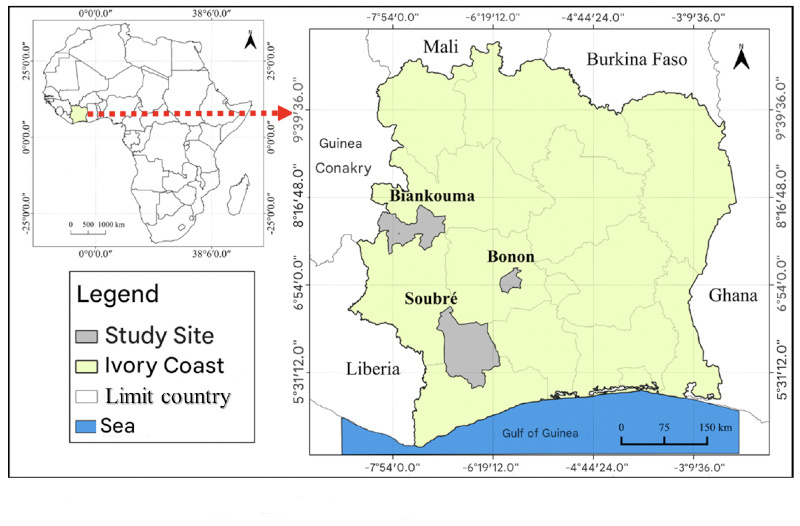 Figure 1. Map of the study sites – Carte des sites d’étude.
2.2. Sampling and data collection
5The selection of farmers was carried out in two stages. The first stage consisted of choosing villages within the three sites selected by the project, namely Bonon, Biankouma and Soubré. The choice of villages and camps per site was made in a reasoned manner with the help of specialized structures such as ANADER (National Agency for Rural Development Support), which oversees farmer supervision in the respective localities. In the second stage, a random selection of 50 cocoa farmers was made in each of the study sites following an exhaustive census of cocoa producers in each village and camp selected in the first stage. The choice of 50 farmers per study area met the criteria of the Cocoa4Future project. Indeed, the project aimed to observe the agricultural practices of producers over a period of five years. Due to budgetary constraints, it was only possible to monitor 50 farmers per site. The mandatory criteria for the census included: being a cocoa farmer, having at least one plot in production and having at least 5 years of experience in cocoa farming.
6The primary data used in this study were collected as part of the Cocoa4Future project observatory. Two main types of data were collected: socio-economic data and ecological data. The socio-economic data were collected from 150 cocoa farmers selected as part of the monitoring of the project's observatory activities, with 50 cocoa farmers per study site. This socio-economic data focused mainly on characteristics such as the farmer's profile, age and previous crop on the farm.
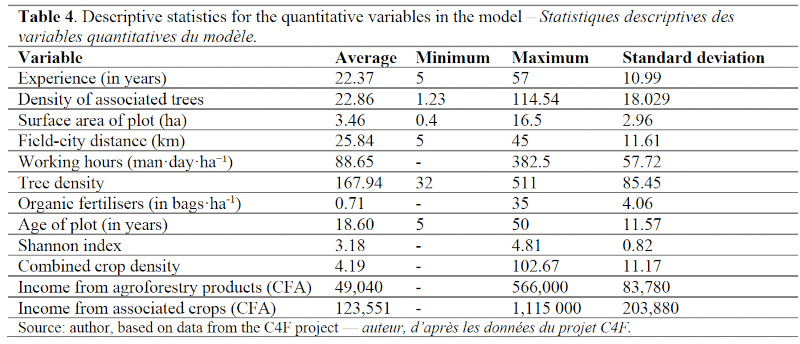
7Ecological data were collected following a two-stage inventory. Firstly, woody species associated with cocoa trees were inventoried using the itinerant survey method, which involves a systematic inventory of all the trees associated with cocoa trees. This method was applied to the 150 farmers’ plots, covering all the plots in all directions. Only woody species with a diameter at breast height (dbh) greater than or equal to 2.5 cm were considered (Konan et al., 2023). Secondly, in order to assess cocoa tree density specifically, 625 m² plots (25 m × 25 m) spaced 200 m apart were set up in cocoa farms, taking into account the production history of each plot (Konan et al., 2023).
2.3. Data analysis
8Determination of floristic composition and diversity in cocoa farms. Species identification was based on the nomenclature of Lebrun & Stork (1997). The floristic data from the inventories were used to assess the floristic richness of the cocoa plantations, and to characterise the morphological types and chorological affinities of the recorded woody species. Floristic richness is defined as the total number of species present within a given surface, regardless of their abundance (Aké-Assi, 1984). Morphological types and chorological affinities were determined on the basis of the work of Aké-Assi (2002). On this basis, the chorological classification distinguishes, on the one hand, between local species, comprising strictly forest species (GC), forest-savanna transition species (GC-SZ) and savanna or Sudano-Zambezian species (SZ); and, on the other hand, exotic species (I).
9To assess the floristic diversity in the cocoa farms, we used the Shannon index (1948). This index, widely recognised in ecology, measures species diversity by simultaneously taking into account the number of species present and the relative abundance of each species. This index measures species heterogeneity and generally ranges between 1.5 and 3.5, rarely exceeding 4.5 (Magurran, 1988).
10The Shannon index is calculated according to the following equation:

11with H: Shannon index; Pi: proportion of species i in the community; Ln: natural logarithm (base e); S: number of species.
12The higher the value of H, the greater the diversity of species in the community. A value of H = 0 indicates a community composed of a single species.
13The Shannon index has been supplemented by Pielou's equitability index (1966), which is used to assess the distribution of individuals among species. Formally, it is determined as follows:

14with E, the Pielou equitability index; H, the Shannon index and S, the total number of species in a biotope.
15Finally, the floristic similarity among the sites was assessed using Sorensen's similarity index. This index is commonly used to evaluate the degree of resemblance between two plant communities based on their species composition. A Sørensen similarity value (K) greater than 50% indicates that the two surveys belong to the same plant community, while a value of less than 50% suggests that they belong to different communities. The Sørensen index is calculated using the following formula:

16with a representing the number of species in plant community 1, b representing the number of species in plant community 2 and c the number of species common to both communities.
17On the basis of these indices, a Kruskal-Wallis test was carried out to compare operators according to ecological zones.
18Finally, cocoa, cashew and rubber are not taken into account in the calculation of diversity indices. Cocoa is considered to be the staple crop, while the other two are considered to be associated crops.
19Identification of factors underlying floristic diversity on cocoa farms. A multiple linear regression model was run on the Shannon index to identify the main determinants of farm diversity. However, given the multi-factorial nature of floristic diversity, the results must be interpreted with caution. The aim here is not to predict diversity perfectly, but to highlight statistically significant relationships between farming practices and observed diversity. The model was validated using a multicollinearity test by calculating the Variance Inflation Factor (VIF) to ensure that there was no problem of multicollinearity between the variables. Finally, descriptive statistics were compiled for each variable studied.
20Assuming that farm diversity depends on ecological and socio-economic factors, our econometric model can be written as follows:

21with YiI, the dependent variable representing the diversity index; β0, the model intercept; β1…βn are the coefficients of the explanatory variables; X1…Xn, are the explanatory variables of the model and ℇ, the error term.
22Following this model, a multicollinearity test was conducted to verify the absence of excessive linear correlation between the explanatory variables.
23The model combines two main components. The first relates to the socio-economic characteristics and farming practices of farmers and their farms. The second component concerns the diversity of associated trees measured using the Shannon diversity index. The choice of this index is justified by the fact that it is widely used in biodiversity studies. It has already been used to assess the degree of diversification of cocoa-based farms in several studies (Jagoret et al., 2009; Kpangui et al., 2015, etc.). All the variables used are specified in table 1.
3. RESULTS
3.1. Floristic composition of cocoa farms
24The botanical surveys recorded a total of 187 woody species associated with cocoa trees across the three study sites. They are divided into 146 genera and 44 families. The most dominant families are Caesalpiniaceae and Moraceae with 16 species each, followed by Euphorbiaceae and Sterculiaceae with 13 species each, then Fabaceae with 11 species (Figure 2). Two genera are the richest in species. These are the Ficus genus with nine species and the Cola genus with six species.
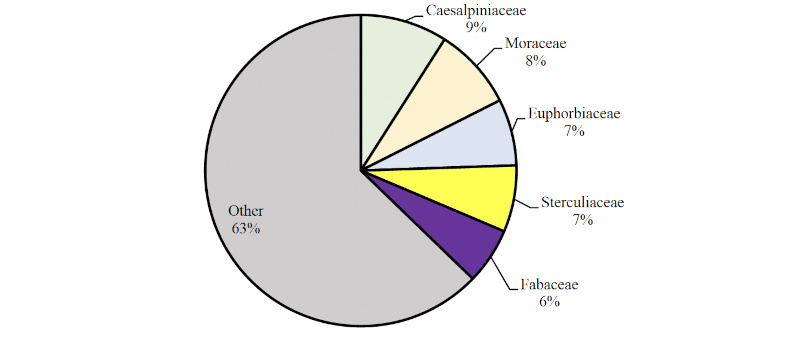
Figure 2. Most dominant families in cocoa farms in the study zones – Familles les plus dominantes dans les fermes de cacao des zones d’étude.
25In addition, four biological types were identified across all study sites (Figure 3). These biological types are phanerophytes. The most numerous were mesophanerophytic lianas (55%) and microphanerophytes (39%). Mesophanerophytes and megaphanerophytes were the least numerous, accounting for 4% and 2% respectively of all the species inventoried. However, microphanerophytes were more numerous in Soubré and Biankouma than in Bonon (Figure 4).
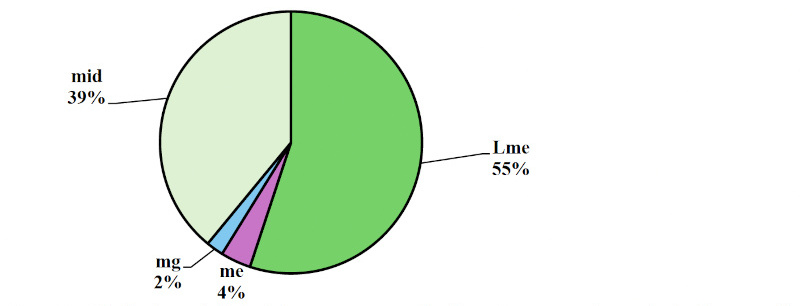
Figure 3. Distribution of biological types across all sites (Lme: mesophanerophytic lianas; mid: microphanerophytes; mg: megaphaneropytes; me: mesophanerophytes) – Répartition des types biologiques sur l’ensemble des sites (Lme : lianes mésophanérophytiques ; mid : microphanérophytes ; mg : mégaphanérophytes ; me : mésophanérophytes).
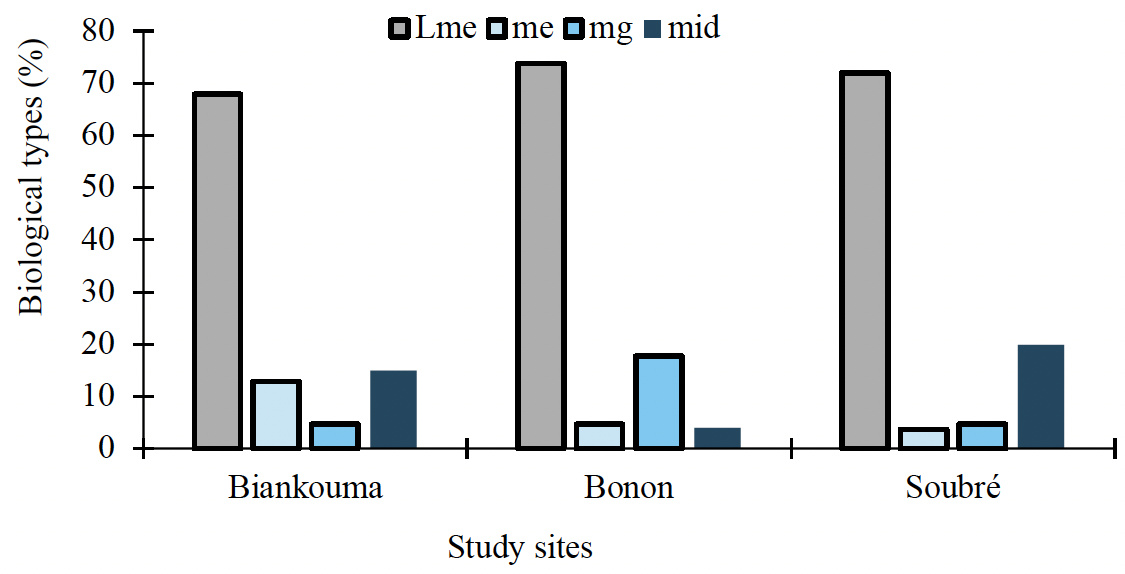
Figure 4. Distribution of biological types at different sites (Lme: Mesophanerophytics lianas; mid: microphanerophytes; mg: megaphaneropytes; me : mesophanerophytes) – Répartition des types biologiques sur différents sites (Lme : lianes mésophanérophytiques ; mid : microphanérophytes ; mg : mégaphanérophytes ; me : mésophanérophytes).
26The phytogeographical distribution of individual plant species recorded at the various study sites shows that individuals of species from the forest-savannah transition zone (GC-SZ) were the most abundant (75%), followed by introduced species (13%) (Figure 5). Across the study areas, it can be seen that species from the forest-savannah transition zone (GC-SZ) are most numerous in Biankouma and Soubré. The Bonon locality is particularly marked by a high proportion of introduced species (Figure 6).
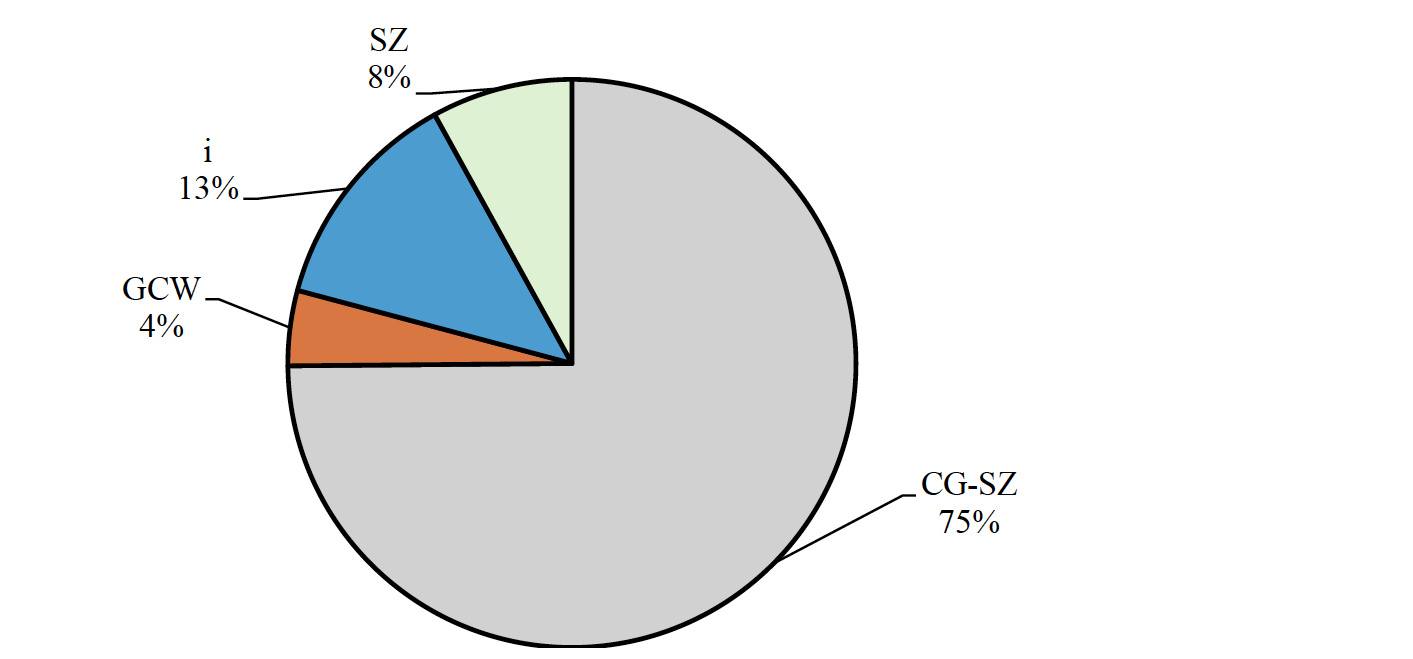
Figure 5. Distribution of chorological affinities across all sites (GC-SZ: Guineo-Congolian-Sudano-Zambezian species; SZ: Sudano-Zambezian species; i: introduced species; GCW: Guineo-Congolese Western species) – Répartition des affinités chorologiques sur l’ensemble des sites (GC-SZ : espèces guinéo‑congolaises–soudano‑zambéziennes ; SZ : espèces soudano‑zambéziennes ; i : espèces introduites ; GCW : espèces guinéo-congolaises occidentales).
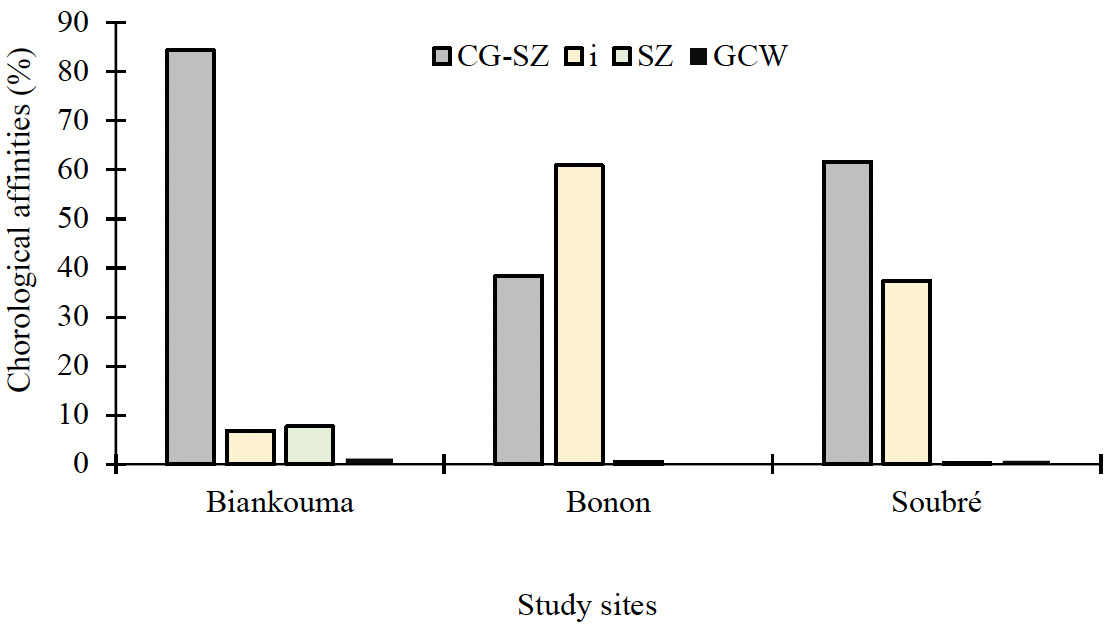
Figure 6. Distribution of chorological types in the different study sites (GC-SZ: Guineo-Congolian-Sudano-Zambezian species; SZ: Sudano-Zambezian species ; i: introduced species; GCW: Guineo-Congolese Western species) – Répartition des types chorologiques dans les différents sites d’étude (GC‑SZ : espèces guinéo‑congolaises–soudano‑zambéziennes ; SZ : espèces soudano‑zambéziennes ; i : espèces introduites ; GCW : espèces guinéo-congolaises occidentales).
273.2. Floristic diversity of cocoa farms
28The Shannon diversity index values (Table 2) show that cocoa farms in the Biankouma area exhibit the highest species diversity (H = 5.125) compared to the other study sites. This higher diversity is consistent with the total number of species recorded, with 137 species in Biankouma, compared to 96 species in Bonon and 101 species in Soubré.
29The equitability index calculated in the different study zones indicates values tending towards 1, which means that individuals of woody species are well distributed in the cocoa farms.
30At the plot level, farmers in Biankouma maintained an average of 33.4 associated trees per hectare, which was significantly higher than densities observed in Bonon (18.5) and Soubré (16.7) (Table 3). This higher tree density at Biankouma is logically accompanied by an equally high average species richness per hectare (9.73 species), compared with 6.12 in Soubré and only 5.06 in Bonon.
31The Shannon diversity index also reflects this trend, with a significantly higher mean value in Biankouma (3.47) compared with Soubré (3.11) and Bonon (2.98). The Pielou equitability index also shows a more even distribution of species in Soubré (0.82) and Biankouma (0.81) than in Bonon (0.77).
32Analysis of floristic similarity between the study sites using the Venn diagram and Sørensen indices (Figure 7) revealed varying levels of similarity between cocoa farms in the different study zones. A core set of 53 woody species was common to all sites. However, each site also has a significant proportion of unique species, particularly Biankouma with 52 specific species. In addition, the calculation of the Sørensen indices indicated values greater than 50%, meaning that there is a similarity in the woody species associated with cocoa plantations across the study areas.
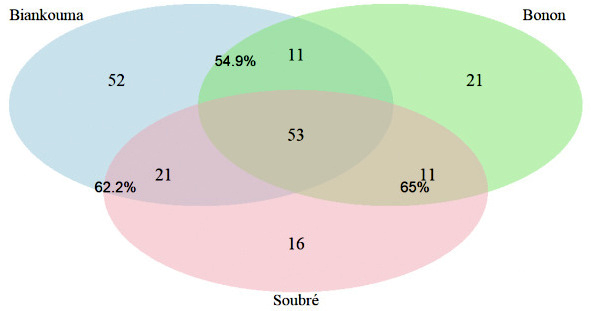
Figure 7. Venn diagram of shared species and Sørensen index – Diagramme de Venn des espèces partagées et indice de Sørensen.
333.3. Characteristics of cocoa farmers and cocoa farms
34Table 4 presents the descriptive statistics for the main quantitative variables used in the econometric analysis. Their average experience of cocoa farming is 22.37 years. The average size of the plots is 3.46 ha, with significant variability (0.4 to 16.5 ha). These plantations have an average age of 18.6 years, with some reaching up to 50 years old. In terms of accessibility, the fields were located an average of 25.84 km from nearest urban centres.
35With regard to agricultural practices, the average density of cocoa trees was 167.94 plants per hectare, with a maximum of 511 plants per hectare. Trees associated with cocoa were present at an average of 22.85 individuals per hectare, with considerable variability (from 1.23 to 114.54). On the other hand, the density of associated crops varied between 0 and 102.67 individuals per hectare, with an average of 4.19 plants per hectare. Maintaining the plots required an average of 88.65 man·day·ha-¹, although some farms required more than 380 man·day·ha-¹.
36The use of organic fertilisers remains marginal, with an average of 0.71 bags·ha-1, although some farmers use up to 35 bags. In economic terms, the income generated by agroforestry products and associated crops was very heterogeneous. On average, producers earned 49,040 FCFA (74.76 €) from agroforestry products and 123,551 FCFA (188.35 €) from intercropping. In some cases, this income can reach 566,000 FCFA (862.86 €) for agroforestry products and 1,115 000 FCFA (1,699.81 €) for intercropping. Finally, floristic diversity, as measured by the Shannon index, shows values ranging from 0 to 4.81, with an average of 3.18.
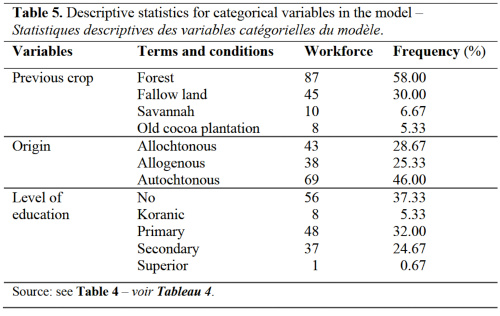
37About 58% of respondents indicated that their plots were previously occupied by forest (Table 5). In addition, 30% of farmers left fallow land, while 6.67% and 5.33% left savannah and former cocoa fields respectively. Three main groups of farmers were identified: autochtonous, allochtonous and allogenous. Autochtones farmers refer to people originating from the locality under study. Allochtones farmers are producers from other regions of the country while allogenous farmers are producers originate from neighboring or foreign countries. In this study, around 46% were autochtonous, allochtonous accounted for 28.67%, while allogenous made up 25.33%. Regarding education, nearly 37% of farmers had no formal education. However, a significant proportion, 57%, had benefited from formal education, with 31.33% having a primary education, 25.33% a secondary education and only 0.67% having attained a higher level. Additionally, 5.33% of farmers had received a Koranic education.
383.4. Factors influencing floristic diversity in cocoa farms
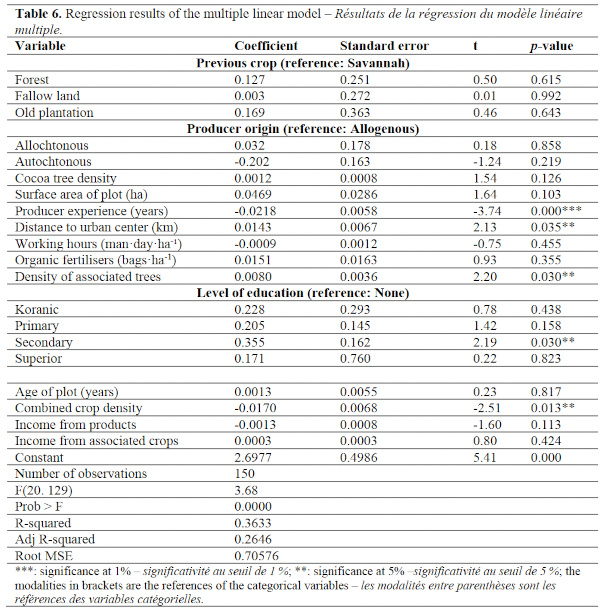
39Analysis of the table 6 shows that the multiple linear regression model was significant overall at the 1% level, with an R² of 36% indicating that the model explains a substantial portion of the variation in floristic diversity. Several variables were statistically significant. The farmer’s experience and the density of associated crops had a negative influence on floristic diversity at the 1% and 5% thresholds respectively. Conversely, the distance between the farm and the nearest urban centre, the farmer's level of education and the total number of associated trees per hectare in terms of number of individuals had a positive influence on floristic diversity at the 5% threshold.
40Other variables such as plot size, plot age, use of organic fertilisers, previous crop, producer origin, cocoa tree density, working time and farm income were not significant in the model.
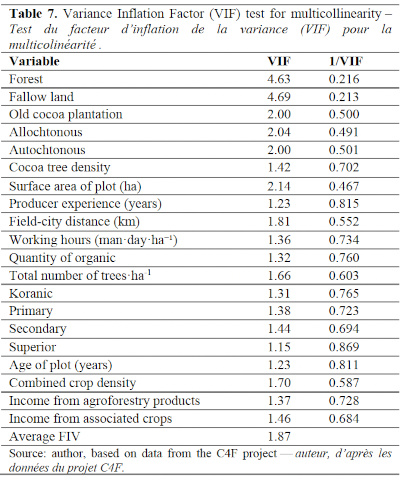
41Table 7 shows that all Variance Inflation Factor (VIF) values are below 5. This indicates that multicollinearity among the explanatory variables is likely not a concern, and no specific corrective measures are required.
4. DISCUSSION
42This study analyses floristic diversity in cocoa farms in Côte d'Ivoire and examines the factors likely to influence it. The results show that the new production zone of Biankouma is characterised by agroforestry systems with higher tree density and greater species richness. From this emerging zone to the older production zone of Bonon, there was a gradual decline in abundance and species richness, a trend confirmed by Shannon indices. These results are in line with those of Kouadio et al. (2025) who also reported a decline in floristic richness linked to the age of cocoa production in these same study zones. This situation can be explained by the fact that the cocoa farms in Biankouma were established around the year 2000 on land previous covered by forest (Barima et al., 2020).
43It is therefore likely that a significant number of trees from these forests still exist within these young farms, encouraging higher floristic diversity. These observations corroborate the findings of Adou Yao & N'Guessan (2006) and Konan et al. (2011) who showed that the floristic diversity of cocoa plantations is influenced by the age of the farms and land-use history of the production area. In addition, a large proportion of the plots at Biankouma are located on mountainsides with altitude reaching approximately 1,000 m (Perraud et al., 1971). This geographical constraint reduces accessibility and limit logging activities, thereby favoring the conservation of large trees in this region. In fact, the difficult access to the mountainous areas increases the chances of finding an abundance and diversity of plant species in these cocoa plantations. These observations are supported by Honvou et al. (2021) who have shown that the floristic diversity of ecosystems is closely linked to their topography. Specific geographical features, such as altitude and mountain slopes, create favourable conditions for preserving and maintaining floristic diversity.
44Overall, the Shannon indices obtained in this study are higher than those generally observed in cocoa agroforests (Jagoret et al., 2011; Jagoret et al, 2012; Deheuvels et al., 2014; Jagoret et al., 2014; Kpangui et al., 2015; Abada et al., 2016; Wainaina et al., 2021; Konan et al., 2023; Boadi et al., 2024; Kouadio et al., 2025). However, they are comparable to the values reported by Penanjo et al. (2014) in agroforests in south-east Cameroon. These differences may be attributed to the intensity of the sampling effort or to the method used to estimate the diversity indices. In the present study, the species census was carried out at the scale of the entire plot, which increases the probability of identifying a greater number of species. In contrast, other studies have estimated diversity at different spatial and analytical scales, such as by type of agroforestry system (Konan et al., 2023), by age class (Kouadio et al., 2025) or by plot (Kpangui et al., 2015). By compartmentalising the plots, these approaches can lead to differentiated results. Pielou's equitability index suggests that Bonon's farms are not only less rich. They are more dominated by a few species, reflecting less balanced diversity. As a result, although Bonon's farmers maintain more individuals on average than those in Soubré, they host fewer species per hectare. The contrast between Bonon and Soubré highlights an important point: tree density does not necessarily guarantee high diversity if the trees present belong to a limited number of species.
45At Bonon, although the farmers keep a greater number of trees per hectare, they seem to concentrate on a small group of species. This choice may be the result of an economic rationale, linked to the opportunities offered by the region (Batsi et al., 2020). Bonon plays a key role in the supply of foodstuffs to major cities, particularly Abidjan. Its strategic geographical location also makes it easier to sell agricultural produce to other towns in the country. This dynamic may encourage producers to favour species with a high economic value at the expense of overall floristic diversity.
46Sørensen's similarity indices, all above 50%, confirm that the different sites share a significant proportion of their floristic composition. The greatest similarity is observed between Bonon and Soubré, which can be explained by the fact that they both belong to the dense rainforest zone. Conversely, the floristic specificity of Biankouma is explained by its position in the forest-savanna transition zone (Guillaumet & Adjanohoun, 1971; Kpangui et al., 2021). This particular location, at the crossroads of two major vegetation formations, increases the probability of encountering species specific to the savannah, thus creating more dissimilarities with other localities.The multiple regression model applied to the Shannon index shows that the variables introduced explain only 36% of the variance in floristic diversity. Although this level of explanation may seem modest, it is consistent with the inherent complexity of the variable studied. Indeed, ecological diversity results from interactions among numerous biotic (Wunderle, 1997), abiotic (Derroire et al., 2016) and socio-economic (Bisseleua & Vidal, 2008; Clough et al., 2011; Batsi et al., 2020) factors, some of which cannot be observed or quantified directly. In particular, the diversification of species on farms can be constrained by random ecological processes, such as seed germination, which depends on the method of dissemination and the effectiveness of dispersing agents (Wunderle, 1997). According to this author, even under optimal conditions, certain species with heavy seeds or limited dispersal capacity cannot disperse efficiently without human intervention. Furthermore, in cocoa plantations, high shade level can slow germination, thus limiting natural regeneration and, consequently, floristic diversity (Kouadio et al., 2025). Thus, the significant proportion of variability not explained by the model reflects the partially deterministic and highly contextual nature of tree diversity. This partial explanation, although limited, remains statistically significant and relevant in the context of a phenomenon as complex as biodiversity in agroforestry systems.
47Finally, the low R² value observed in our model may be explained by the absence of certain ecological variables not included in the model. These are soil quality, species dispersal mode, proximity of farms to forests and local climatic conditions (rainfall and temperature). The future integration of these parameters would probably improve the explanatory power of the model. Such a process would allow us to better understand the complexity of the factors influencing floristic diversity within farms. The results of the linear regression show that the distance between farms and nearby urban centres has a significant influence on the floristic diversity of cocoa farms. The further the farms are from the towns, the less they are subject to anthropogenic pressures. It is likely that farmers near towns concentrate their efforts on species with high economic potential, neglecting those that bring them little benefit. These purely economic reasons may influence the level of diversity on cocoa farms (Roussy et al., 2015).
48This finding contrasts with other studies suggesting that proximity to markets can encourage diversification by providing opportunities to commercialize a wider range of farm products (Sonwa et al., 2007; Temgoua et al., 2019; Batsi et al., 2020). For example, in Congo, Batsi et al. (2020) observed that farms close to major urban areas had an abundance of economically valuable species such as oil palms and edible fruit trees such as avocado (Persea americana) and African pepper (Xylopia aethiopica). Furthermore, the density of associated trees has a positive influence on the overall floristic diversity of the farms. This suggests the presence of a relatively rich floristic reservoir within these systems. Each species contributes to enriching the floristic composition of the farm, thus increasing the variability of the ecological niches available. Indeed, the number of stems of species present in an environment can be positively correlated with its overall diversity, as shown by Adou Yao & N'Guessan (2006). However, this relationship is not systematic. As noted by Batsi et al. (2020), in some cases, a high density of individuals may be the result of the predominance of a few species, which limits effective diversity.
49This contrast is illustrated by the comparison between the Soubré and Bonon sites, although Bonon exhibits a higher density of individuals, it displays lower species richness than Soubré. This result highlights the importance of seeking a balance between the abundance of individuals and the diversity of species in farm management. A management approach that promotes both sufficient density and high species diversity could strengthen the ecological resilience of cocoa-based agroforestry systems (Kieck et al., 2016).
50On the other hand, there appears to be a trade-off between crop intensification and floristic diversity. The density of associated crops acts as a limiting factor here, as excessive crop density can increase competition for available resources (light, water, nutrients) to the detriment of woody or spontaneous species. This pressure may also encourage farmers to eliminate species perceived as unproductive or cumbersome, thereby reducing the overall richness of the flora. It is as if, in certain contexts, associated crops are gradually replacing the functional role traditionally played by trees within farms (Vaast & Somarriba, 2014).
51In Bonon, for example, farmers have discovered the agronomic value of cashew (Anacardium occidentale), particularly in combating swollen shoot. This interest, combined with the plant's economic value, has led growers in this locality to focus more on this species, to the detriment of other woody or naturally regenerating species (Ruf et al., 2019). This observation illustrates that, while intercropping can help to enrich diversity to some extent, over-intensive or unbalanced management tends to homogenise systems and impoverish their floristic composition (Batsi et al., 2020).
52Conversely, the level of education of farmers had a differentiated effect on floristic diversity. Only those with secondary education had a significant and positive influence. This finding suggests that a certain level of education encourages a better understanding, and even greater appreciation, of tree diversity within their production systems. It is also plausible that farmers with a higher level of education could theoretically better perceive the importance of diversity. However, their limited representation in the sample could have limited the statistical significance of this modality in the model. In contrast, farmers with only a primary education may have a more limited understanding of the issues related to diversification. Despite attending school, many lose basic reading and writing skills. This may therefore reduce their ability to assimilate technical training and effectively implement diversification practices.
53More educated farmers are generally more inclined to access technical information, take part in training or get involved in sustainable development initiatives (Kpadenou et al., 2019). This educational capital strengthens their ability to perceive the long-term agronomic and ecological benefits associated with greater tree diversity (Konaté, 2021). Education thus appears to be a strategic lever for promoting biodiversity in cocoa agroforestry systems (Mercer, 2004). Finally, the results show that farmers' experience is a limiting factor for floristic diversity on farms. The most experienced farmers tend to favour species they are familiar with and consider useful, which can slow down the adoption of new species (Derrouch et al., 2020). In the absence of clear financial incentives or tangible benefits associated with diversification, these farmers may remain attached to their traditional practices. Indeed, according to a collective scientific appraisal by INRA, the lack of available information on the performance of innovative cropping systems leads farmers to assess them based on their prior knowledge and personal experience (Roussy et al., 2015). These observations highlight that a farmer's farming experience can also act as a brake on the adoption of diversified farming practices, due to a marked preference for tried and tested methods perceived as less risky. Taken together, these results, when compared with the literature, highlight the need for a concerted approach involving all stakeholders in the cocoa sector. To reconcile economic incentives for monoculture farming with biodiversity conservation objectives, it appears essential to rethink public intervention methods. One relevant avenue is to favor bottom-up approaches, where farmers are placed at the heart of program design and implementation. This participatory approach enables better integration of local realities, knowledge systems, and the economic constraints faced by producers. By placing farmers at the center of decision-making processes, policies are more likely to be context-specific, socially acceptable, and effective. Furthermore, the implementation of subsidy or compensation mechanisms could encourage producers to adopt more diversified practices. Such measures would help create a sustainable balance between economic performance and environmental objectives.
5. CONCLUSIONS
54The aim of this study was to analyse the floristic diversity of cocoa farms in Côte d'Ivoire, as well as the factors likely to influence it. The results of the floristic inventories yielded 187 woody species associated with cocoa trees in the Biankouma, Bonon and Soubré areas. They are divided into 146 genera and 44 families. Specifically, cocoa farms show varying levels of diversification depending on the cocoa production zone. However, farms located in the new cocoa production zone in Biankouma have a higher floristic diversity than those in the older zones of Bonon and Soubré. Despite these differences, there is a floristic similarity in the woody species associated with cocoa trees between the different cocoa production zones, due to the fact that they all belong to the dense rainforest zone. Furthermore, the econometric analysis reveals that several factors have a significant influence on the floristic diversity of farms. Farmers' agricultural experience and the density of associated crops appear to be factors limiting tree diversity. In addition, the distance between farms and urban centres, the farmers' level of secondary education and the number of associated trees are all factors that contribute positively to the floristic diversity of cocoa farms.
55This research makes an important contribution to the literature on cocoa plantation sustainability by highlighting the interaction between ecological and socioeconomic dimensions in the formation of floristic diversity. The analysis of these interactions provides practical elements for agricultural development policies and programs. Thus, public authorities, NGOs, and technical partners could integrate measures aimed at reconciling economic profitability and biodiversity preservation. Future studies could focus on institutional dimensions, particularly the role of agricultural standards. For example, it would be relevant to conduct longitudinal monitoring of farms to assess how the new ARS1000 standard has influenced floristic diversity.
56Conflict of interests
57The authors declare no conflicts of interest.
58Funding
59This study was conducted within the framework of the Cocoa4Future (C4F) project, which is funded by the European DeSIRA Initiative under grant agreement No. FOOD/2019/412-132 and by the French Development Agency. The C4F project pools a broad range of skills and expertise to meet West African cocoa production development challenges. It brings together many partners jointly striving to place people and the environment at the core of tomorrow's cocoa production.
Bibliographie
Abada M.M.M. et al., 2016. The role of cocoa agroforestry systems in conserving forest tree diversity in the Central region of Cameroon. Agrofor. Syst., 90(4), 577-590, doi.org/10.1007/s10457-016-9945-8
Adou Yao C.Y. & N'Guessan E.K., 2006. Diversité floristique spontanée des plantations de café et de cacao dans la forêt classée de Monogaga, Côte d'Ivoire. Schweiz. Z. Forstwes., 157(2), 31-36.
Aké-Assi L., 1984. Flore de la Côte d'Ivoire : étude descriptive et biogéographique avec quelques notes ethnobotaniques. Thèse de doctorat : Université d’Abidjan (Côte d’Ivoire).
Aké-Assi L., 2002. Flore de la Côte d'Ivoire 2. Catalogue systématique, biogéographie et écologie. Genève, Suisse : Conservatoire et Jardin Botanique.
Anglaaere L.C.N., Cobbina J., Sinclair F.L. & McDonald M.A., 2011. The effect of land use systems on tree diversity: farmer preference and species composition of cocoa-based agroecosystems in Ghana. Agrofor. Syst., 81(3), 249-265, doi.org/10.1007/s10457-010-9366-z
Barima Y.S.S. et al., 2016. Cocoa crops are destroying the forest reserves of the classified forest of Haut-Sassandra (Ivory Coast). Global Ecol. Conserv., 8, 85-98, doi.org/10.1016/j.gecco.2016.08.009
Barima Y.S.S., Konan G.D., Kouakou A.T.M. & Bogaert J., 2020. Cocoa production and forest dynamics in Ivory Coast from 1985 to 2019. Land, 9(12), 524, doi.org/10.3390/land9120524
Batsi G. et al., 2020. Biodiversity of the cocoa agroforests of the Bengamisa-Yangambi forest landscape in the Democratic Republic of the Congo (DRC). Forests, 11(10), 1096, doi.org/10.3390/f11101096
Bennett R.E., Sillett T.S., Rice R.A. & Marra P.P., 2022. Impact of cocoa agricultural intensification on bird diversity and community composition. Conserv. Biol., 36(1), e13779, doi.org/10.1111/cobi.13779
Bisseleua D., Hervé B. & Vidal S., 2008. Plant biodiversity and vegetation structure in traditional cocoa forest gardens in southern Cameroon under different management. Biodivers. Conserv., 17(8), 1821-1835, doi.org/10.1007/s10531-007-9276-1
Boadi S.A. et al., 2022. The role of innovation in sustainable cocoa cultivation: moving beyond mitigation and adaptation. In: Coromaldi M. & Auci S., eds. Climate-induced innovation. Cham, Switzerland: Springer International Publishing, 47-80.
Boadi S. et al., 2024. Variability in forest tree species composition and diversity in different aged cocoa agroforests of Ghana. Agrofor. Syst., 98(1), 255-268, doi.org/10.1007/s10457-023-00903-6
Carlos G.-O.E., Osorio-Guarín J.A. & Yockteng R., 2023. Phylogenetic diversity of cacao (Theobroma cacao L.) genotypes in Colombia. Plant Genet. Resour. Charact. Util., 20(3), 203-214, doi.org/10.1017/S1479262123000047
Cerda R. et al., 2020. Coffee agroforestry systems capable of reducing disease-induced yield and economic losses while providing multiple ecosystem services. Crop Prot., 134, 105149, doi.org/10.1016/j.cropro.2020.105149
Clough Y. et al., 2011. Combining high biodiversity with high yields in tropical agroforests. PNAS, 108(20), 8311-8316, doi.org/10.1073/pnas.1016799108
Deheuvels O. et al., 2014. Biodiversity is affected by changes in management intensity of cocoa-based agroforests. Agrofor. Syst., 88(6), 1081-1099, doi.org/10.1007/s10457-014-9710-9
Derroire G., Tigabu M., Odén P.C. & Healey J.R., 2016. The effects of established trees on woody regeneration during secondary succession in tropical dry forests. Biotropica, 48(3), 290-300, doi.org/10.1111/btp.12287
Derrouch D., Dessaint F., Felten É. & Chauvel B., 2020. L'adoption du semis direct sous couvert végétal : transition douce ou rupture ? Cah. Agric., 295, doi.org/10.1051/cagri/2020003
Froufe L.C.M. et al., 2020. Nutrient cycling from leaf litter in multistrata successional agroforestry systems and natural regeneration at Brazilian Atlantic rainforest biome. Agrofor. Syst., 94(1), 159-171, doi.org/10.1007/s10457-019-00377-5
Guillaumet J.-L. & Adjanohoun E., 1971. La végétation de la Côte d’Ivoire. In : Avenard J.M. et al., eds. Le milieu naturel de la Côte d’Ivoire. Paris : Mémoire ORSTOM.
Honvou S.H.S. et al., 2021. Floristic diversity, structure and distribution of plant groups in transhumant rangelands in the Lower and Middle Ouémé Valley, Benin. Int. J. Biol. Chem. Sci., 15(1), 81-96, doi.org/10.4314/ijbcs.v15i1.8
Jagoret P. et al., 2009. Diversification of cocoa-based farms in Central Cameroon: myth or reality? Biotechnol. Agron. Soc. Environ., 13(2), 271-280.
Jagoret P., Michel-Dounias I. & Malézieux E., 2011. Long-term dynamics of cocoa agroforests: a case study in central Cameroon. Agrofor. Syst., 81(3), 267-278, doi.org/10.1007/s10457-010-9368-x
Jagoret P. et al., 2012. Afforestation of savannah with cocoa agroforestry systems: a small-farmer innovation in central Cameroon. Agrofor. Syst., 86(3), 493-504, doi.org/10.1007/s10457-012-9513-9
Jagoret P. et al., 2014. Farmers' assessment of the use value of agrobiodiversity in complex cocoa agroforestry systems in central Cameroon. Agrofor. Syst., 88(6), 983-1000, doi.org/10.1007/s10457-014-9698-1
Jinger D. et al., 2022. Agroforestry for controlling soil erosion and enhancing system productivity in ravine lands of Western India under climate change scenario. Environ. Monit. Assess., 194(4), article n°267, doi.org/10.1007/s10661-022-09910-z
Kanwal M.S., Yadava A.K. & Vishvakarma S.C.R., 2022. Crop productivity and soil properties under agroforestry system in Kosi watershed of Kumaun Himalaya. Indian J. Ecol., 49(1), 21-30.
Kieck J.S. et al., 2016. Plant diversity effects on crop yield, pathogen incidence, and secondary metabolism on cacao farms in Peruvian Amazonia. Agric. Ecosyst. Environ., 222, 223-234, doi.org/I:10.1016/j.agee.2016.02.006
Konan D. et al., 2011. Étude comparative de la flore ligneuse des plantations de cacao en fonction de l’âge et des groupes ethniques dans le centre-ouest de la Côte d'Ivoire. Ann. Bot. Afr. Ouest, 7, 59-79.
Konan G.D., Kpangui K.B., Kouakou K.A. & Barima Y.S.S., 2023. Typology of cocoa-based agroforestry systems according to the cocoa production gradient in Côte d'Ivoire. Int. J. Biol. Chem. Sci., 17(2), 378-391.
Konaté N., 2021. Analyse socioéconomique des exploitations familiales de cacao dans les sites de l'Observatoire cocoa for future à Bonon et Soubre en Côte d'Ivoire. Mémoire de Master : Université Jean Lorougnon Guédé Daloa (Côte d'Ivoire).
Kouadio H.K., Ouattara V.T., Koffi S.K. & Kotaix J.A.A., 2023. The impact of traditional cocoa-based agroforestry systems on chemical soil fertility in southwest of Côte d'Ivoire. World J. Adv. Res. Rev., 19(1), 1300-1309, doi.org/10.30574/wjarr.2023.19.1.1448
Kouadio K.A.L. et al., 2025. Floristic structure, potential carbon stocks, and dynamics in cocoa-based agroforestry systems in Côte d'Ivoire (West Africa). Agrofor. Syst., 99(1), article n°12, doi.org/10.1007/s10457-024-01103-6
Kpadenou C.C., Tama C., Tossou B.D. & Yabi J.A., 2019. Socio-economic determinants of the adoption of agro-ecological practices in vegetable production in the Niger Valley, Benin. Int. J. Biol. Chem. Sci., 13(7), 3103-3118.
Kpangui K.B., Vroh B.T.A., Goné B.Z.B. & Adou Y.C.Y., 2015. Floristic and structural diversity of "v baoulé" cocoa plantations: the case of Kokumbo sub-prefecture (Centre, Côte d'Ivoire). Eur. Sci. J., 11(36), 40-60.
Kpangui K.B., Konan G.D., Koua K.A.N. & Barima Y.S.S., 2021. Impacts of cocoa tree establishment on landscape dynamics in the forest-savanna contact zone of Biankouma (West, Ivory Coast). Agron. Afr., 33(1), 57-68.
Läderach P., Martinez-Valle A., Schroth G. & Castro N., 2013. Predicting the future climatic suitability for cocoa farming of the world's leading producer countries, Ghana and Côte d'Ivoire. Clim. Change, 119(3-4), 841-854, doi.org/10.1007/s10584-013-0774-8
Lebrun J.-P. & Stork A.L., 1997. Énumération des plantes à fleurs d'Afrique tropicale : 4. Gamopétales : Clethraceae à Lamiaceae. Genève, Suisse : Conservatoire et Jardin Botaniques.
Magurran A.E., 1988. Ecological diversity and its measurement. London: Chapman & Hall (reprinted by Springer).
Maney C., Sassen M. & Hill S.L.L., 2022. Modelling biodiversity responses to land use in areas of cocoa cultivation. Agric. Ecosyst. Environ., 324, article n°107712, doi.org/10.1016/j.agee.2021.107712
Mercer D.E., 2004. Adoption of agroforestry innovations in the tropics: a review. Agrofor. Syst., 61-62(1-3), 311-328, doi.org/10.1023/B:AGFO.0000029007.85754.70
Ndah N.R. et al., 2023. Crop diversification and sustainability in a cocoa agroforestry system in Meme division South West Region, Cameroon. Asian J. Res. Agric. For., 9(2), 1-15, doi.org/10.9734/ajraf/2023/v9i2196
Notaro M., Gary C. & Deheuvels O., 2020. Plant diversity and density in cocoa-based agroforestry systems: how farmers' income is affected in the Dominican Republic. Agrofor. Syst., 94(3), 1071-1084, doi.org/10.1007/s10457-019-00472-7
Obeng E.A. et al., 2020. Economic value of non-market ecosystem services derived from trees on cocoa farms. Curr. Res. Environ. Sustainability, 2, article n°100019, doi.org/10.1016/j.crsust.2020.100019
Oliveira S., Raneri J.E. & Weise S.F., 2023. Assessing biodiversity conditions in cocoa agroforests with a rapid assessment method: outcomes from a large-scale application in Ghana. Diversity, 15(4), 503, doi.org/10.3390/d15040503
Olwig M.F., Skovmand B.A. & Owusu K., eds., 2024. Agroforestry as climate change adaptation: the case of cocoa farming in Ghana. Cham, Switzerland : Springer International Publishing.
Penanjo S., Fongnzossie F.E., Kemeuze V.A. & Nkongmeneck B.-A., 2014. Species composition and abundance of non-timber forest products among the different-aged cocoa agroforests in Southeastern Cameroon. Afr. Study Monogr., Suppl. 49, 47-67.
Perraud A. et al., 1971. Les sols. Le milieu naturel de la Côte d'Ivoire. Paris : Mémoire ORSTOM, 50, 157-263.
Pielou E.C., 1966. Species diversity and pattern diversity in the study of ecological succession. J. Theor. Biol., 10(2), 370-383, doi.org/10.1016/0022- 5193(66)90133-0
Roussy C., Ridier A. & Chaib K., 2015. Adoption d’innovations par les agriculteurs : rôle des perceptions et des préférences. [Travaux universitaires] auto-saisine. Rennes, France : INRA.
Ruf F.O., 2011. The myth of complex cocoa agroforests: the case of Ghana. Hum. Ecol., 39(3), 373-388, doi.org/10.1007/s10745-011-9392-0
Ruf F. & Schroth G., 2004. Chocolate forests and monocultures: a historical review of cocoa growing and its conflicting role in tropical deforestation and forest conservation. Agrofor. Biodivers. Conserv. Trop. Landscape, 6, 107-134.
Ruf F., Kone S. & Bebo B., 2019. The cashew boom in Côte d'Ivoire: ecological and social transition of cotton- and cocoa-based systems. Cah. Agric., 28, article n°21, doi.org/10.1051/cagri/2019019
Schwendenmann L. et al., 2010. Effects of an experimental drought on the functioning of a cacao agroforestry system, Sulawesi, Indonesia. Global Change Biol., 16(5), 1515-1530, doi.org/10.1111/j.1365-2486.2009.02034.x
Shannon C.E., 1948. A mathematical theory of communication. Bell Syst. Tech. J., 27(3), 379-423, doi.org/10.1002/j.1538-7305. 1948.tb01338.x
Simpson E.H., 1949. Measurement of diversity. Nature, 163(4148), 688, doi.org/10.1038/163688a0
Sonwa D.J. et al., 2007. Diversity of plants in cocoa agroforests in the humid forest zone of Southern Cameroon. Biodivers. Conserv., 16(8), 2385-2400, doi.org/10.1007/s10531-007-9187-1
Sumilia S., Akhir N. & Syarif Z., 2019. Plant diversity in various agroforestry system based on cocoa in Pasaman, West Sumatra. Int. J. Environ. Agric. Biotechnol., 4(2), 402-406, doi.org/10.22161/ijeab/4.2.22
Temgoua F.L., Momo Solefack M.C. & Boucheké R.K., 2019. Floristic diversity of woody trees in cocoa agroforestry systems of littoral Cameroon: case of Loum arrondissement. Eur. Sci. J., 15(9), doi.org/10.19044/esj.2019.v15n9p62
Tscharntke T. et al., 2011. Multifunctional shade-tree management in tropical agroforestry landscapes - a review: multifunctional shade-tree management. J. Appl. Ecol., 48(3), 619-629, doi.org/10.1111/j.1365-2664.2010.01939.x
Vaast P. & Somarriba E., 2014. Trade-offs between crop intensification and ecosystem services: the role of agroforestry in cocoa cultivation. Agrofor. Syst., 88(6), 947-956, doi.org/10.1007/s10457-014-9762-x
Wainaina P., Minang P.A., Duguma L. & Muthee K., 2021. A review of the trade-offs across different cocoa production systems in Ghana. Sustainability, 13(19), article n°10945, doi.org/10.3390/su131910945
Wunderle J.M., 1997. The role of animal seed dispersal in accelerating native forest regeneration on degraded tropical lands. For. Ecol. Manage., 99(1-2), 223-235, doi.org/10.1016/S0378-1127(97)00208-9
