


- Home
- Volume 30 (2026)
- Numéro 2
- Physical weed control: a review in Belgian conditions. Part 1: Specificities of Walloon agriculture and their impact on the potential of physical weeding


View(s): 253 (2 ULiège)
Download(s): 53 (1 ULiège)

Physical weed control: a review in Belgian conditions. Part 1: Specificities of Walloon agriculture and their impact on the potential of physical weeding

Résumé
Lutte physique contre les mauvaises herbes : une revue dans des conditions belges. Partie 1 : spécificités de l’agriculture wallonne et leur impact sur le potentiel du désherbage physique
Introduction. L’utilisation des herbicides est remise en question en raison de leur impact sur la santé et l’environnement. Les solutions de désherbage physique sont une alternative encore peu utilisée en Belgique. L’agriculture et le contexte régional dans lequel elle se développe ont un impact sur la possibilité qu’ont les agriculteurs d’intégrer des outils de désherbage physique dans leurs pratiques culturales.
Littérature. Des facteurs externes ou internes aux exploitations agricoles peuvent expliquer le manque d’utilisation des alternatives au désherbage chimique. Les caractéristiques pédologiques, et notamment la teneur en argile, la charge caillouteuse superficielle et la présence de pentes, ont un impact sur la possibilité d’utiliser les outils de désherbage mécanique qui interagissent avec le sol. Le climat est également un facteur qui limite les plages disponibles pour une bonne réussite du désherbage. Les caractéristiques intrinsèques des fermes telles que leur assolement, leur taille, la structure de leur main-d’œuvre ou encore leur rentabilité permettent également d’expliquer le potentiel d’introduction du désherbage physique en Wallonie.
Conclusions. La Wallonie offre des opportunités pour le déploiement de solutions de désherbage physique. Son potentiel exprimé en termes de superficie agricole adaptée est estimé à 42 % de la surface agricole utile, principalement concentrée dans les régions agricoles Limoneuse et Sablo-limoneuse. Le climat est un obstacle à la généralisation du désherbage physique en Wallonie. Quelle que soit la région agricole, il est observé que le nombre de jours disponibles pour une bonne réussite du désherbage physique est nul certaines années. Une analyse plus spécifique de la structure des fermes spécialisées dans les grandes cultures permet de constater que leur assolement diversifié est favorable à l'introduction du désherbage physique et qu'elles disposent généralement de ressources suffisantes, tant humaines que financières, pour soutenir l'intégration de ces nouvelles techniques et outils dans les itinéraires culturaux.
Abstract
Introduction. The use of herbicides has been called into question due to their impact on health and the environment. Physical weeding solutions are an alternative which are still rarely used in Belgium. Agriculture and the regional context in which it develops has an impact on farmers' ability to integrate physical weeding tools into their crop management practices.
Literature. External or internal factors related to farms can help explain the limited use of alternatives to chemical weeding. Soil characteristics, particularly clay content, surface stone load and the presence of slopes, all have an impact on the feasibility of using mechanical weeding tools that interact with the soil. Climate is also a limiting factor, as it reduces the time windows available for successful weeding operations. Intrinsic characteristics of farms, such as crop rotation, farm size, labour structure, and profitability, also help explain the potential for introducing physical weeding in Wallonia.
Conclusion. Wallonia presents opportunities for the deployment of physical weed control solutions. Its potential expressed in terms of suitable agricultural area is estimated at 42% of the usable agricultural land, mainly concentrated in the Limoneuse and Sablo-limoneuse agricultural regions. The climate is an obstacle to the widespread use of physical weed control in Wallonia. Regardless of the agricultural region, it can be observed that the number of available days for successful physical weeding is zero in some years. A more specific analysis of the structure of specialized field-crop-farms shows that their diversified crop rotation is favourable for the introduction of physical weed control and they generally have sufficient resources, both human and financial, to support the integration of these new techniques and tools into crop management practices.
Table of content
Received 17 April 2025, accepted 5 November 2025, available online 12 May 2026.
This article is distributed under the terms and conditions of the CC-BY License (http://creativecommons.org/licenses/by/4.0)
1. INTRODUCTION
1The use of synthetic herbicides to weed crops is being questioned due to their impact on human health and the environment, and in particular water resources (SPW-DEMNA-DEE, 2021). European legislation sets out a stricter framework for the use of pesticides (Directive 2009/128/EC). In Wallonia, this is implemented through the Walloon Pesticide Reduction Programme (Programme Wallon de Réduction des Pesticides - PWRP III 2023-2027). This reduction in the possibilities for using pesticides is further exacerbated by a decline in the introduction of herbicides with new modes of action onto the market (O’Duke, 2011) and by an increase in cases of weed resistance to herbicides (International herbicide-Resistant Weed Database, https://www.weedscience.org).
2Among the non-chemical weed control alternatives, a variety of physical solutions are being developed. These include mechanical weed control that uses tools that act directly on weeds, thermal weeding and electrical weeding (Rabier et al., 2026).
3Such solutions now enable farmers to work under optimal conditions, achieve higher field performance and carry out more targeted work. The possibilities for using them are primarily dependent on the type of agriculture and the soil and climatic conditions, and their effectiveness varies.
4In Wallonia, weed control still primarily relies on spraying herbicides and the development potential of physical weed control remains largely limited to the organic farming sector. External (soil and climatic conditions, economic or political context) and internal (crop rotation, size, workforce, profitability, etc.) aspects relating to farms may explain this failure to introduce non-chemical solutions. Walloon agriculture and the regional context in which it evolves, together with its specific characteristics, therefore influence the capacity for farmers to introduce physical weeding tools into their cultivation practices.
5This article aims to analyse the impact of the key determining factors identified in the Walloon context on the development of physical weed control. These factors include the soil and climatic conditions, the main crops and their distribution in Wallonia, the characteristics of farms and the cost of weed control.
6In order to achieve this objective, specific data concerning agriculture in the Walloon region, mainly sourced from the Belgian statistical office and the Public Service of Wallonia, have been collected and analysed. These data have been complemented by information and results from regional studies and projects. For the climate analysis, the data from the Pameseb network were used. A second part associated with this paper covers the most suitable physical destruction tools for Walloon arable crop rotations (Rabier et al., 2026).
2. SOIL, CLIMATE AND SPATIAL DISTRIBUTION OF CROPS IN WALLONIA
7Belgian legislation (Arrêté royal of 24/02/1951) defines 14 agricultural regions based on natural characteristics and the soil and climatic conditions of agricultural land; 10 are present in Wallonia (Figure 1) and 8 of these have significant areas dedicated to agriculture (Ardenne, Condroz, Famenne, Haute-Ardenne, Herbagère, Jurassique, Limoneuse and Sablo-limoneuse).
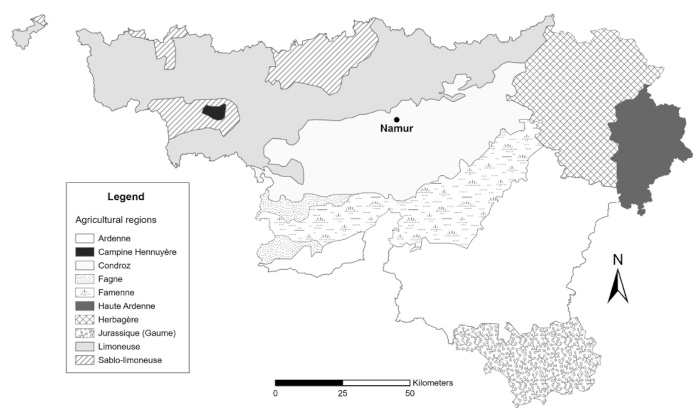
Figure 1. Agricultural regions of Wallonia – Régions agricoles de Wallonie (Service Public de Wallonie, 2025).
2.1. Soil characteristics
8Walloon soils are highly diverse, and their characteristics impact the feasibility of using physical weeding tools that interact with the soil, specifically conventional mechanical weeding tools (such as hoes, flex-tine harrows, rotary hoes, etc.).
9Texture and stone load. Clay soils (heavy soils) are less suited to mechanical weeding due to their impermeability and high plasticity in wet conditions and their high compaction when dry making the soil difficult to work. In these soils, the tines of flex-tine harrow slide over the soil without vibrating, making weeding ineffective. In dry conditions, the hardness of the soils reduces, or even prevents, the blade from penetrating the ground during hoeing. In Wallonia, three soil classes are defined based on their clay content in the surface horizon (0-40 cm): light (< 12% of clay), medium (12-19%) and heavy (> 19%). The table 1 presents their distribution in the agricultural regions (Chartin et al., 2024).
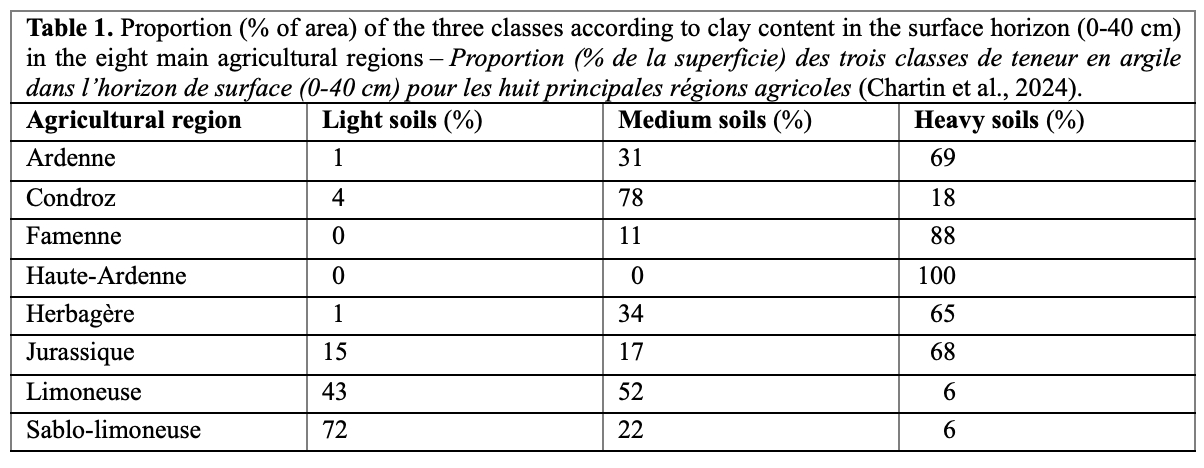
10The Walloon Utilised Agricultural Area (UAA) is comprised of 52% heavy soils, 35% medium soils and 13% light soils. Heavy soils are found in the south of the Walloon Region. In the Sablo-limoneuse region, 94% of the surface area has a clay content of less than 19%. These proportions are 95% for the Limoneuse region and 82% for the Condroz. Loamy soils may be subject to crusting following heavy rainfall on bare, tilled soil with low organic matter. The formation of a soil crust creates an obstacle that prevents the tines from penetrating and vibrating. If a blade-hoeing type machine is used on poorly developed crops in these conditions, damage may occur by the lifting of clods of soil that lead to the uprooting of seedlings. Another parameter that influences the use of mechanical weeding tools is the stone load in the topsoil, as mechanical weeding tools only work the surface of the soil (< 5 cm). Based on the digital soil map of Wallonia, Walloon soils were classified according to the proportion of coarse elements (Maugnard et al., 2022). Four soil classes were defined based on the stone load at the surface: stone-free soils (< 5% coarse elements), slightly stony (≥ 5 to < 15%), stony (≥ 15 to < 50%) and very stony (≥ 50%). The distribution of these four classes for the eight main agricultural regions is presented in Table 2.
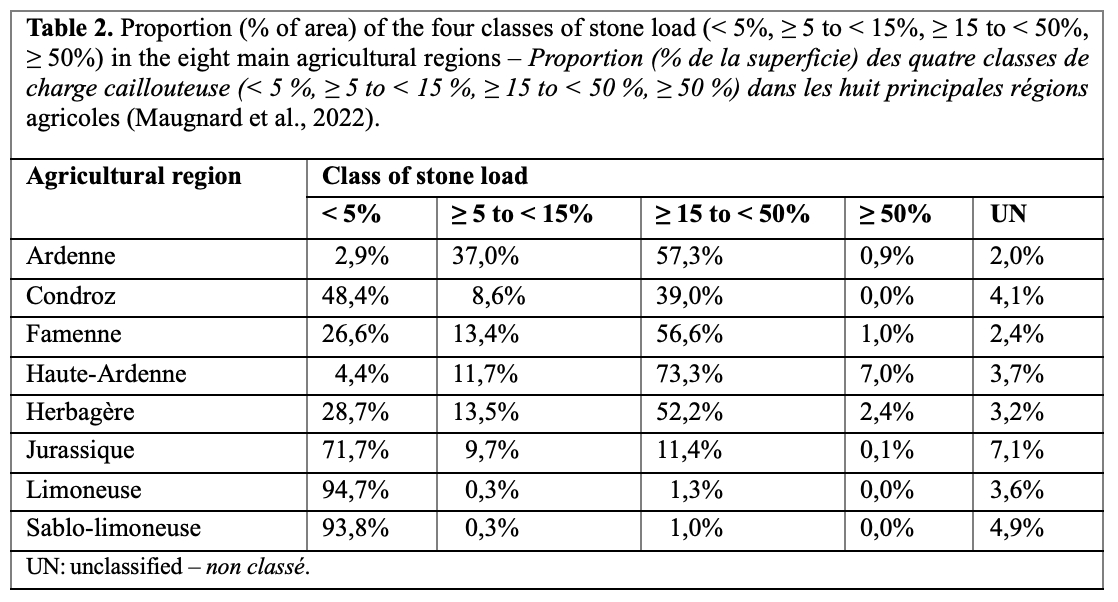
11Mechanical weeding operations are impossible for very stony soils and difficult on stony soils. The Limoneuse, Sablo-limoneuse and Jurassique regions have the highest proportion of agricultural land with a coarse element content < 15%, with 95.1%, 94.1% and 81.4% respectively.
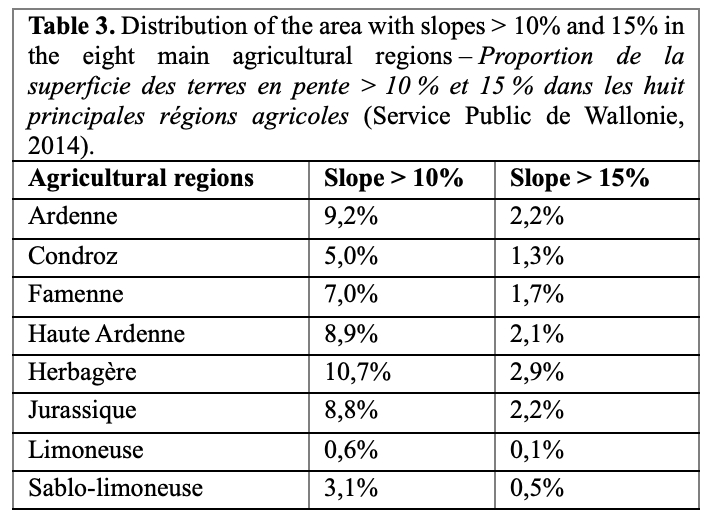
12Slope. Generally, the slope of an agricultural plot impacts the potential for using all agricultural machines. Plots with a slope >15% are not suitable for annual crops requiring tillage, and therefore for physical weed control. For slopes between 5% and 15%, the machines need special equipment to stabilise the work and ensure safety. Slopes impose constraints in terms of access to the plot and the direction in which operations are carried out. Mapping the slopes of agricultural plots (Service Public de Wallonie, 2014) shows that 5.1% and 1.2% of the Walloon UAA have slopes > 10% and 15% respectively. Although these averages seem fairly low, the presence of an area with a steep slope within a larger agricultural plot affects the entire plot. These proportions vary according to the agricultural region (Table 3), with the flattest plots located in the Limoneuse and Sablo-limoneuse regions.
2.2. Climate
13Wallonia has a temperate oceanic climate characterised by moderate temperatures, high levels of cloud cover and frequent but light rainfall. The summers are generally cool and damp, while the winters are mild and wet.
14Available days. Physical weeding operations are added to already busy cropping calendars and are carried out during periods limited by the development stage of the crop and the weeds. Only certain days are available during the season (Reboul, 1964) because they meet the right agronomic conditions for such work. A day is available when it allows the equipment to access and operate without negatively impacting the soil (trafficability) and when the conditions are appropriate for the success of the operation (workability) (Métais et al., 2023). Trafficability is determined by the drying time, which is itself dependent on the soil type, its drainage capacity, the rainfall (quantity and frequency) and the temperature during the days preceding the operation. This multi-factor parameter, which is not specific to physical weed control, is not covered here.
15The workability of physical weed control depends on the climate during the days following the operation, which should allow for the desiccation of the weeds and/or prevent transplanting (Abras et al., 2017). The simplest way to assess this criterion is to use rainfall (mm) and consider days that are followed by a sufficiently dry period as workable days. In practice, it is accepted that there should be three consecutive days without rain, which can be reduced to two during the summer due to the drier conditions (Institut Technique de la Betterave, 2019). Another climate indicator, used in the Arvalis J-Distas tool currently in development (Labreuche et al., 2022) includes the quantity of water that can be evaporated by the soil and the vegetation cover. It is calculated based on the difference between the rainfall and potential evapotranspiration using Equation 1.
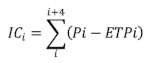
16with i: day of weeding, Pi: rainfall of day i in mm and ETPi: potential evapotranspiration of day i in mm. Available days are those where the calculated climatic indicator (IC) is ≤ -6 mm (Métais et al., 2023).
17Assessment of the climatic potential. Historical climate series from 2004 to 2024 from the Pameseb network (Rosillon et al., 2024) were used to assess the climatic potential of the Walloon Region for physical weed control. The 18 meteorological stations selected for this analysis (Figure 2) were chosen to be representative of the eight main agricultural regions, while ensuring that the data series were complete.
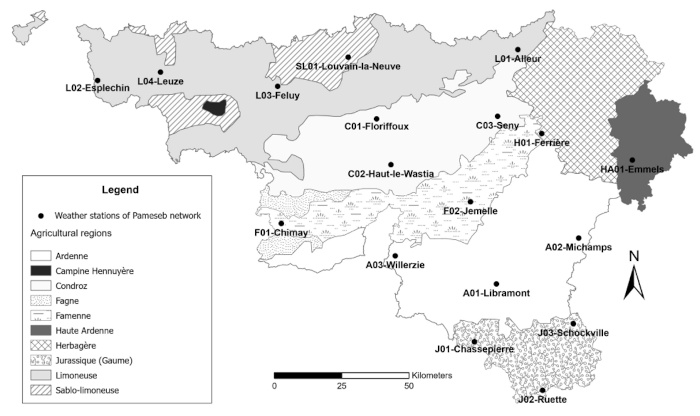
18Figure 2. Location of the 18 meterological stations of Pameseb network used in the study – Localisation des 18 stations météorologiques du réseau Pameseb utilisées pour l’étude (Service Public de Wallonie, 2025).
19The numbers of available days for the workability of physical weeding operations in each station from 2004 to 2024 were calculated based on the IC. An example is presented for the data from the station L04 in the Limoneuse region (Figure 3).
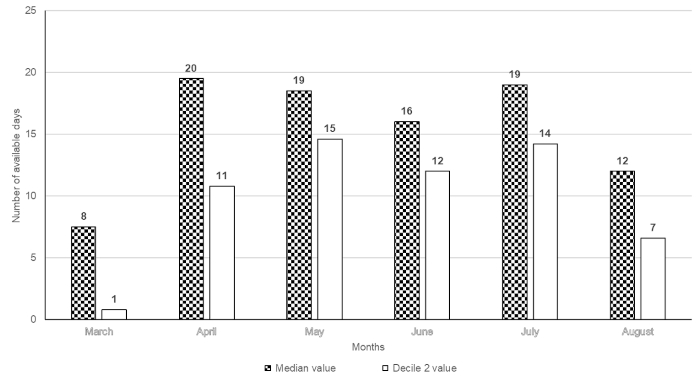
Figure 3. Number of available days for physical weeding from March to August at L04 station: median and second decile values between 2004 to 2024 – Nombre de jours disponibles pour le désherbage mécanique de mars à août à la station L04 : valeurs médiane et décile 2 entre 2004 et 2024.
20The median value illustrates the number of available days observed in at least one year out of two years. In our example, in June there were at least 16 available days for 10 years during the 2004-2024 period. The other information shown is the second decile, i.e. the value for which 20% of the data are lower. This value is more restrictive than the median, and therefore lower than it, since it represents the number of available days observed in at least 8 out of 10 years, which in our example for June corresponds to 12 available days in at least 16 of the 20 years. The number of available days varies depending on the month under consideration, reflecting more favourable conditions from May to July (less rainfall and greater evapotranspiration). Between 11 and 14 days/month are available in 8 out of 10 years for this period. Detailed data for each weather station from March to August are shown in Appendix 1.
21Figure 4 presents the median and second decile values of the total available days (based on IC) for the March to August period for the stations selected for the study. A geographical trend is observed with more workable days in the northern half of Wallonia and a decrease from west to east.
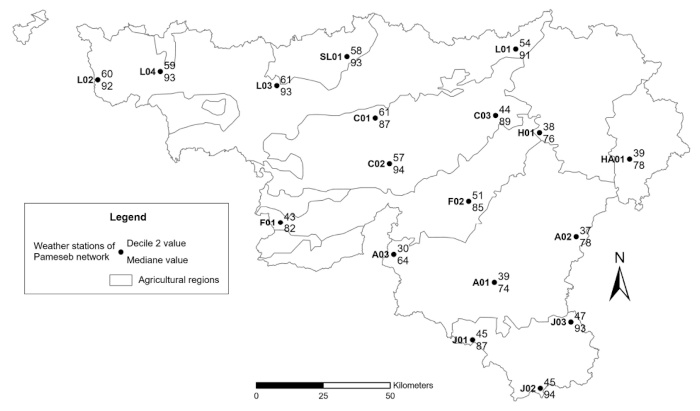
Figure 4. Mediane and second decile values of the total number of available days during the period from March to August (2004 to 2024) for each station – Médiane et décile 2 du nombre de jours disponibles total de la période de mars à août (2004 à 2024) pour chaque station.
22The regions in the South-East of Belgium have a lower climatic suitability for physical weed control, except for the Jurassique region, which benefits from a specific microclimate that results in higher temperatures in this area. The available days data calculated based on the IC may appear to be overestimated relative to actual experiences in practice. This is explained by the fact that the calculation only includes the drying conditions required for proper weed desiccation. If the trafficability criterion is incorporated, this adds a constraint that reduces the available windows for operations. Table 4 shows the minimum and maximum values of available days calculated for each station.
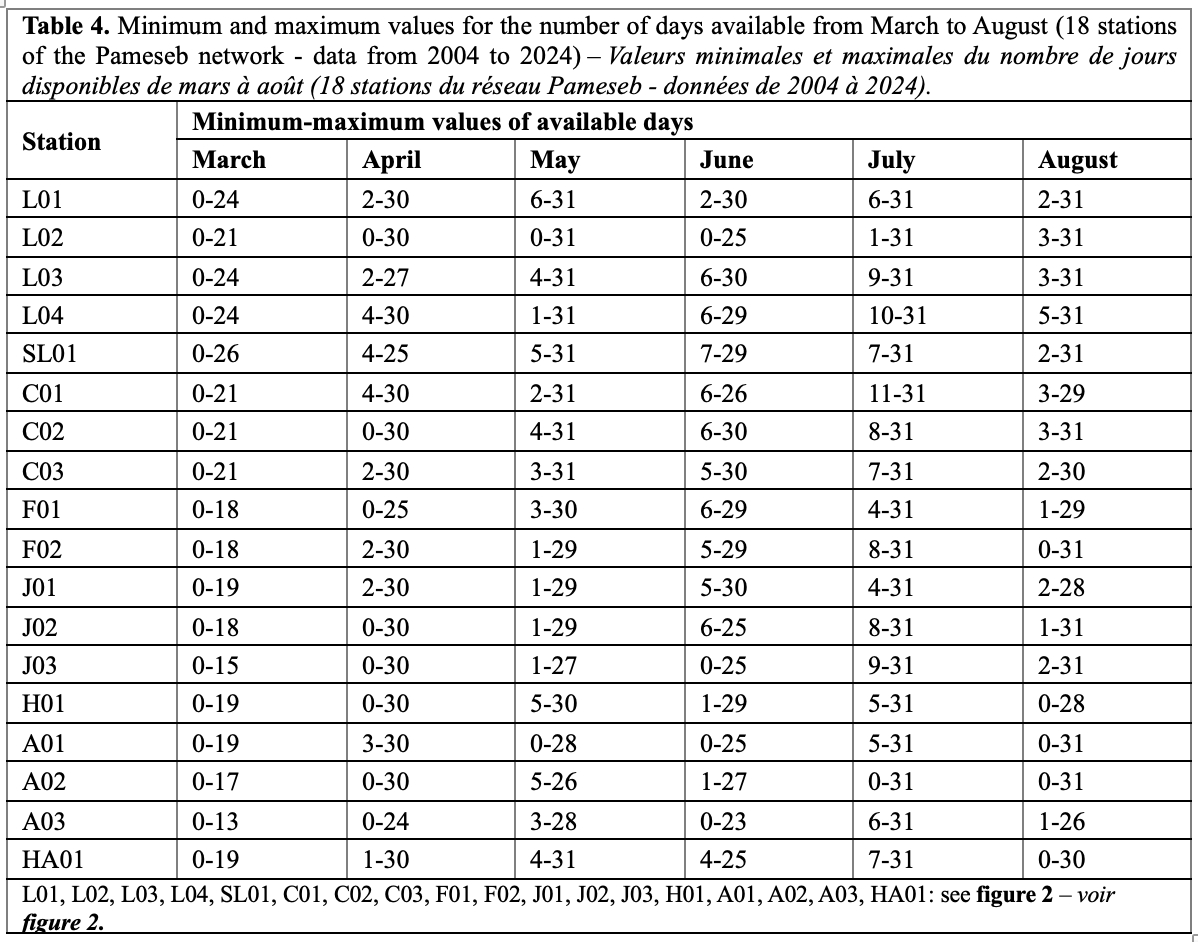
23There is a very wide range of variations observed for the number of available days between years. For example, in March, each location has a minimum of 0 days which shows that in those years, mechanical weeding of cereals would be compromised. The situation from May to June for the spring crops is not easier, with minimum values of zero to a few days, particularly in locations in the Herbagère region, Ardenne and Haute-Ardenne.
24This highlights a barrier to the integration of physical weed control in Wallonia, as the use of tools for weed destruction is very difficult, and even impossible in some years. As a result of the expected climate change in Wallonia (Service Public de Wallonie, 2018), which will lead to an increase in temperatures and average rainfall in autumn and spring, the number of available days could reduce further.
2.3. Crop distribution across agricultural regions
25Crops have morphological and phenological characteristics (for example, soil cover, growth habit, root system, cycle length, etc.) as well as traits related to crop management (row spacing, sowing date sowing density, type of farming, etc.) that influence the implementation of physical weed control. There are a variety of weed control practices that can be adapted to arable crops based on these criteria (Sicard et al., 2012; Pannacci et al., 2017). Part 2 of this publication describes the physical methods, existing tools and their effectiveness for different crops.
26Over the 733,907 ha of UAA in 2023 (Office Belge de Statistique, 2024), the Walloon Region has a diverse range of annual crops across the different agricultural regions (Table 5).
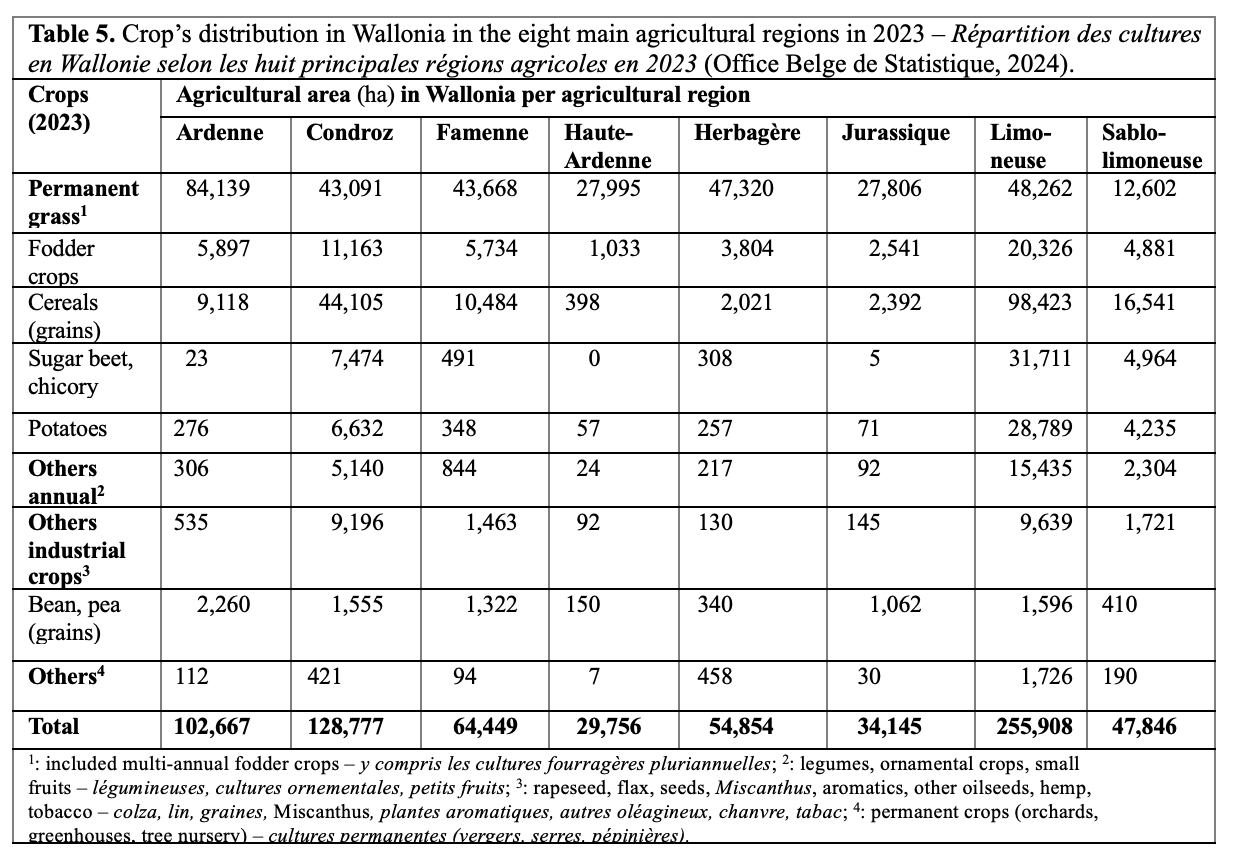
27In total, 385,466 ha of annual crops (arable land excluding multi-year forage) present an opportunity to introduce physical weed control as an alternative to spraying herbicides (53% of the total UAA). This interest is even greater for crops with high herbicide consumption, such as sugar beet, chicory or spring vegetables (Service Public de Wallonie, 2024).
28The distribution of crops in Wallonia shows that the potential for developing physical weed control is primarily located in the three agricultural regions that have the largest areas dedicated to annual arable crops (50% of their UAA). These are the Limoneuse region (80% of its UAA), the Sablo-limoneuse region (73%) and the Condroz (64%). In 2023, in terms of surface areas, these three regions accounted for 86% of Wallon cereals, 98% of sugar beet and chicory, 97% of potatoes, 89% of other industrial crops, 93% of other annual crops and 64% of maize (forage).
2.4. Synthesis
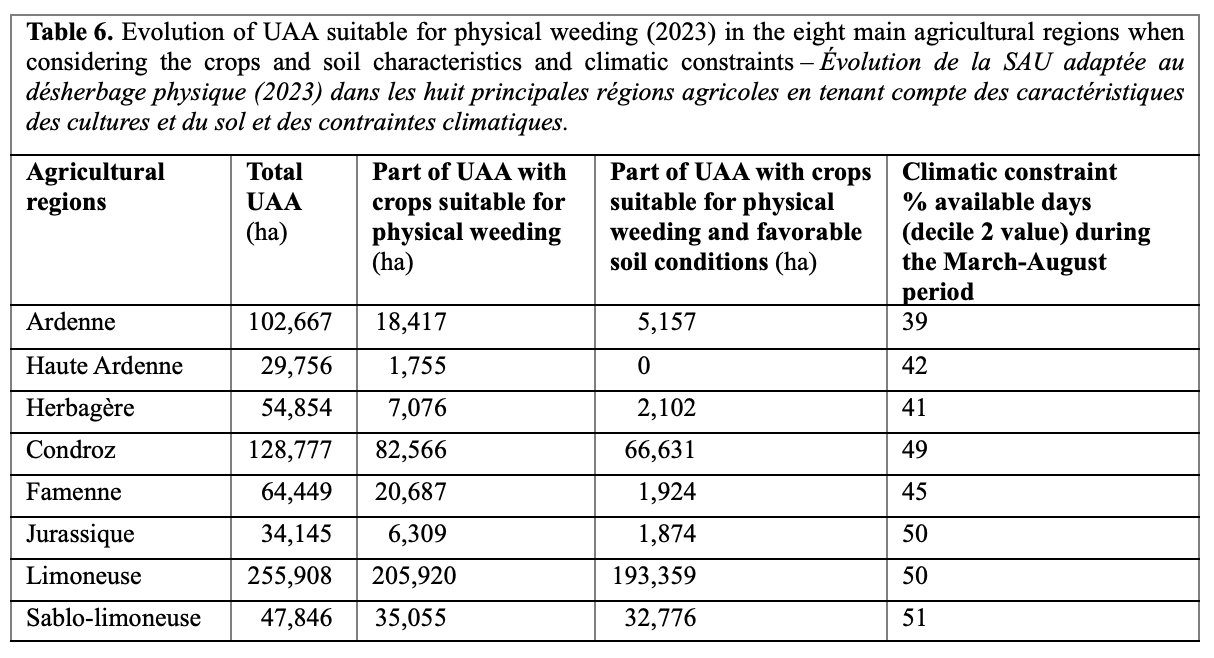
29The Ardenne, Haute-Ardenne and Herbagère regions have soils with high clay content (between 65% and 100% of their UAA), significant stone load (58%, 80% and 55% of their UAA respectively) and a high proportion of slopes: 54% of Walloon land with a slope > 15% are found in these three agricultural regions. These soil data explain the distribution of crops that is observed with, over all three regions, 85% of the area dedicated to permanent forage and little diversification for other crops on farms mainly focused on cattle farming. The available days that can be used for successful physical weeding operations are also fewer compared with the rest of Wallonia. It therefore appears that these agricultural regions are not compatible with a significant development of physical weed control for their agriculture and, in particular, the use of mechanical tools that interact with the soil.
30The Condroz, Famenne and Jurassique regions present in-between scenarios across their territory. Condroz comprises 82% of light to medium soils and the slope percentage >10% is limited to 5% of the area. However, 39% of soils are considered stony. This region also has more available days for physical weeding. This soil and climatic context allows for greater diversity of annual crops across 64% of the UAA. Consequently, in slightly stony plots, there is good potential to use physical weeding tools.
31Famenne is characterised by heavy soils in 88% of the UAA on average and 57.6% of the UAA consist of stony soils. Available days provide intermediate values, higher than those calculated for Ardenne and lower than Condroz. The farms in this region are cattle farms , but annual crops still represent 32% of the UAA where, for the less stony plots, it is possible to consider the use of physical weed control alternatives. The Jurassique region has more slope but fewer stony soils (12% of the UAA) than Condroz. On average, 68% of the soils in this region are heavy. A positive point is the presence of a climate that allows more available days for physical weeding operations than the neighbouring Ardenne. However, as this region is dominated by beef cattle farms, agricultural areas are mainly dedicated to permanent forage (81% of its UAA), giving limited potential for the introduction of physical weed control.
32The Limoneuse and Sablo-limoneuse regions are both characterised by light to medium soils (95% and 94% of their UAA respectively) and land with few slopes > 10%: 0.6% of the UAA in the Limoneuse region and 3.1% of the UAA in the Sablo-limoneuse region. In addition, 94% of the total UAA is stone-free. From a climatic perspective, available days for physical weeding operations are the highest in Wallonia. These conditions are optimal for annual crops which are mainly found on farms specialising in field crops, vegetables or field and livestock combined. The total agricultural area in both regions, where the potential to develop physical weed control is significant, represents 240,975 ha. Table 6 summarizes the impact of soil, climatic and crop characteristics on the potential for implementing physical weeding.
3. CHARACTERISTICS OF WALLOON FARMS SPECIALISING IN FIELD CROPS
33The farming’s type is determined by the relative contribution of the standard gross production of the farm's various productions to its total standard gross production. The typology and calculation method are set out in European Regulation (EC No. 1198/2014). This criterion is used to form homogeneous groups based on an economic approach (Direction de l’Analyse Économique Agricole, 2024c). In Wallonia, farms are primarily classified under seven different types (Table 7).
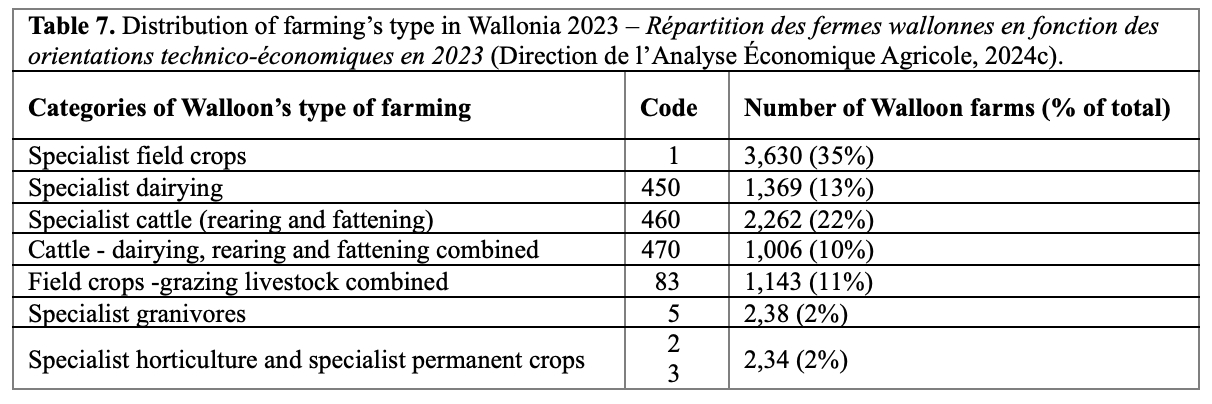
34This typology distinguishes between farms where the economic activity is more dependent on field crops (1 and 83) and vegetables (2), and where the development of physical weed control is expected. Growing maize for forage, which is more common in farms focused on cattle production (450, 460 and 470) is also suited to mechanical weeding. Wallonia is characterised by a specific geographical distribution of types of farming (Direction de l’Analyse Économique Agricole, 2024c). Farms specialising in field crops, mixed field crops and grazing livestock, and horticulture are located in the northern part of Wallonia. Types of farming specialising in cattle production are located in the regions to the South and East. Farms specialising in field crops account for the largest proportion of Walloon farms: 35% of the total number of farms for a total surface area of 256,582 ha. Their number has risen by 29% since 1990, with an acceleration from 2010 onwards. The same is true for organic farms of this type, the number of which increased from 146 to 289 farms over the past seven years.
3.1. Crop rotation
35The average farm specialising in field crops has a UAA of 70.7 ha which is 20% higher than the average for Walloon farms. The distribution of crops in the UAA for this type of farm is shown in table 8.
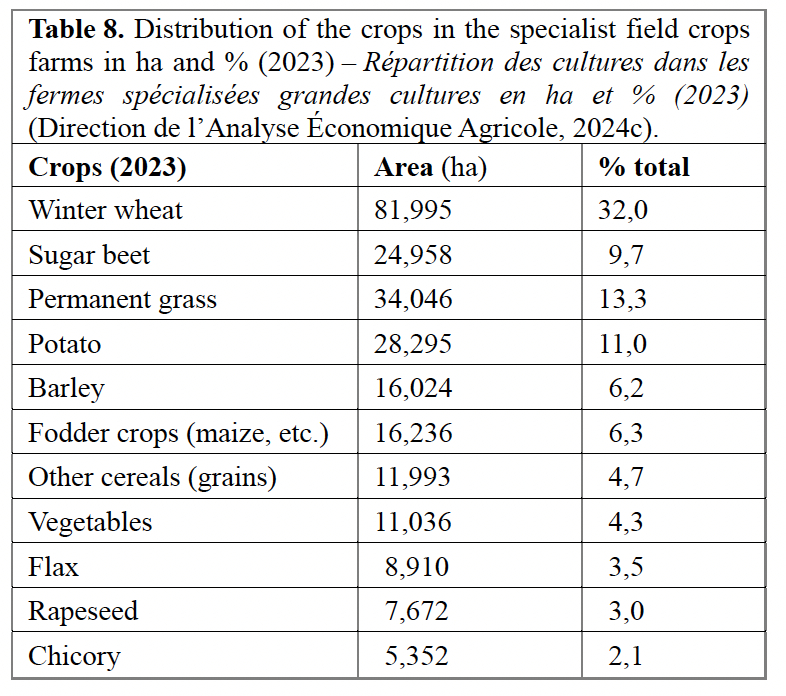
36The cessation of livestock farming on some field crops and grazing livestock combined farms (code 83) which then become part of this group explains the presence of permanent grassland and forage crops in the crop rotation. The diversity of crops observed, with a particularly significant proportion of spring crops (sugar beet, chicory, maize, vegetables, potatoes, etc.) confirms that, regarding this criterion, these farms present a potential for the implementation of physical weed control techniques. If these figures are compared to the data on Wallonia's agricultural areas, it can be seen that type 1 farms produce a significant share of cereals (56%), industrial crops (68% mainly sugar beet, chicory and rapeseed), flax (78%) and potatoes (68%). Based on the figures relating to the UAA of farms specialising in field crops since 1990 (Direction de l’Analyse Économique Agricole, 2024c), a trend in the diversification of crops is observed with an increase in the share of industrial crops relative to cereals.
3.2 Labour
37Physical weed control uses tools with working widths and/or speeds resulting in lower work rates than those observed for a sprayer (Rabier et al., 2026). In addition, these weeding techniques require more detailed agronomic monitoring of plots and greater operational flexibility. This is related to the effectiveness of their implementation, which is more dependent on climatic conditions and the development stages of the crop/weed pair (Rabier et al., 2026). The analysis of the potential to introduce physical weed control in farms must therefore consider labour availability as a criterion.
38Table 9 shows the available work units in specialist field crop farms compared to the average for Walloon farms (Direction de l’Analyse Economique Agricole, 2022).
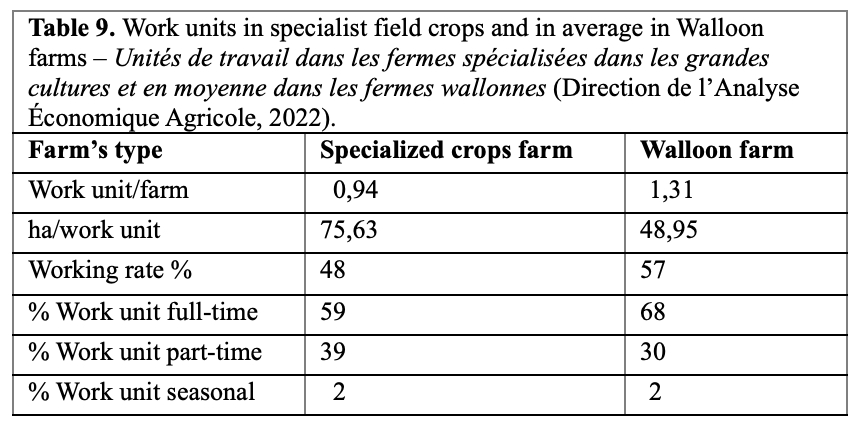
39In 2020, the field crops sector accounted for 24% of the total Walloon regular agricultural labour force and 23% of occasional labour. On these farms 0.94 work units (WU) per farm were employed, which is lower than the Walloon average of 1.31 WU/farm. This is explained by greater work efficiency as evidenced by the area managed per WU indicator. This area is 75.63 ha/WU on farms specialising in field crops compared with 48.95 ha/WU on average in Wallonia. This productivity is explained by mechanisation, more efficient production techniques and the more frequent use of agricultural contractors on this type of farm. Another characteristic of the workforce on type 1 farms is their lower employment rate, 48% compared with 57% in Wallonia. In these farms, regular workers hold fewer full-time jobs (59% of WU). In 2020, only 26% of farm managers specialising in field crops said that they had a successor (22% for the Walloon average). This type of farm therefore tends to expand by incorporating areas of land transferred from other farms. In these more industrial production models, the introduction of physical weed control techniques can prove difficult due to a lack of time for monitoring and carrying out slower work. However, since the areas to be weeded are larger, the profitability of the investments is improved.
40Even if these farms have more part-time jobs, there is potential to increase the employment rate of workers, especially since agricultural work has very little on-call time (daily, mandatory tasks) compared to livestock farms and therefore allows greater flexibility in the organisation. Finally, fully automated physical weed control solutions (robots) are being developed and can be used to replace manual weeding operations in organic crops of vegetables (chicory, carrots, onions etc.).
3.3. Profitability
41In order to take into account the significant variability seen in the economic results (volatility of agricultural prices and inputs), the data presented are the weighted average over the 2013-2023 period, which is a sample of between 48 and 65 farms depending on the year.
42With an average value of 1,009 € of income for 1,000 € of expenses, farms specialising in field crops can cover all their expenditure (Direction de l’Analyse Économique Agricole, 2024d). By way of comparison, the average for Walloon farms is lower at 871 € of income/1,000 € of expenses. The gross margin reflects the efficiency with which the farm generates income through its allocated operating expenses. Type 1 farms show a gross margin of 1,330 €·ha-1, which is higher than the 1,250 €·ha-1 on average for Walloon farms. A more detailed analysis of the gross margin per crop (Direction de l’Analyse Économique Agricole, 2024a) shows that certain industrial crops lead to higher incomes than those for cereals; 1,643 €·ha-1 for sugar beets compared with 1,279 €·ha-1 for winter wheat. Labour income amounts to 38,063 €·WU-1, which is higher than the average labour income of Walloon farms, 24,703 €·WU-1 (Direction de l’Analyse Économique Agricole, SPW, 2024). However, these values mask differences between farms, as not all show the same economic potential for introducing physical weed control techniques. On average, over the last 10 years, farms specialising in field crops have shown positive economic results. Industrial crops are highly profitable and suited to physical weed control alternatives. If there is enough available labour and the level of debt is controlled, a new investment is therefore possible.
3.4. The cost of weed control in Wallonia
43Physical weed control will be more readily adopted if its cost remains acceptable, not only in relation to farmers' income but also relative to the standard cost of weed control using chemical herbicides. In practice, weeding can be carried out by farmers using their equipment, potentially jointly owned, or it can be subcontracted to a third party. When the farmer carries out the weeding, the total costs must include the cost of purchasing and maintaining the equipment (tractor and tool), labour and any products. The Mecacost decision-support tool (Rabier et al., 2008) based on Walloon references was used to estimate the cost of using common mechanical weeding equipment compared to the cost of using a sprayer (Figure 5). The purchase prices shown in the figure are based on average price assumptions excluding taxes.
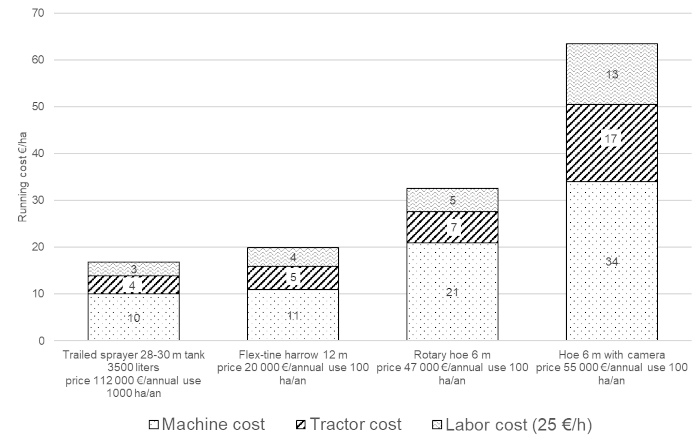
Figure 5. Estimated of running cost of a sprayer and mechanical weeding equipment in €·ha-1 by intervention: flex-tine harrow, rotary hoe and hoe – Estimation du coût d'utilisation d’un pulvérisateur et de matériel de désherbage mécanique en €·ha-1 par passage : herse étrille, houe rotative et bineuse (www.mecacost.cra.wallonie.be).
44These calculations show the running cost per ha for one pass of the tool. They are based on working hypotheses that are consistent with the situation of Walloon field crops farms regarding tool prices, working widths and annual tool use. When only mechanisation costs are considered (without herbicides), the mechanical weeding equipment is at a disadvantage than that to the sprayer. The work rate (working speed and width) is lower compared to the sprayer. In our simulation, the work rate is 8.5 ha·h-1 for the sprayer and 2 ha·h-1 for the hoeing machine. This factor impacts the traction cost and the associated labour per ha since it rises from 7 € for one sprayer pass to 30 € for a hoeing operation. In addition, when a tool is used for a larger surface area, this improves the profitability of the investment by reducing the operating cost per hectare (Rabier et al., 2008). This is the case for the sprayer which can treat a larger surface area annually due to its versatility as it can be used on all farm crops and for other operations besides weeding (fertilisation, application of fungicides, etc.).
45The accounting data from Walloon farms in the European monitoring network (Direction de l’Analyse Économique Agricole, 2024b) provide reference values for the average cost of herbicides per hectare for some field crops in Wallonia (Table 10).
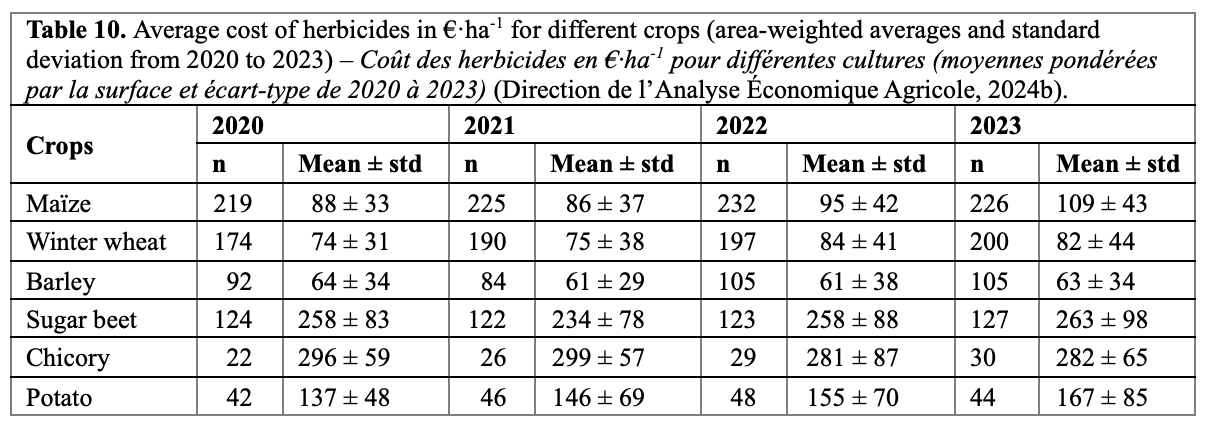
46A multi-year analysis is presented in order to take into account the evolution of product costs and availability as well as climatic conditions that affect their use due to the treatment conditions and weed pressure. The cost of herbicides varies depending on the crops and is higher for spring crops with a slow early growth stage such as chicory. Significant variability is observed within the same crop among farms, depending on plot conditions, farm structure and farmer decisions.
47When the costs of herbicides are added to the running cost of the equipment, the cost of spraying increases compared to herbicide-free techniques. This applies even more so for sensitive crops that require more products over several applications. A study comparing different weeding treatments in sugar beet (Rabier et al., 2017) showed that herbicides represented 79% of the total weed control cost, making the overall cost of chemical weed control higher than that of mechanical control for the season.
48Estimating the financial impact of using a new weed control technique with a specific tool is still complex and must be analysed on a case-by-case basis based on the specific situation of each farm. When integrating physical weeding into crop rotations, several tools may be used depending on the farm and the crops, making it difficult to forecast costs. In a farm that uses conventional production methods, a sprayer must often be kept for other treatments. In this case, the use of an alternative weeding tool must be included in addition to the existing equipment and not as a replacement, which does not generate any savings. If the technology is expensive and specific to a crop, a model based on subcontracting the work would be recommended.
5. CONCLUSIONS
49In the context of increasingly strict Belgian and Walloon legislation on herbicide use — leading to severe, or even total, restrictions in certain areas — this review shows that Wallonia offers opportunities for the deployment of physical weed control solutions. Wallonia's potential in terms of suitable land (based on crop and soil characteristics) is estimated at 303,823 ha (42% of the UAA). It is mainly concentrated in the Limoneuse and Sablo-limoneuse agricultural regions. These regions are also home to farms specialized in field crop. A more specific analysis of the structure of these farm types indicates that their diversified crop rotation is favourable for the introduction of physical weed control and generally has sufficient resources, both human and financial, to support the integration of these new techniques and tools into crop management practices. Contract-based crops appear to be the most profitable. However, these contract crops are highly dependent on the stability and development of agro-industrial chains, which although well-established in Belgium, may face issues related to global market and geopolitical tensions that could cause difficulties for these crops in the future. It should be noted that in Wallonia there are specific investment aids and financial incentives based on Common Agricultural Policy (CAP) mechanisms with possible supplements from regional or European budgets that can support this effort to transition to alternative weed control techniques.
50The climate is the main obstacle to the widespread use of physical weed control in Wallonia. Regardless of the agricultural region, it is observed that the number of available days for successful physical weeding is zero or close in some years. These difficult years, where it is not possible to use physical weed control, do not leave the farmer without solutions. However, this makes profitability difficult to achieve as the cost of the unused physical weeding equipment must be added to the cost of substitute chemical weed control or manual correction on organic farms.
51Other, more technical factors, related to the effectiveness of the weeding and its ease of implementation, which can influence the potential to introduce physical weed control into technical pathway in Wallonia are detailed in part 2 of this publication (Rabier et al., 2026).
52Author contributions
53Fabienne Rabier: conceptualization, data collection, analysis, and writing of the original draft.
54Olivier Miserque: resources, validation and review.
55Quentin Limbourg: review and editing.
56Bruno Huyghebaert: review and editing.
57Free versions of AI-based tools (ChatGPT and DeepL) were used to support the translation and linguistic refinement of the manuscript.
Bibliographie
Abras M., Rabier F. & Limbourg Q., 2017. Comparaison de techniques de désherbage mécanique en culture de froment biologique. In: 1967-2017, 50 ans de partenariat entre agriculteurs et chercheurs, presented at the Livres Blanc Céréales Gembloux, Belgique, 3/14-3/19/2017.
Chartin C., van Wesemael B. & Goidts E., 2024. Implémenttion de la mesure agro-environnementale et climatique “sol” (MAEC sol) (Convention Région wallonne (CSC n° 03.07.05-22-2125)). Louvain-la-Neuve, Belgique : UCLouvain.
Direction de l’Analyse Économique Agricole, 2024a. Grandes cultures - Produits, charges et marge brute, https://etat-agriculture.wallonie.be, (17/12/2024).
Direction de l’Analyse Économique Agricole, 2024b. Données réseau de comptabilités agricoles wallonnes. Namur, Belgique : Direction de l’Analyse Économique Agricole.
Direction de l’Analyse Économique Agricole, 2024c. État de l’agriculture wallonne - Orientations technico-économiques, https://etat-agriculture.wallonie.be, (9/12/2024).
Direction de l’Analyse Économique Agricole, 2024d. État de l’agriculture wallonne - Produits et charges de l’exploitation spécialisée en grandes cultures, https://etat-agriculture.wallonie.be, (09/12/2024).
Direction de l’Analyse Économique Agricole, SPW, 2024. État de l’agriculture wallonne - Marge brute, excédent brut et revenus de l’exploitation spécialisée en grandes cultures, https://etat-agriculture.wallonie.be (09/12/2024).
Institut Technique de la Betterave, 2019. Desherb’Avenir VI - Les stratégies de désherbage alternatives au tout chimique. Paris : Institut Technique de la Betterave.
Labreuche J. et al., 2022. Alternatives au glyphosate : des leviers aux efficacités variables. In : Phloeme, 3è Biennales de l’innovation céréalière, Protéger les cultures : les solutions d’avenir, 3-4 novembre 2022, Paris, France.
Maugnard A., Van Languenakers P., Bielders C. & Degré A., 2022. Cartographie du risque de dégradation des sols et de transfert des pollutions agricoles diffuses au cours d’eau (Rapport de mise à jour des données du Service Public de Wallonie). Namur, Belgique : SHER Ingénieurs- Conseils
Métais P. et al., 2023. J-DISTAS : Prévoir les Jours Disponibles pour réussir les opérations culturales et éviter les tassements des sols en grandes cultures. Agron. Environ. Soc., 13, 1-19.
O’Duke S., 2011. Why have no new herbicide modes of action appeared in recent years? Pest. Manage. Sci., 68, 505-512, doi.org/10.1002/ps.2333
Office Belge de Statistique, 2024. Exploitations agricoles et horticoles, chiffres agricoles de 2023, https://statbel.fgov.be/fr, (15/09/2024).
Pannacci E., Lattanzi B. & Tei F., 2017. Non-chemical weed management strategies in minor crops: a review. Crop Prot., 96, 44-58, doi.org/10.1016/j.cropro.2017.01.012
Rabier F. et al., 2008. Guide of running costs for farm equipment : a simple tool for decision-making. In: Proceedings of the III International Scientific Symposium, Farm Machinery and Processes management in Sustainable agriculture, Lublin, Poland, 43-50.
Rabier F. et al., 2017. Assessment of the integration of mechanical weeding for weed control in sugar beet-growing. In: Proceedings of IX International Scientific Symposium, Farm Machinery and Processes Management in Sustainable Agriculture, Department of Machinery Exploitation and Management of Production Processes, University of Life Sciences, Lublin, Poland, 330-335.
Rabier F., Huyghebaert B., Parafiniuk S. & Limbourg Q., 2026. Physical weed control: a review in Belgian conditions. Part 2: Technical description of implements, effectiveness and selectivity. Biotechnol. Agron. Soc. Environ., 30(2), 142-156.
Reboul C., 1964. Temps de travaux et jours disponibles en agriculture. Écon. Rurale, 61, 55-80, doi.org/10.3406/ecoru.1964.1857
Rosillon D. et al., 2024. Near real-time spatial interpolation of hourly air temperature and humidity for agricultural decision support systems. Comput. Electron. Agric., 223, 1-15, doi.org/10.1016/j.compag.2024.109093
Service Public de Wallonie, 2014. Relief de la Wallonie, https://geoportail.wallonie.be/catalogue/1f13febe-5b6f-4bbc-863f-9ea8d786b532.html, (19/12/2024).
Service Public de Wallonie, 2018. État de l’environnement wallon - Évolution future du climat régional, https://etat.environnement.wallonie.be, (12/12/2024).
Service Public de Wallonie, 2024. État de l’environnement wallon - Utilisation de produits phytopharmaceutiques, http://etat.environnement.wallonie.be, (15/10/2024).
Service Public de Wallonie, 2025. Carte des régions agricoles de Belgique, https://geoportail.wallonie.be/catalogue/6f562464-f478-4f41-99a7-ed28d0cdbe7c.html, (28/01/2025).
Sicard H.et al., 2012. Désherber mécaniquement les grandes cultures. Paris : ITAB (Institut de l’Agriculture et de l’Alimentation Biologique).
SPW-DEMNA-DEE, 2021. État de l’environnement wallon - Chapitre : Agriculture. SPW Éditions.
